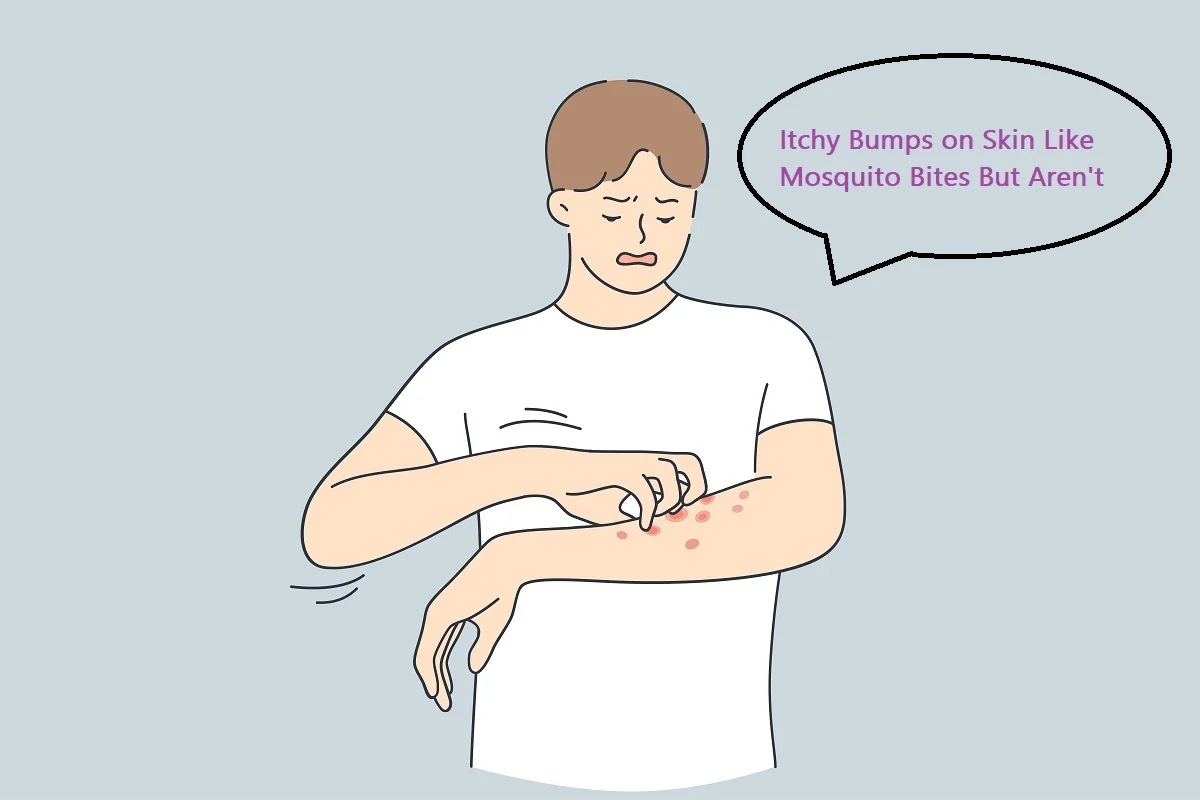
Waking up with red, itchy bumps covering your arms can be alarming, especially when you know you haven’t been near mosquitoes. These mysterious welts appear suddenly, cause intense itching, and leave you searching for answers.
Approximately 20% of people experience hives at some point in their lives, and many other skin conditions can mimic the appearance of insect bites. Understanding what causes these bumps and how to identify them helps you find the right treatment quickly.
Quick Answer: Itchy Bumps That Look Like Mosquito Bites But Aren’t
If you have itchy bumps that look like mosquito bites but appear without insect exposure, the most common cause is hives (urticaria). Other possible causes include allergic reactions, contact dermatitis, bed bug bites, scabies, heat rash, eczema, or folliculitis. Key clues include whether the bumps move, how long they last, where they appear on the body, and whether itching is worse at night. Correct identification helps determine the right treatment.
Understanding Itchy Skin Bumps
When you notice itchy bumps on skin like mosquito bites but aren’t from actual insects, you’re likely experiencing one of several common skin reactions. These bumps appear as raised, red welts ranging from small dots to large patches. The medical term for many of these reactions is urticaria, commonly known as hives.
What Are Hives?
Hives develop when your body releases histamine in response to various triggers. This chemical causes blood vessels to leak fluid under your skin, creating raised, itchy welts that typically appear and disappear within 24 hours. Individual bumps may move to different body areas, distinguishing them from stationary bug bites.
10 Common Causes of Mosquito Bite-Like Bumps
1. Allergic Reactions and Hives
Allergic reactions trigger your immune system to release histamine, creating red, raised welts identical to mosquito bites. Common triggers include certain foods (shellfish, nuts, eggs), medications (antibiotics, pain relievers), environmental allergens (pollen, pet dander), and physical factors (sunlight, temperature changes, pressure).
Food-induced hives typically appear within minutes to hours after eating, while medication reactions may develop days after starting a new prescription.
2. Contact Dermatitis
Contact dermatitis occurs when your skin touches an irritant or allergen, creating itchy, raised bumps 1-2 days after exposure. Unlike hives, these bumps remain in the exact location where contact occurred.
Common triggers include harsh soaps, nickel jewelry, fragrances in cosmetics, latex gloves, and plants like poison ivy. The pattern often provides clues; a rash around the wrist suggests a watchband allergy, while hand dermatitis points to cleaning products or gloves.
3. Bed Bug Bites
Bed bug bites create small, red, itchy marks that closely resemble mosquito bites. These nocturnal insects feed while you sleep, leaving distinctive straight lines or clusters of bites on exposed skin like arms, neck, and face.
Check mattress seams, bed frames, and nearby furniture for small brown insects (about apple seed size), dark spots, or shed skins. Unlike hives, bed bug bites don’t move and persist for several days.
4. Flea Bites
Flea bites cause intensely itchy, small red bumps with red halos, typically appearing in clusters around ankles and legs. Pet owners and people who have been around animals are most susceptible. The itching is often more intense than mosquito bites.
5. Scabies
Scabies results from microscopic mites burrowing into skin to lay eggs. The allergic reaction creates intensely itchy bumps with thin, irregular burrow tracks between them. Intense nighttime itching is the hallmark symptom.
Common areas include between fingers, wrists, elbows, waistline, and genitals. Scabies is highly contagious through prolonged skin-to-skin contact, so household members often develop symptoms simultaneously.
6. Heat Rash (Miliaria)
Heat rash develops when sweat glands become blocked during hot, humid weather. Trapped sweat creates tiny red or flesh-colored bumps in areas where skin touches clothing or in skin folds like the neck, armpits, and groin.
7. Eczema (Atopic Dermatitis)
Eczema causes chronic inflammation that creates red, itchy patches with small raised bumps. During flare-ups, these bumps can resemble insect bites. Understanding your skin type helps identify whether you have sensitive skin that’s prone to eczema and other inflammatory reactions. Unlike hives, eczema patches persist and worsen without treatment, appearing most commonly on inner elbows, behind knees, hands, and face.
The affected skin becomes dry, scaly, and thickened over time. The condition often runs in families with histories of allergies or asthma.
8. Folliculitis
Folliculitis occurs when hair follicles become inflamed or infected, creating small red bumps that may be itchy or painful. Causes include bacterial or fungal infections, friction from tight clothing, shaving, or hot tub use. The bumps typically have a hair in the center.
9. Papular Urticaria
Papular urticaria is a hypersensitivity reaction to insect bites that creates persistent, symmetrical clusters of itchy bumps. More common in children but can affect adults, these bumps measure 0.2-2 centimeters and may develop into fluid-filled blisters. Symptoms typically worsen in late spring and summer.
10. Stress-Induced Hives
Emotional stress triggers physical responses, including hives. Stress hormones can cause your immune system to release histamine, creating bumps that appear during or after stressful periods. These typically resolve when stress decreases but can become chronic with ongoing stress.
Quick Diagnosis Checklist
Use this checklist to narrow the likely cause of your itchy bumps:
- ✔️ Do bumps appear and disappear within 24 hours and move location? → Likely hives
- ✔️ Only in areas that touched a product, metal, or plant? → Contact dermatitis
- ✔️ In straight lines or clusters after sleep? → Bed bugs
- ✔️ Mostly around ankles or lower legs? → Flea bites
- ✔️ Severe itching at night with burrow-like lines? → Scabies
- ✔️ In sweaty, covered skin areas during hot weather? → Heat rash
- ✔️ Centered around hair follicles or shaving areas? → Folliculitis
- ✔️ Chronic dry itchy patches on elbows/knees? → Eczema
- ✔️ Started after stress, food, or medication? → Allergic or stress hives
If multiple boxes apply, medical evaluation is recommended.
Effective Treatment Options
Immediate Relief
- Cold compresses: Apply ice wrapped in cloth for 10 minutes to reduce swelling and numb itching.
- Antihistamines: Over-the-counter options like cetirizine, loratadine, or diphenhydramine block histamine release and provide relief within hours.
- Topical treatments: Hydrocortisone cream (1%) reduces inflammation, while calamine lotion and colloidal oatmeal baths soothe widespread itching.
- Avoid scratching: Keep nails short and consider wearing cotton gloves at night to prevent damage and infection.
Condition-Specific Treatments
- Hives: Identify and avoid triggers, take daily antihistamines for chronic cases, and seek prescription medications for severe reactions.
- Contact dermatitis: Avoid the triggering substance, wash affected skin with mild soap, and apply prescribed topical corticosteroids.
- Scabies: Use prescription permethrin cream or oral medications, treat all household members simultaneously, and wash bedding in hot water.
- Bed bugs/fleas: Eliminate the infestation through thorough cleaning or professional pest control; use antihistamines for symptom relief.
- Eczema: Apply daily moisturizers to maintain the skin barrier, use prescription topical treatments, and identify personal triggers.
When Prescription Help Is Needed
Healthcare providers may prescribe stronger antihistamines, topical or oral corticosteroids, immunosuppressants for severe cases, biologics for chronic urticaria, or specific antimicrobial treatments for infections when over-the-counter options don’t work.
My Own Experience:
On the morning of February 2, 2026, I woke up and noticed the same bumps on my face again. This usually happens when I eat spicy chicken dishes, which are common in Pakistan. This is not just a one-time incident. It happens almost every time I eat spicy food. This is based on my personal experience, and others may have different reactions.