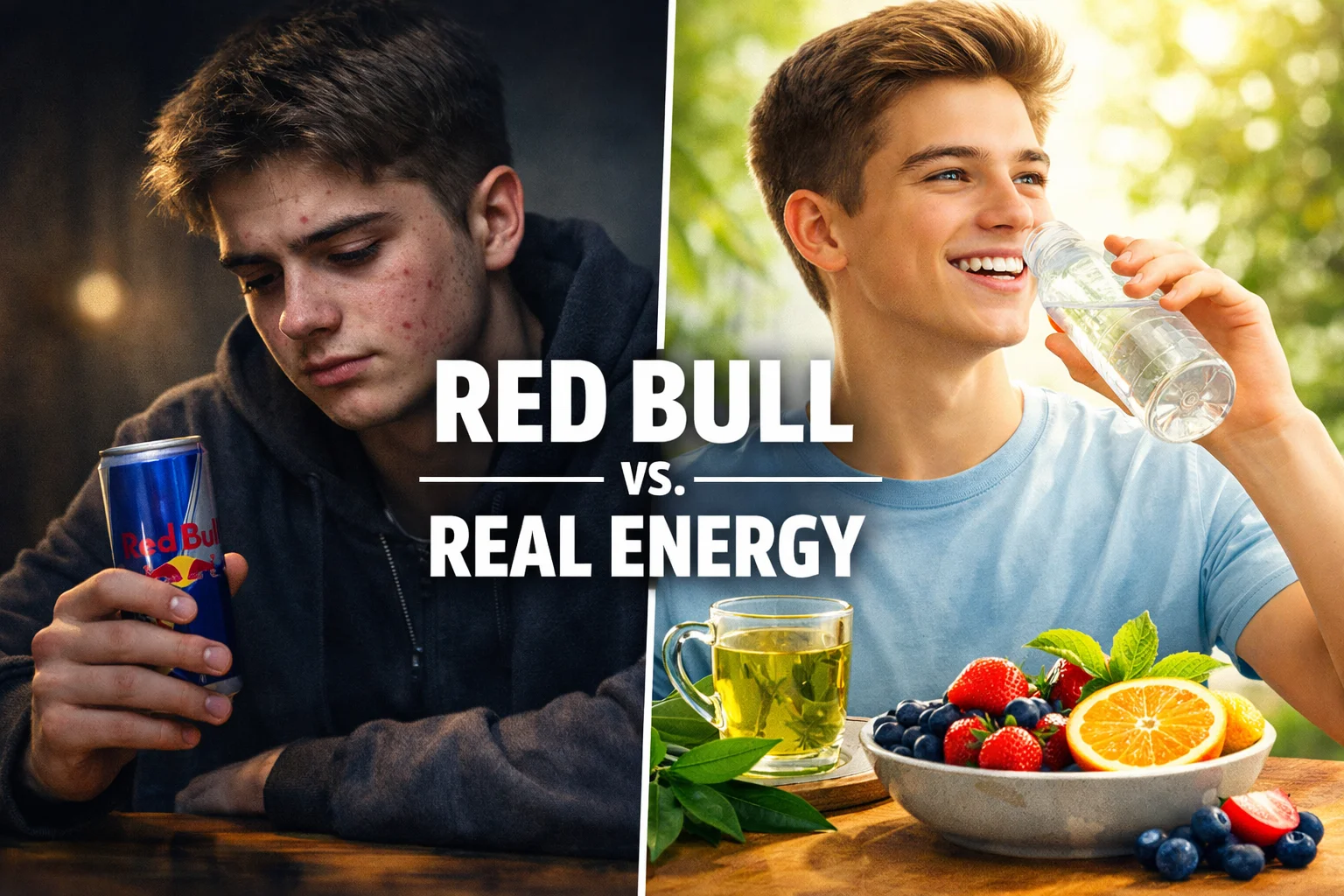
Most teenagers don’t realize one fact: that can of Red Bull is affecting their body right now. Your skin’s oil production spiked. Your heart rate climbed. Your sleep will suffer.
More than 40% of American teens consumed an energy drink in the past three months. Many drink Red Bull daily, sometimes multiple cans. But here’s what they’re not seeing on the label: how this drink damages skin and disrupts health during years when your body is still developing.
The real question isn’t whether Red Bull is “bad.” It’s this: what actually happens to a teenager’s body and skin when drinking it regularly? The answer matters.
What’s in Red Bull? The Ingredient Breakdown
One 8.4-ounce can contains 80 milligrams of caffeine. The recommended daily limit for adolescents is 100 mg, so one can consumes 80% of that safe amount. Two cans exceed what pediatricians recommend for an entire day.
The sugar is where problems appear fast. A standard can has 27 grams of sugar (six teaspoons). The FDA considers 50 grams a safe daily limit, so one can provides 54% of that maximum. Sugary beverages hit your bloodstream fast, causing rapid insulin spikes.
Red Bull also contains taurine, an amino acid, in concentrations higher than normal consumption. Research suggests taurine in energy drinks may contribute to acute kidney injury. That’s particularly concerning for developing teenage bodies.
Then there are the B vitamins. One can cover your recommended daily intake for several B vitamins. But high doses of B12 and biotin do something unexpected to your skin.
How Red Bull Wrecks Your Skin
You start drinking Red Bull, and within days, acne appears. Three mechanisms happen simultaneously.
First: the sugar.
High-glycemic sugar enters your bloodstream rapidly. Your body produces extra insulin to manage that spike. High insulin triggers increased sebaceous gland activity, directly causing acne. Your skin produces more oil. Clogged pores form. Acne follows within one to three days in acne-prone teenagers.
Second: the B vitamins.
High doses of B12 alter skin bacteria and increase acne formation. One acne esthetician documented a girl whose energy drink contained 1000% of the recommended daily biotin. When she stopped, her cystic acne cleared.
Third: the caffeine.
Caffeine increases cortisol, your body’s stress hormone. Elevated cortisol increases inflammation, a known acne trigger. Caffeine also acts as a diuretic, increasing fluid loss. This dehydrates your skin, compromising your skin barrier and causing irritation and breakouts.
The combination is brutal for teenagers because their hormones are already active. Red Bull amplifies these effects dramatically.
Sugar-free versions don’t solve this. Both standard and sugar-free energy drinks trigger insulin resistance, meaning sugar-free versions also cause acne through different mechanisms.
The Bigger Health Risks Beyond Acne
Acne is annoying. These other effects are dangerous.
Caffeine increases your heart rate and blood pressure. Studies demonstrate significant increases after Red Bull intake. For teenagers with developing cardiovascular systems, that matters. Repeated caffeine consumption can lead to irregular heartbeats and cardiac problems.
Sleep gets destroyed. Caffeine has a five to eight-hour half-life, so one afternoon drink ruins your sleep. Poor sleep increases cortisol production, worsening acne and affecting mood, concentration, and stress management.
Mental health takes a hit. Research associates energy drink consumption with increased risk-taking behavior in teenagers. Caffeine creates anxiety in sensitive individuals. When sugar wears off, you experience a “sugar crash” with sudden fatigue, mood swings, and irritability.
Your kidneys and liver face stress. A 2023 review suggests an association between liver toxicity and excessive niacin (vitamin B3) in Red Bull. These organs handle serious work in your developing body.
Adolescents who consume energy drinks are more likely to use tobacco, alcohol, and illicit drugs. That doesn’t mean Red Bull causes drug use, but it indicates teenagers who regularly drink Red Bull tend to make riskier choices overall.
Why Teenagers Are at Higher Risk Than Adults
An adult can drink Red Bull and probably be fine. A teenager cannot.
Your body is still developing. Your cardiovascular system is maturing. Your brain is forming new connections in areas handling impulse control. Your metabolism works differently. Your sensitivity to stimulants is higher because of your lower body weight and developing neurological systems.
Adverse reactions to excessive caffeine begin at about 200 mg and worsen with larger doses, especially above 400 mg. Two cans deliver 160 mg. Three cans reach dangerous territory. An adult might feel jittery. A teenager could experience seizures, rapid heartbeat, or severe anxiety.
Additionally, teenagers experience natural hormonal changes. Your body is already producing more oil and dealing with acne. Red Bull doesn’t start these processes. It amplifies them dramatically.
Marketing targets you specifically. Red Bull sponsors extreme sports events and athlete endorsements, with product placements in media oriented toward teenagers. The message is consistent: Red Bull gives you energy, power, and freedom. Nobody shows acne, insomnia, or a racing heart. That’s intentional.
Healthier Alternatives That Actually Work
Better options exist. Water with a small meal provides sustained energy without the crash. Genuine fatigue signals dehydration or hunger, not caffeine deficiency.
Green or black tea contains 25-50 mg caffeine without the sugar crash. Coffee offers about 95 mg per cup, close to your daily limit. Fruit smoothies with protein provide actual nutrition. Physical activity generates energy more reliably than caffeine.
The honest truth: if you’re so tired you need Red Bull daily, something is wrong. You’re not sleeping enough. Your diet is poor. You’re stressed. You’re dehydrated. Red Bull masks the problem instead of solving it.
Common Questions
Can I drink Red Bull occasionally without problems?
One can occasionally probably won’t cause serious damage, but even occasional consumption can trigger acne in acne-prone teenagers. Skin effects happen fast, within one to three days.
What about sugar-free Red Bull?
Sugar-free versions still contain caffeine, taurine, and high B vitamin doses. Both versions carry health risks through different mechanisms.
How long does acne clear after stopping Red Bull?
Many teenagers report improvements in one to two weeks. Consistent skincare and hydration speed recovery.
Is one can a day okay?
No. One can daily exceeds the recommended daily caffeine limit for teenagers. This is regular consumption of a substance not designed for developing bodies.
What if I’m addicted?
Caffeine addiction is real. Stopping suddenly causes headaches, fatigue, and mood swings for a few days. Replace one daily can with tea or water and reduce gradually.
The Bottom Line
Red Bull doesn’t give you wings. It gives you stimulation, followed by a crash, while damaging your skin and stressing your developing body.
For teenagers specifically, the risks outweigh any benefits. The acne appears quickly. The sleep disruption is real. The cardiovascular stress accumulates. The mental health effects are documented.
You don’t need Red Bull to succeed in school, athletics, or anything else. You need sleep, water, actual food, and physical activity. Those things take more effort than opening a can. They’re also actually effective.
Give yourself two weeks without Red Bull. Drink water and tea instead. See what happens to your skin. Notice how you sleep. Pay attention to your mood and energy levels. You’ll probably be surprised by how much better you feel.
Your teenage years are limited. Your skin is developing. Your body is establishing patterns that affect your health for decades. Red Bull isn’t worth the cost.