
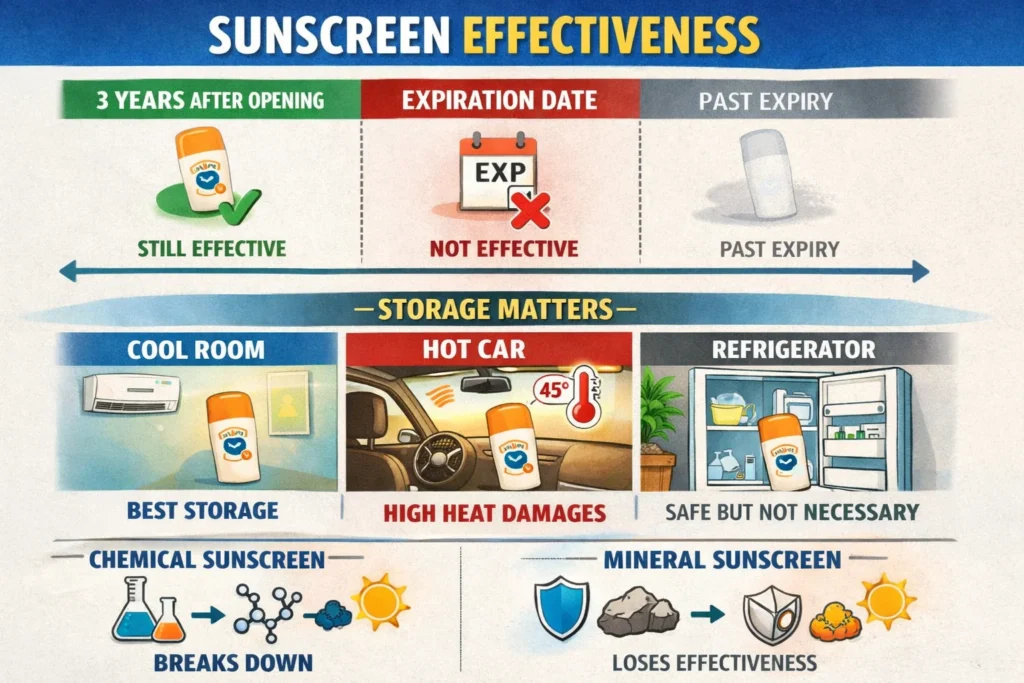
According to FDA regulations, sunscreens are required to stay at their original effectiveness for at least 3 years. The Derma Co. Even if a bottle is half empty, sunscreen that’s within the three-year window will be safe to use as long as it’s been stored properly by Consumer Reports.
Real-world note: Your bottle shouldn’t last that long if you use it. Using about a shot glass worth daily means even a large bottle runs out in less than 3 years.
How long is sunscreen good for after the expiration date?
The Direct Answer: Sunscreen does lose its effectiveness over time, and you need to respect the expiration date. A board-certified dermatologist has seen numerous sunburns on patients who realized too late that their sunscreen had expired. Mustela USA. Do not use it if you have sensitive skin.
What Happens:
- The ingredients in it can go bad or spoil. Chemical sunscreens containing ingredients like oxybenzone and homosalate may start to oxidize, while those with zinc oxide will start to lose potency, according to the Cleveland Clinic.
- The biggest risk of using an expired one is that the ingredients will have lost their effectiveness, increasing the risk of burning. Chemical sunscreens may oxidize, and physical sunscreens may degrade, which could make your skin more sensitive or irritated. Neutrogena.
Can You Use It “Just a Little” Past Expiration?
According to dermatologist Maral K. Skelsey from Georgetown University: “That being said, if it’s a choice between sunscreen that has just passed its expiration date and not using sunscreen, I’d opt for using it.” Physical sun blockers found in mineral sunscreens like zinc oxide or titanium dioxide are more stable than chemical sunscreens, and may be a safer bet if you have to use them past their expiration date, Healthline.
However, the issue is that expired products may not be as effective as labeled, putting you at risk in the short term for sunburn and in the long term for skin cancer and photoaging, according to Healthline.
RED FLAGS (Discard Immediately):
Indicators that your sunscreen may be past its prime include changes in color, consistency, smell, and texture. Even if these changes occur before the expiration date, it’s likely no longer safe to use COOLA.
STORAGE MATTERS:
Sunscreen that’s been exposed to direct sunlight or excessive heat can deteriorate faster. A container stored in your bathroom cabinet is fine. One in your beach bag in the trunk of your car probably isn’t Consumer Reports. Also, it’s best to regularly store it at room temperature (around 77 degrees is considered ideal), but placing it in the fridge for an hour or two before you apply it can give it a refreshing feeling when you slather it on.