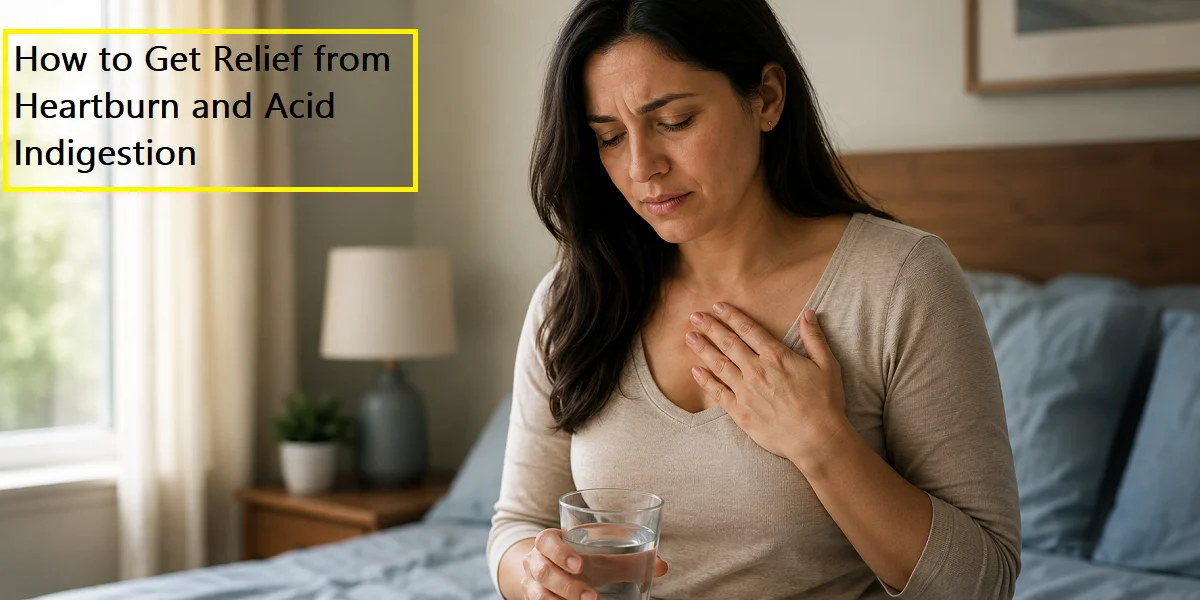
That burning feeling behind your breastbone right after dinner? You’re not imagining it, and you’re definitely not alone. Relief from heartburn and acid indigestion usually comes down to a short list of things you can do right now, plus a few habits that keep it from coming back. Here’s what actually works, based on how the condition happens in the first place.
Heartburn happens when stomach acid pushes up into your esophagus, the tube connecting your mouth to your stomach. A ring of muscle called the lower esophageal sphincter (LES) is supposed to keep that acid where it belongs. When it relaxes at the wrong time, acid escapes upward and burns the lining of your esophagus. That’s the sensation you’re feeling.
The National Institute of Diabetes and Digestive and Kidney Diseases notes that heartburn is also called acid indigestion, and that it’s one of the most common symptoms of gastroesophageal reflux (GER). Almost everyone gets it occasionally. It’s only when it starts happening often that it’s worth paying closer attention to.
What Causes Heartburn and Acid Indigestion?
Most heartburn traces back to one of two things: something you ate, or how your body was positioned after eating it.
Certain foods relax that valve or slow digestion, giving stomach acid more time and more opportunity to travel upward. The usual suspects:
- Fried and fatty foods
- Spicy foods
- Citrus fruits and tomato-based sauces
- Chocolate and peppermint
- Coffee and caffeinated drinks
- Alcohol
- Carbonated beverages
Lying down soon after a meal, eating large portions, being overweight, smoking, and pregnancy can all make things worse too, since each one puts extra pressure on that sphincter or gives acid an easier path upward.
Here’s something worth knowing, though: the American College of Gastroenterology’s own 2022 guidelines recommend avoiding trigger foods, but they also admit there’s surprisingly little solid evidence behind that advice. Some research even links milk consumption to lower rates of nonerosive reflux, the opposite of what most people assume. So if tomatoes have never bothered you, you probably don’t need to cut them out just because they’re on every “avoid” list online.
Fast Relief: What to Do When Heartburn Hits Right Now
If you’re mid-burn and want it gone, these are your quickest options.
Stand up or sit upright. Gravity works in your favor here. Lying down lets acid pool near the top of your stomach, right next to the valve that’s supposed to keep it down. Sitting or standing gives it somewhere else to go.
Take a sip of water. Small sips can help clear acid out of the lower esophagus. Not a full glass, just enough to rinse things down.
Loosen tight clothing. A tight waistband or belt puts pressure on your stomach, which pushes acid upward. Loosen it and give your stomach room.
Reach for an antacid. Products like Tums or Rolaids neutralize stomach acid within minutes, which makes them the fastest option in your medicine cabinet even though they don’t touch the underlying cause of why the acid got up there in the first place.
Try an alginate. These work a little differently: instead of neutralizing acid, they create a physical foam barrier that floats on top of your stomach contents and blocks it from reaching the esophagus at all. You can even layer one with an antacid if a single option isn’t cutting it.
I’ve found that standing up and taking a few slow sips of water handles milder episodes without needing anything from the medicine cabinet at all. It’s not glamorous, but it works more often than people expect.
Home Remedies That May Help
Beyond the in-the-moment fixes, a handful of home remedies show up again and again in both clinical guidance and common practice. None of these are cures, and none work identically for everyone, but they’re worth trying.
Ginger. Ginger has anti-inflammatory properties and has long been used to settle an upset stomach. A cup of ginger tea, or a few slices of fresh ginger steeped in hot water, is a reasonable first move when heartburn is coming on.
Baking soda. Mixing about half a teaspoon of baking soda into a glass of water creates a mild, temporary antacid effect, since baking soda is sodium bicarbonate, the same active ingredient in many over-the-counter products. Don’t make this a daily habit, though. Too much sodium bicarbonate can throw off your body’s acid-base balance.
Nonfat milk. Whole milk can actually make heartburn worse because of its fat content, but nonfat or skim milk may briefly buffer stomach acid. Think of it as short-term relief, not a long-term fix.
Chewing gum. Chewing sugar-free gum after a meal increases saliva production, and that extra saliva helps neutralize acid and clear it from the esophagus faster. Skip mint-flavored gum, though. Peppermint tends to relax that same sphincter, which works against you here.
Apple cider vinegar. This one’s genuinely mixed. Some people swear a teaspoon diluted in water settles their stomach. Others find it makes things worse, since it’s acidic to begin with. If you want to try it, dilute it well and never drink it at full strength. It can irritate an already-sensitive esophagus.
Lemon water with honey. Straight lemon juice is acidic and would seem like the last thing you’d want during a flare-up. But a small amount mixed into warm water, with a spoonful of honey stirred in, is thought to have a mild alkalizing effect once it’s diluted down. Honey also brings some antioxidant properties along for the ride. It’s a gentler option than vinegar if your stomach tends to be sensitive.
Not every remedy on this list will do anything for you specifically, and that’s fine. Heartburn triggers and relief methods vary a surprising amount from person to person, so a little trial and error is normal. Keep a rough note of what you tried and whether it helped. After a few flare-ups, a pattern usually starts to show up on its own.
Lifestyle Changes for Long-Term Relief
If heartburn keeps coming back, prevention matters more than any single remedy. These changes address the underlying valve problem directly instead of just calming a symptom after it starts.
- Eat smaller meals, more often. A stomach that’s less full puts less pressure on the LES.
- Stop eating two to three hours before bed. Give your stomach real time to empty before you lie down.
- Elevate the head of your bed by 6 to 8 inches. Use a wedge or blocks under the bedposts, not extra pillows, since pillows alone can bend your body in a way that increases abdominal pressure instead of reducing it.
- Sleep on your left side. This position may keep the stomach lower than the esophagus, making reflux less likely overnight.
- Work toward a healthy weight. Extra abdominal weight is one of the most consistent risk factors for frequent reflux.
- Wear looser clothing, especially around your waist.
- Cut back on smoking and alcohol. Both relax that valve directly, undoing a lot of the other work on this list.
None of these fix heartburn overnight. But give them a few weeks and most people notice a real difference in how often symptoms show up at all.
When to See a Doctor
Occasional heartburn, even a few times a month, usually isn’t something to worry about. But there’s a line where self-care stops being enough.
Talk to a doctor if:
- You’re getting heartburn two or more times a week
- Over-the-counter antacids aren’t helping anymore, or you’re needing them daily
- You have trouble swallowing, or swallowing hurts
- You’re losing weight without trying
- You notice blood in vomit or stool, or your stool looks black
- You’re 60 or older, and heartburn is new for you
Frequent, untreated reflux can point to gastroesophageal reflux disease (GERD), a chronic condition that, over time, can damage the esophagus and in rare cases lead to complications like Barrett’s esophagus. That’s not meant to scare you. It’s meant to explain why “just live with it” isn’t always the right call once heartburn becomes a regular guest instead of an occasional visitor.
A doctor might recommend an H2 blocker or a proton pump inhibitor (PPI) if lifestyle changes and antacids aren’t cutting it. These reduce how much acid your stomach produces in the first place, rather than just neutralizing it after the fact. PPIs tend to be the stronger of the two and are generally better at healing esophagus damage that’s already occurred, while H2 blockers work faster and are often used for on-demand relief. Both are more effective for frequent symptoms than antacids alone, but they’re also a bigger commitment than grabbing a Tums, so they’re worth discussing with a doctor rather than self-prescribing long term.
If your symptoms don’t clear up with medication, or your doctor wants a clearer picture of what’s happening, they may suggest a closer look. An upper endoscopy lets a gastroenterologist examine your esophagus directly with a thin camera, usually while you’re sedated. An esophageal pH test measures how much acid is actually reaching your esophagus over a full day. Neither is anyone’s idea of a fun afternoon, but they give a doctor real data instead of guesswork, and that usually means a treatment plan that’s built around what’s actually happening in your body rather than a generic starting point.
Conclusion
Relief from heartburn and acid indigestion almost always starts with the basics: sit up, sip some water, reach for an antacid if you need to. From there, home remedies like ginger tea or a diluted dose of baking soda can help in the moment, while smaller meals, an elevated bed, and cutting back on trigger foods reduce how often you deal with it at all.
Most heartburn responds well to this kind of layered approach. But if it’s showing up two or more times a week, or you’re noticing warning signs like trouble swallowing or unexplained weight loss, that’s your cue to loop in a doctor rather than keep managing it solo. Your esophagus will thank you either way.
Sources referenced:
- National Institute of Diabetes and Digestive and Kidney Diseases (NIDDK), “Definition & Facts for GER & GERD”
- American College of Gastroenterology, 2022 GERD diagnosis and management guidelines