If you’ve come across the word Cumhuritey while reading about Turkey, you’ve run into one of the most loaded terms in modern Turkish history. It simply means “republic” in Turkish, but the word carries the weight of an entire national transformation. In 1923, it marked the end of six centuries of Ottoman rule and the birth of a new country built on a genuinely different idea, that sovereignty belongs to the people, not to a sultan.
This piece walks through where the word comes from, how the republic actually came to exist, and why October 29 still matters to millions of people every year.
What Does Cumhuritey Actually Mean?
Cumhuritey comes from the Arabic word “cumhur,” meaning the public or the people at large. Add the Turkish suffix “-iyet” and you get, roughly, “the state of the people governing themselves.” It’s the direct Turkish equivalent of the Latin-derived “republic,” the same root that gives English and French their own versions of the word.
That’s not a small detail. Before 1923, Turkey didn’t have a word in common use for this concept, because it hadn’t needed one. The Ottoman Empire ran on inherited authority. A sultan ruled, and his son ruled after him. Cumhuriyet introduced a different logic entirely. Leaders would be chosen, not born into the job.
From Empire to Republic: How It Happened
The empire didn’t collapse quietly. After World War I, Allied powers occupied large parts of Anatolia, and the 1920 Treaty of Sevres would have carved up what remained of Ottoman territory. Most Turks saw it as a national humiliation, not a peace deal.
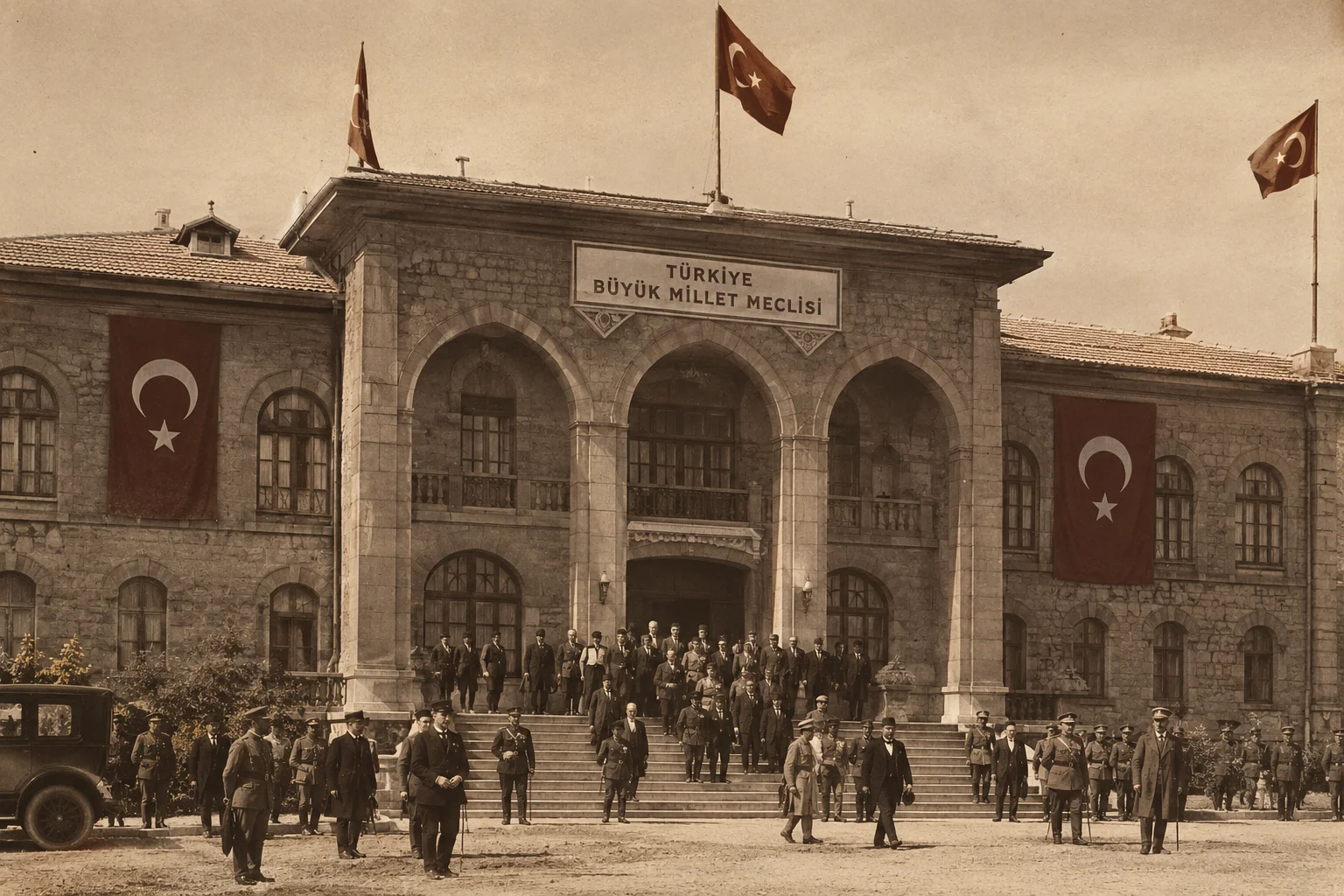
Mustafa Kemal, a general who’d earned his reputation defending Gallipoli, resigned his Ottoman military post in 1919 and started organizing resistance from the inside out. By April 1920, he’d convened a new parliament in Ankara, the Grand National Assembly. That assembly, not the sultan’s government in Istanbul, became the real center of Turkish political power over the next few years, even though nobody outside Turkey had formally recognized it yet.
What followed was four hard years of fighting, known today as the Turkish War of Independence. By its end, occupying forces had withdrawn from Anatolia and eastern Thrace, and the old monarchy was finished for good. The sultanate had already been formally abolished a year earlier, in November 1922, closing out roughly 600 years of Ottoman rule.
The Treaty That Made It Official
Winning a war is one thing. Getting the rest of the world to recognize your new borders is another. That’s where the Treaty of Lausanne comes in, and it’s worth understanding, because a lot of people skip straight to “Ataturk declared a republic” without asking what made that declaration hold up internationally.
Signed on July 24, 1923, in Lausanne, Switzerland, the treaty settled the Anatolian and Thracian portions of the old Ottoman partition and cancelled the earlier, far harsher Treaty of Sevres. It’s genuinely hard to overstate how different this outcome was from what the Allies had originally planned for Ottoman territory just three years before. The new nation that emerged became the first officially secular, Muslim-majority state in the world.
Three months after that treaty was signed, on October 29, 1923, the Grand National Assembly formally proclaimed the Republic of Turkey. Mustafa Kemal, later given the surname Ataturk, meaning “Father of the Turks,” became its first president. The night before, he reportedly told fellow parliamentarians something close to “tomorrow we will proclaim the republic.” That’s exactly what happened.
Why Ankara, Not Istanbul?
Here’s a detail that surprises people who only know Istanbul as Turkey’s famous city: it was never made the capital of the new republic. Ankara was.
That wasn’t an oversight. Istanbul carried Ottoman associations the new government was actively trying to move away from. Ankara, a smaller and more central Anatolian city, had also been the actual seat of the resistance movement and the Grand National Assembly since 1920. Naming it the capital was a statement in itself. This republic was starting fresh, geographically and symbolically.
Cumhuritey Bayrami: The Holiday, Not Just the History
If you’re in Turkey on October 29, you’ll notice it immediately. Flags go up everywhere. Fireworks light up cities from Istanbul to small Anatolian towns. Schools put on plays. This is Cumhuritey Bayrami, or Republic Day, and the celebration doesn’t last a single day. It traditionally begins at 1:00 pm on October 28 and runs for 35 hours straight.
I didn’t fully grasp the scale of this holiday until I saw footage of the wreath-laying ceremony at Anitkabir, Ataturk’s mausoleum in Ankara, where sitting presidents and rival opposition leaders show up together every single year. Politics in Turkey can be sharply divided on almost everything else. Republic Day tends to be one of the rare exceptions.
Why This Still Matters Today
A century later, Cumhuritey isn’t just a history lesson. It’s shorthand for a set of values Turkish civic life still argues over constantly: secularism, national sovereignty, and a break from inherited rule. Debates about the country’s direction, whether over religion’s role in public life or the balance of power between institutions, often circle back to what the founders of 1923 actually meant by the word.
That’s probably the most useful thing to take away here. Cumhuriyet isn’t only a translation exercise or a date on a calendar. It’s a specific historical decision, made by a specific group of people in a specific year, about how a country should be run. Whether that decision has fully delivered on its promise is still, honestly, a live argument in Turkey today.
Read more blogs here.
Conclusion
Cumhuritey means “republic,” but in the Turkish context it means far more than a dictionary entry suggests. It represents the end of Ottoman monarchy, the international recognition secured through the Treaty of Lausanne, and a founding vision built around popular sovereignty instead of inherited power. Understanding the word means understanding October 29, 1923: the Grand National Assembly’s declaration, and Ataturk’s role in shaping everything that came after. If you want to go deeper, the Turkish War of Independence and Ataturk’s later reforms are the natural next places to look. Together, they explain how a single word became a nation.