Post written and reviewed by Dr. Saleem Qaiser.
Diarrhea is one of the most common reasons pet parents book an unplanned vet visit, and in a lot of cases it clears up with nothing more than a few days of gentle care at home.
This guide covers what vets most often recommend for mild, short-term diarrhea in an otherwise healthy adult dog, what to specifically avoid (including two over-the-counter medications that can make things worse), and the signs that mean it’s time to stop trying home care and call your vet. If your dog is a puppy, a senior, or already managing a health condition, jump to that section before trying anything below.
Quick gut check: If your dog is bright, still eating and drinking, and this is a single bout of soft or loose stool, home care is usually reasonable to try. Skip straight to the vet if you notice blood, black or tar-like stool, repeated vomiting, or a dog who seems weak, painful, or uninterested in food and water. More detail on this further down.
What Actually Helps
Give the Gut a Short Break
Some vets recommend withholding food, though never water, for somewhere between 6 and 24 hours when diarrhea first starts.
The idea is simple: less material moving through an already irritated gut gives the intestinal lining a chance to calm down.
That said, this isn’t universal advice anymore. Some newer guidance skips the fast entirely and moves straight to a bland diet, especially since going too long without food isn’t a great idea for puppies, toy breeds, diabetic dogs, or seniors. All of them can develop low blood sugar faster than you’d expect. If your dog fits any of those categories, check with your vet before withholding meals at all.
Switch to a Bland Diet
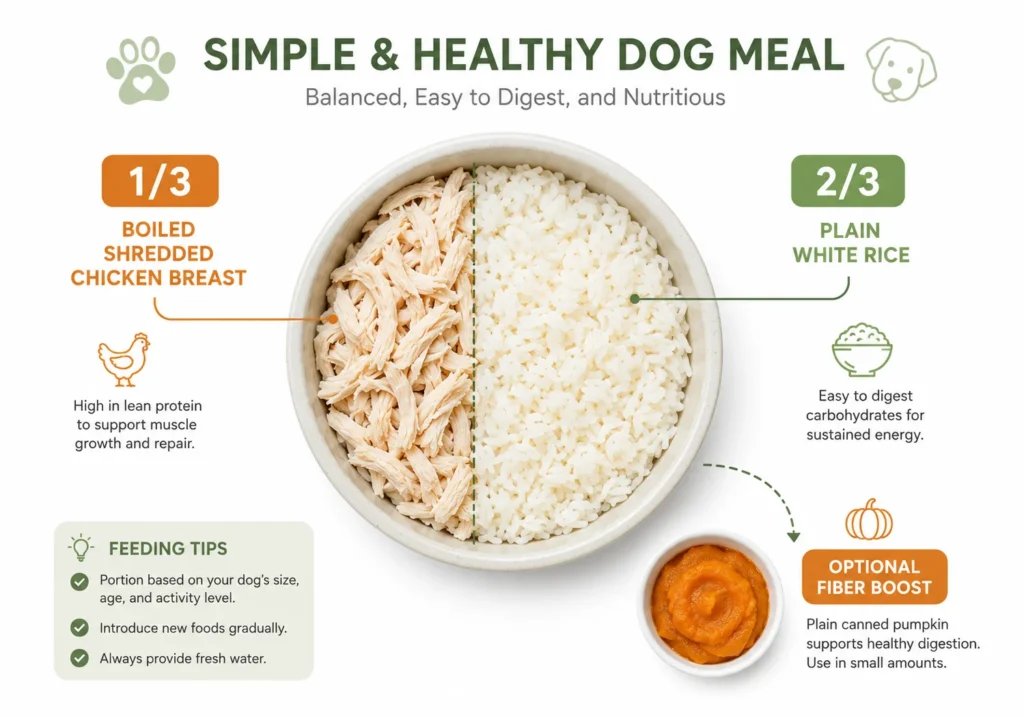
This is the closest thing to a universal recommendation you’ll find. Boiled, skinless chicken breast (or lean ground turkey or beef) mixed with plain white rice, with no salt, butter, or seasoning, is easy to digest and gives the gut less work to do. Vets differ on the exact ratio, anywhere from equal parts rice and protein to twice as much rice as protein, and it genuinely doesn’t seem to matter much which one you land on.
Boil, bake, or steam the meat rather than frying it. Fat is the real culprit here, not the meat itself, and greasy food can trigger pancreatitis on top of an already upset stomach.
Feed small amounts, roughly 2 tablespoons per 10 pounds of body weight, every 3 to 4 hours for the first day. If things are improving, gradually increase the portion size and stretch out the time between meals over the next few days. Most adult dogs shouldn’t stay on a bland diet for more than about a week, since it isn’t nutritionally complete on its own, and puppies should be back on regular food within 2 to 3 days.
Add Canned Pumpkin
Plain canned pumpkin, not pumpkin pie filling, shows up in nearly every vet’s home care list for a reason. Its soluble fiber absorbs excess water in the gut and helps firm up loose stool. A spoonful for a small dog and up to a few tablespoons for a larger one, mixed into the bland diet, is a reasonable amount.
Try a Dog-Specific Probiotic
Probiotics reintroduce helpful bacteria into a gut that diarrhea has thrown off balance, and there’s real research behind their ability to shorten a bout of it. Products made specifically for dogs are the better choice. Plain yogurt with live active cultures works in a pinch, but keep it to a tablespoon or two. Too much dairy tends to backfire, since plenty of adult dogs don’t tolerate it well.
Offer Bone Broth
A little plain, unsalted bone broth (chicken or beef, no onion or garlic) stirred into water can encourage a dog who’s gone off drinking to take in more fluid, and that matters more than almost anything else on this list. Dehydration, not the diarrhea itself, is usually what turns a mild case into a genuinely worrying one.
Consider a Fiber Supplement
Psyllium husk and slippery elm bark both show up regularly in vet recommendations for firming up stool, and both work by forming a soothing, gel-like coating in the gut. Dosing depends on your dog’s weight and the specific product, and different sources give different numbers here, so follow the label or ask your vet rather than guessing. More isn’t better.
What NOT to Give Your Dog
Two over-the-counter human medications come up constantly in searches for dog diarrhea remedies, and both deserve a hard pass without your vet’s direct sign-off:
- Imodium (loperamide). It works by slowing down the gut, which sounds helpful until you remember that diarrhea is sometimes the body’s way of clearing out something harmful: a toxin, bacteria, or even a partial blockage. Slowing that process down can make things considerably worse. Certain herding breeds, including Collies and Australian Shepherds, also carry a gene mutation (MDR1) that makes them unusually sensitive to this drug.
- Pepto-Bismol and Kaopectate. Both contain bismuth subsalicylate, which is chemically related to aspirin and can be toxic to dogs at the wrong dose. It also turns stool black, which can hide the very symptom (bleeding) you’d want to catch early.
Beyond those two, it’s worth steering clear of dairy in large amounts, fatty table scraps, anything heavily seasoned, and antibiotics your vet hasn’t specifically prescribed for this episode. Unneeded antibiotics can prolong diarrhea by wiping out good gut bacteria along with the bad.
Puppies, Seniors, and Dogs With Health Conditions
Everything above assumes an adult dog who’s otherwise healthy. Puppies, senior dogs, and dogs managing something like diabetes, kidney disease, or inflammatory bowel disease deserve a lower threshold for calling the vet, not a higher one.
Young puppies dehydrate fast and are more likely to have a cause that genuinely needs treatment, like parvovirus or a parasite such as giardia, rather than something that resolves with rice and patience. If your puppy has diarrhea, a same-day call to your vet is the safer default, even if they still seem playful and hungry.
When to Call the Vet
Contact your vet if you notice any of the following:
- Blood in the stool, or stool that looks black and tarry
- Vomiting alongside the diarrhea
- Lethargy, weakness, or a dog who seems painful
- No interest in food for more than 24 hours, or no interest in water at all
- Signs of dehydration: dry or tacky gums, sunken eyes, or skin that’s slow to bounce back when gently pinched
- Known or suspected ingestion of a toxin, medication, or foreign object like a toy or sock
- Diarrhea that hasn’t improved after 2 to 3 days of home care
- A bloated or visibly painful abdomen
Any one of these is reason enough to stop trying home remedies and get your dog seen. Black, tarry stool in particular is treated as an emergency by every major veterinary source, since it usually signals bleeding higher up in the digestive tract.
Read related blog post: Can your dog eat saltine crackers?
Can I give my dog Pepto-Bismol or Imodium?
Not without talking to your vet first. Both can mask serious problems or worsen certain causes of diarrhea, and Imodium carries extra risk for herding breeds with the MDR1 gene mutation.
How long should I try home remedies before calling the vet?
Most vets give it 2 to 3 days, provided your dog is otherwise eating, drinking, and acting normally. Puppies and seniors warrant a call sooner.
Should I withhold food from my dog with diarrhea?
It depends on the dog. A short fast of several hours can help healthy adults, but puppies, small breeds, seniors, and diabetic dogs shouldn’t go without food for long. When in doubt, skip the fast and go straight to a bland diet.
Is pumpkin or rice better for diarrhea?
They do different jobs. Rice, paired with lean protein, is the bland, easy-to-digest base of the diet. Pumpkin adds soluble fiber that helps firm up the stool. Most vets recommend using both together rather than picking one.
Can I give my dog plain yogurt?
In small amounts, yes, a tablespoon or two mixed into food. Look for plain yogurt with live active cultures and skip anything with added sugar or artificial sweeteners like xylitol, which is toxic to dogs.
Can stress cause diarrhea in dogs?
Yes. Boarding, travel, new pets or people in the house, and even a change in your schedule can upset a dog’s gut just as easily as a change in food can.
What color of dog poop is an emergency?
Black, tarry stool (sometimes described as looking like coffee grounds) points to digested blood and needs same-day veterinary attention. Bright red streaks can happen with minor irritation but are still worth mentioning to your vet.