Most people who search for animal health probiotics are looking for a supplement they can buy off a shelf. BioMatrix International isn’t that. It’s a feed-additive manufacturer in Princeton, Minnesota, supplying probiotics and related natural ingredients to the agricultural industry itself, the companies and producers who put feed in front of livestock and pets in the first place. That distinction matters, and it’s worth understanding before looking at what the company actually does.
Who BioMatrix International Is
BioMatrix International was founded in 1997 by Dr. Guy William Miller, who holds a PhD in anaerobic microbiology from Kansas State University. The company describes itself as focused on natural technologies within the agricultural feed additive industry, and its product range covers coated essential oils, prebiotics, patented beta glucan and vitamin C combinations, Omega-3 additives, and protected probiotics. It serves five species categories: swine, poultry, beef, dairy, and companion animals.
The company runs production out of a 14,200-square-foot facility, and its probiotic technology centers on a proprietary microbial coating process it calls Durabac. That coating exists to solve a specific, unglamorous problem: live bacteria don’t survive feed manufacturing well on their own. Heat, pressure, and moisture during processing kill off a meaningful share of unprotected probiotic strains before the product ever reaches an animal. A coated, protected probiotic is built to survive that journey.
Real Research, Not Just Marketing Claims
Here’s something that separates BioMatrix from a lot of companies in this space: it has actually funded independent, third-party research on one of its probiotic applications, and the results are documented, not just described in marketing copy.
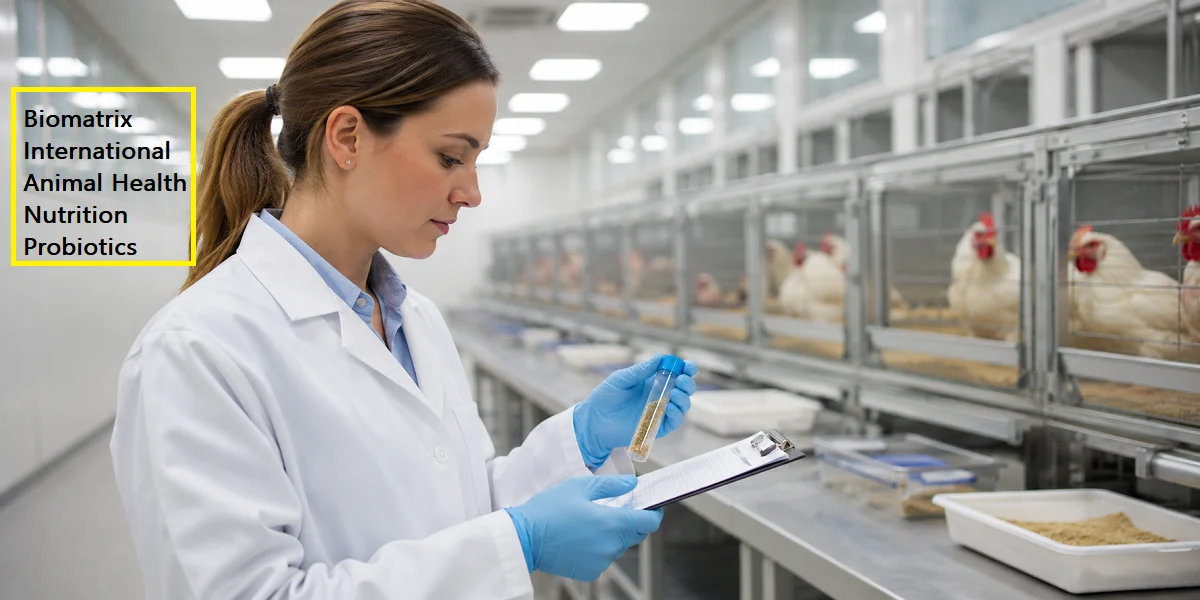
Researchers at Mississippi State University’s Poultry Research Unit, working with Dr. Li Zhang and North Carolina State’s Dr. Aaron Kiess, ran a study on whether a Bacillus-based probiotic could reduce Salmonella Enteritidis colonization in laying hens. This isn’t a minor concern. Salmonella doesn’t typically sicken the hens themselves, but it colonizes their intestinal tract and gets shed in feces, creating a foodborne illness risk for the humans who eventually eat the eggs. The 21-day trial, run at Mississippi State’s Animal Biosafety Level-2 facility, randomized hens into a control group and two groups given different levels of the probiotic, then tracked colonization through weekly sampling. The study was funded by BioMatrix International.
What the Study Doesn’t Claim
That’s a genuinely different thing from a company simply asserting its product works. It’s a controlled trial with named academic researchers, run at an actual biosafety facility, on a specific and measurable outcome. It’s also honest to note what the research doesn’t claim.
The lead researcher on the project, Dr. Anuraj Adhikari, was clear that no single feed additive is a complete solution on its own. Housing conditions, hen age, breed, and how long the probiotic stays effective once it’s in the feed all still matter, and more research is needed to understand those variables fully. That kind of caveat, coming from the scientist and not scrubbed out of the reporting, is worth more than a confident marketing line would be.
Why the Broader Category Works
BioMatrix’s approach fits into a well-established shift in animal agriculture. For years, producers used low-dose antibiotics to promote growth in livestock. That practice has been restricted across most major markets because of antimicrobial resistance concerns, and the industry needed something to fill the gap. Probiotics became one of the primary answers.
A 2025 review in the journal Animals, focused specifically on probiotic applications in livestock and companion animals, found that probiotics work by enhancing gut health, modulating the immune system, and suppressing pathogens. Researchers linked this to improved feed conversion ratios and reduced antibiotic dependence, along with a reduction in methane emissions. In practical terms, a stable gut microbiome means an animal gets more nutritional value out of the same amount of feed, deals with fewer digestive illnesses, and needs fewer antibiotics to stay healthy.
A separate 2025 review, published in Veterinary Research Communications and covering cattle, pigs, poultry, sheep, and goats, reached a similar conclusion. The researchers found that probiotic, prebiotic, and synbiotic supplementation improved milk yield, weight gain, immune function, and meat and egg quality, while also reducing disease incidence and improving nutrient absorption across the species studied. That’s a wide spread of measurable outcomes for something as simple, on paper, as adding live bacteria to feed.
Where Species-Specific Details Matter
Not every application looks the same, and this is where a lot of marketing copy gets vague in ways that don’t help anyone evaluating a supplier.
In poultry specifically, a systematic review in Frontiers in Animal Science confirmed that probiotic supplementation helps promote beneficial bacterial populations, suppress pathogens, and improve nutrient absorption, which in turn improves growth performance. That’s the same mechanism the Mississippi State Salmonella study was testing, just measured through a different lens, pathogen reduction rather than growth metrics.
In dairy cattle, the research picture looks different because the biology is different. A 2025 gut health review noted that probiotics and their associated metabolites have shown efficacy in treating mastitis in dairy cattle and gastrointestinal diseases in calves, two of the more expensive health problems a dairy operation deals with regularly.
For companion animals, BioMatrix’s own materials describe a probiotic blend intended specifically as a topical coating for dry, extruded pet food, a supplemental source of live, viable, naturally occurring microorganisms. That’s a narrower and more specific claim than most consumer-facing pet probiotic marketing makes, and narrower claims are generally easier to trust, since they’re not trying to cover every possible benefit at once.
What to Actually Ask a Feed-Additive Supplier
If you’re evaluating a company like BioMatrix, or comparing it against another supplier, the coating or protection technology is the first thing worth asking about. An unprotected probiotic added to feed can lose most of its viability before it ever reaches an animal, which makes the delivery method just as important as the bacterial strain itself.
It’s also worth asking what independent research exists, and specifically whether that research was conducted by outside academics or purely in-house. The Mississippi State study is a strong example of the former, funded by BioMatrix but designed and run by university researchers with their own credentials on the line. Not every claim in this industry has that kind of backing, and it’s a fair question to ask directly.
One honest limitation is worth naming: the Salmonella study covers one specific product application in laying hens, not the company’s full product line. A result in poultry doesn’t automatically transfer to swine or dairy applications, since the biology, the pathogens of concern, and the delivery mechanism can all differ by species. That’s not a knock against BioMatrix specifically. It’s just how this research actually works, and any supplier claiming otherwise is oversimplifying.
Also read our latest blog:
- Jamie Lovejoy Arrested After Dog Left Outside Sustained Frostbite
- What Home Remedy Can I Give My Dog For diarrhea
Bottom Line
BioMatrix International occupies a specific role in animal agriculture: manufacturing feed additives, including coated probiotics, for producers who need measurable improvements in gut health, disease resistance, and antibiotic reliance. What sets it apart from a purely marketing-driven supplement brand is that at least one of its applications, a Bacillus-based probiotic tested against Salmonella in laying hens, has been through an actual university-run trial with named researchers and documented methodology.
The broader science supports the category. Across pigs, poultry, and cattle, recent peer-reviewed research consistently links probiotic supplementation to better gut health, stronger immune function, and reduced antibiotic use. Whether that holds for any single supplier’s specific product is a narrower question, and the Mississippi State research gives BioMatrix a genuine, checkable answer for at least one of its applications, which is more than most companies in this space can offer.