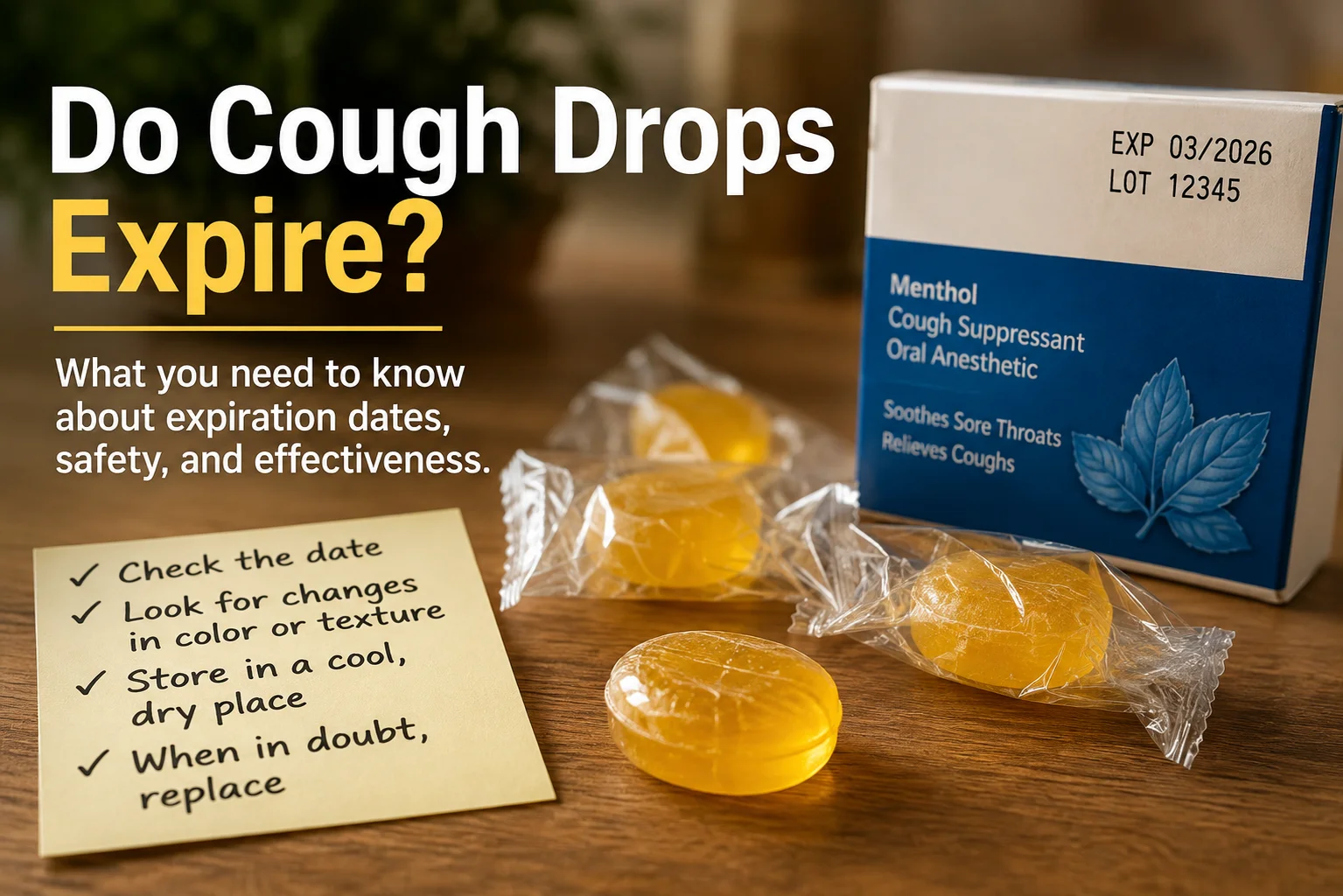
Yes, cough drops expire. Every box comes stamped with a date, and once you pass it, the drop probably won’t hurt you, but there’s a decent chance it won’t do much for your throat either.
That’s really the whole story in one sentence. The rest is just the details worth knowing before you pop one from a bag that’s been sitting in your junk drawer since last winter.
Why do cough drops have an expiration date at all?
Cough drops are regulated as over-the-counter drugs in the US, and the FDA has required an expiration date on both prescription and OTC medicine since 1979. Manufacturers run stability tests, exposing the product to heat, light, and humidity, then use the results to set a date through which they’ll guarantee the drop still meets its original standards for strength and quality. Once that date passes, that guarantee just… stops. It’s not a cliff. It’s more like a warranty running out.
Most cough drops carry a date somewhere between one and two years from manufacture. That’s shorter than some pills, mostly because the active ingredients (menthol especially) are volatile. They evaporate and break down faster than, say, a compressed tablet sitting in a sealed bottle.
What actually happens after the date passes
Here’s the honest answer: probably not much. The main active ingredients in cough drops, things like menthol, benzocaine, dextromethorphan, or pectin, slowly lose potency as they age. You won’t taste a dramatic difference at first. But the cooling numbness or the throat-soothing effect gets weaker, and eventually it’s more or less gone.
I’ll be direct about something a lot of articles dance around: eating one expired cough drop is very unlikely to make you sick. These aren’t liquid medications, which can grow bacteria once opened. They’re solid, mostly sugar-based lozenges, and there’s no strong evidence they turn dangerous the day after the date on the wrapper. The FDA’s general guidance is still to avoid all expired medicine, and that’s the safest official line to follow, but the actual risk profile for a lozenge is nowhere near that of something like insulin or an antibiotic, where losing potency can be genuinely dangerous.
So the real cost of an expired cough drop isn’t usually safety. It’s that it might just… not work.
Signs your cough drops have gone bad (regardless of the date)
The printed date matters less than how the drops actually look and feel. Toss them if you notice:
- Stickiness or fusing together inside the wrapper or bag
- Crystallization or a cloudy, grainy surface (sugar “blooming”)
- A stale or off smell, especially with menthol or herbal flavors
- Discoloration, or a texture that’s gone soft, hard, or crumbly
- Any sign of mold, which is rare but not impossible with humidity exposure
If a bag of drops shows any of that, don’t try to salvage them for the sake of a few cents. It’s not worth it.
How to make cough drops last longer
Storage does more for shelf life than most people assume. Keep them cool and dry (a pantry beats a bathroom cabinet, which traps humidity every time someone showers), away from direct sunlight and heat (a hot car in summer is about the worst spot), and sealed in their original packaging. Individually wrapped drops hold up better than loose ones dumped into a jar, since each wrapper acts as its own barrier against air and moisture.
Do that consistently and a lozenge can often hold its potency right up to the printed date, sometimes a bit past it.
When you shouldn’t risk it
Skip the expired drop and grab a new pack if you’re treating a child or someone with a chronic condition like asthma or diabetes, if the sore throat has lasted more than two days or comes with fever, rash, or swelling (worth a doctor’s visit regardless), or if the drops show any physical signs of degradation from the list above.
Otherwise, don’t panic-check every lozenge. For a healthy adult with an ordinary scratchy throat, a cough drop a few months past its date is a low-stakes call, just don’t expect miracles from it.
Our latest blog: Benefits of Cayenne Pepper.
Conclusion
Cough drops do expire, and the date on the package is there for a real reason: it’s when the manufacturer stops guaranteeing full strength. Past that point, the bigger risk is usually a lozenge that just doesn’t soothe your throat the way it used to, not one that’s suddenly unsafe. Store them somewhere cool and dry, watch for stickiness or a stale smell more than the date itself, and when in doubt, especially for kids or anyone with an underlying health condition, reach for a fresh pack instead.