
If you’ve searched “GLP-3” recently, you’ve probably landed in the middle of a naming argument. Here’s the short version: GLP-3 isn’t a real hormone, and there’s no such thing as a GLP-3 receptor in the human body. The term is internet shorthand for retatrutide, an experimental weight-loss drug from Eli Lilly that’s still working its way through clinical trials. It hasn’t been approved by the FDA. Anyone selling you “GLP-3” today is selling you something outside the law.
That mix-up matters. People are already buying unregulated “GLP-3 peptides” online, sometimes through encrypted apps like Telegram, hoping to get ahead of an approval that hasn’t happened yet. This guide sorts out what the term actually refers to, what the trial data shows so far, and why the naming confusion carries real risk.
Where the Name “GLP-3” Comes From
Your gut naturally produces two glucagon-like peptides: GLP-1 and GLP-2. That’s the complete list in humans. There’s no GLP-3 hormone waiting to be discovered, and no receptor for one either.
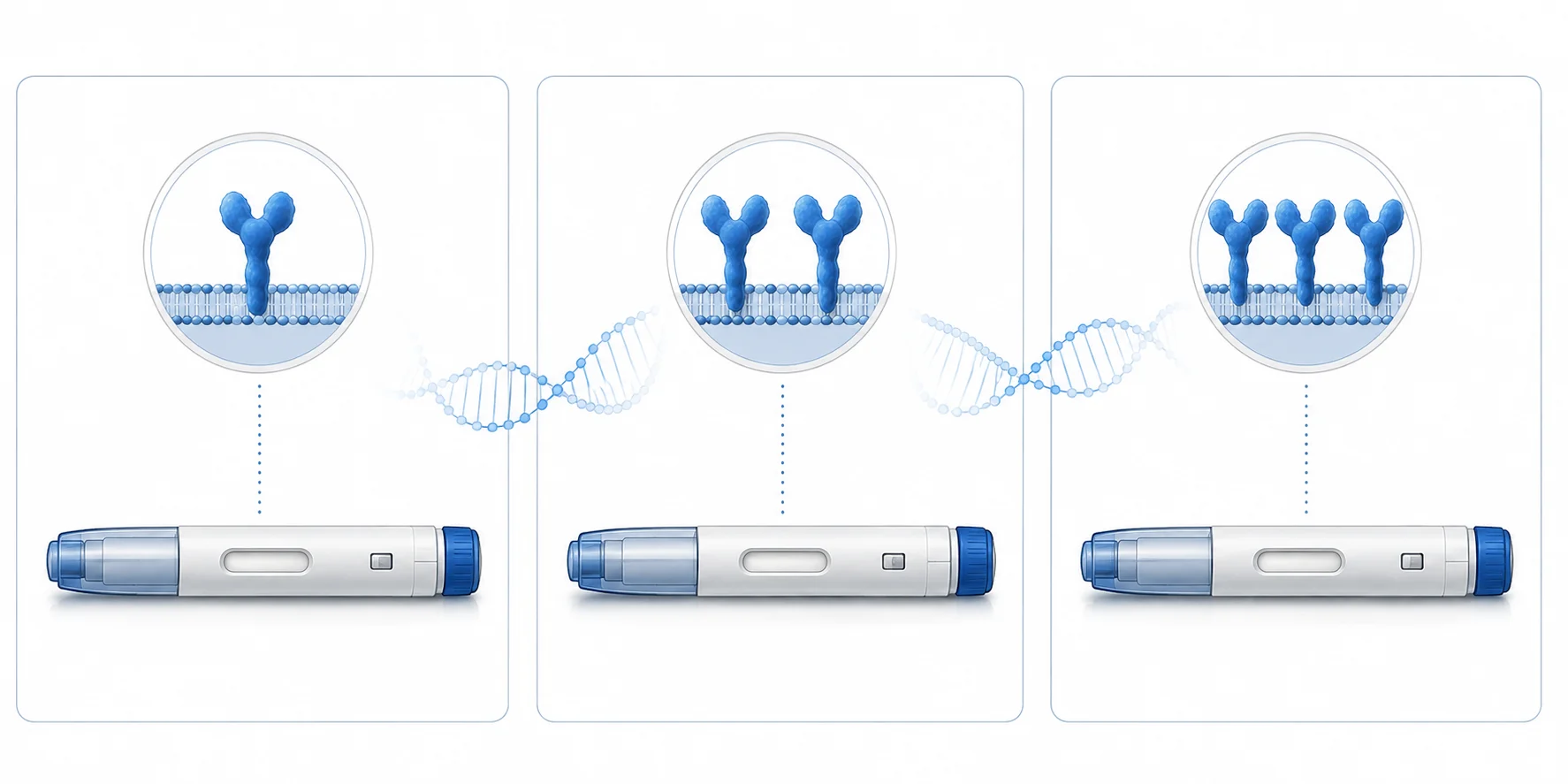
So why does everyone keep saying it? Retatrutide activates three separate hormone receptors at once: GLP-1, GIP (glucose-dependent insulinotropic polypeptide), and glucagon. Journalists and social media users started calling it “GLP-3” because it seemed like a natural next step after GLP-1 drugs (Ozempic, Wegovy) and dual-agonist drugs like tirzepatide (Mounjaro, Zepbound). The logic reads like a sequel title, but it’s not how the science actually works.
Clinicians and researchers use a different label: triple agonist, or sometimes “triple-G.” You won’t find “GLP-3” in Eli Lilly’s regulatory filings, in peer-reviewed journals, or anywhere in FDA paperwork. Drugs.com’s clinical reference confirms this directly: retatrutide activates three separate hormone receptors, and it remains investigational with no FDA-approved uses of any kind.
Retatrutide: The Drug Behind the Nickname
Retatrutide (development code LY3437943) is a once-weekly injectable peptide developed by Eli Lilly, the same company behind Mounjaro and Zepbound. Instead of targeting one metabolic pathway, it hits three:
- GLP-1 receptor: slows digestion, curbs appetite, supports insulin release
- GIP receptor: boosts insulin secretion and helps regulate blood sugar
- Glucagon receptor: increases how much energy the body burns and helps break down stored fat
Adding that third target is the whole point. Existing GLP-1 drugs work well, but they mostly leave the calorie-burning side of the equation alone. Retatrutide tries to attack the problem from both directions: less hunger, more energy expenditure.
A peer-reviewed review published in Current Cardiovascular Risk Reports found that participants with obesity lost close to a quarter of their body weight on average after 48 weeks on the highest dose, with a separate group of participants who had type 2 diabetes losing nearly 17% over 36 weeks. Both groups also saw meaningful improvements in blood pressure, cholesterol, and liver fat. Later Phase 3 readouts have pushed those numbers even higher in some dosing groups, with some trial participants losing close to 30% of their body weight over roughly a year and a half. For comparison, that’s a bigger drop than most people see from semaglutide (Wegovy) and larger than what’s typically reported with tirzepatide.
None of this means retatrutide is safer, better tolerated, or guaranteed to reach the market. It means the early numbers are strong enough that a lot of people are paying close attention, some for the wrong reasons.
Where Retatrutide Stands With the FDA Right Now
This is the part that gets lost in the hype: retatrutide is not approved. It’s not legal to prescribe, compound, or sell outside of a registered clinical trial.
Here’s where things actually stand as of mid-2026:
- Retatrutide is deep into its Phase 3 program, known as TRIUMPH, covering obesity, type 2 diabetes, cardiovascular risk, sleep apnea, and several other conditions.
- Multiple TRIUMPH trials have reported topline results throughout 2026, each one adding more safety and efficacy data to the file.
- Eli Lilly has said it intends to submit a Biologics License Application to the FDA in the first quarter of 2027.
- Standard FDA review timelines run roughly ten months after a submission like that, which puts realistic approval somewhere in late 2027 at the earliest.
According to Drugs.com’s clinical reference on the drug, retatrutide is currently limited to registered clinical trial participants. It cannot be legally purchased, prescribed, or compounded anywhere else, and any product marketed under that name outside a trial should be treated as illegitimate and potentially unsafe.
That last point is worth sitting with. Products marketed as “GLP-3,” “reta,” or “retatrutide peptide” on gray-market websites aren’t tested for purity, correct dosing, or sterility. Some are sourced overseas and shipped without any regulatory oversight at all. Self-injecting an unverified compound carries risks that go well beyond nausea and stomach upset, the more familiar GLP-1 side effects.
GLP-1 vs. Tirzepatide vs. Retatrutide: How They Actually Differ
It helps to line these up side by side, since the naming makes them sound more different than they are.
| Drug (brand) | Receptors targeted | FDA status |
|---|---|---|
| Semaglutide (Ozempic, Wegovy) | GLP-1 only | Approved |
| Tirzepatide (Mounjaro, Zepbound) | GLP-1 + GIP | Approved |
| Retatrutide (“GLP-3”) | GLP-1 + GIP + glucagon | Investigational, not approved |
Each step up adds a receptor, not a new hormone family. Retatrutide isn’t a “third-generation GLP” in any strict scientific sense. It’s a single molecule engineered to activate three existing, well-understood receptor systems at once.
Side Effects Reported So Far
Because retatrutide works through the same core pathways as approved GLP-1 drugs, its side-effect pattern looks familiar. Trial participants most commonly reported:
- Nausea
- Diarrhea
- Vomiting
- Constipation
These effects tend to show up early in treatment and often ease as the body adjusts to the medication. A small percentage of participants also reported dysesthesia, a burning or tingling sensation, along with modest increases in resting heart rate. Researchers studying the drug describe the overall safety profile as broadly consistent with other approved incretin-based medicines, though full long-term data is still being collected. Because retatrutide hasn’t finished the approval process, there’s no official prescribing information, no confirmed boxed warnings, and no complete picture of rare or long-term risks.
What This Means If You’re Considering “GLP-3”
If a clinic, website, or social media ad is offering you “GLP-3 shots” today, take that as a warning sign rather than a shortcut. A few practical takeaways:
- There’s no legitimate way to buy retatrutide right now outside of an enrolled clinical trial through a source like ClinicalTrials.gov.
- Approved alternatives already exist. Semaglutide and tirzepatide are FDA-approved, well-studied, and available through licensed providers.
- Gray-market vials carry real risk. Without regulatory testing, you don’t actually know what’s in the syringe.
- A doctor can help you weigh timing. If retatrutide’s trial results have you curious, a conversation with a healthcare provider about your options, including trial enrollment, is a safer path than an unregulated purchase.