
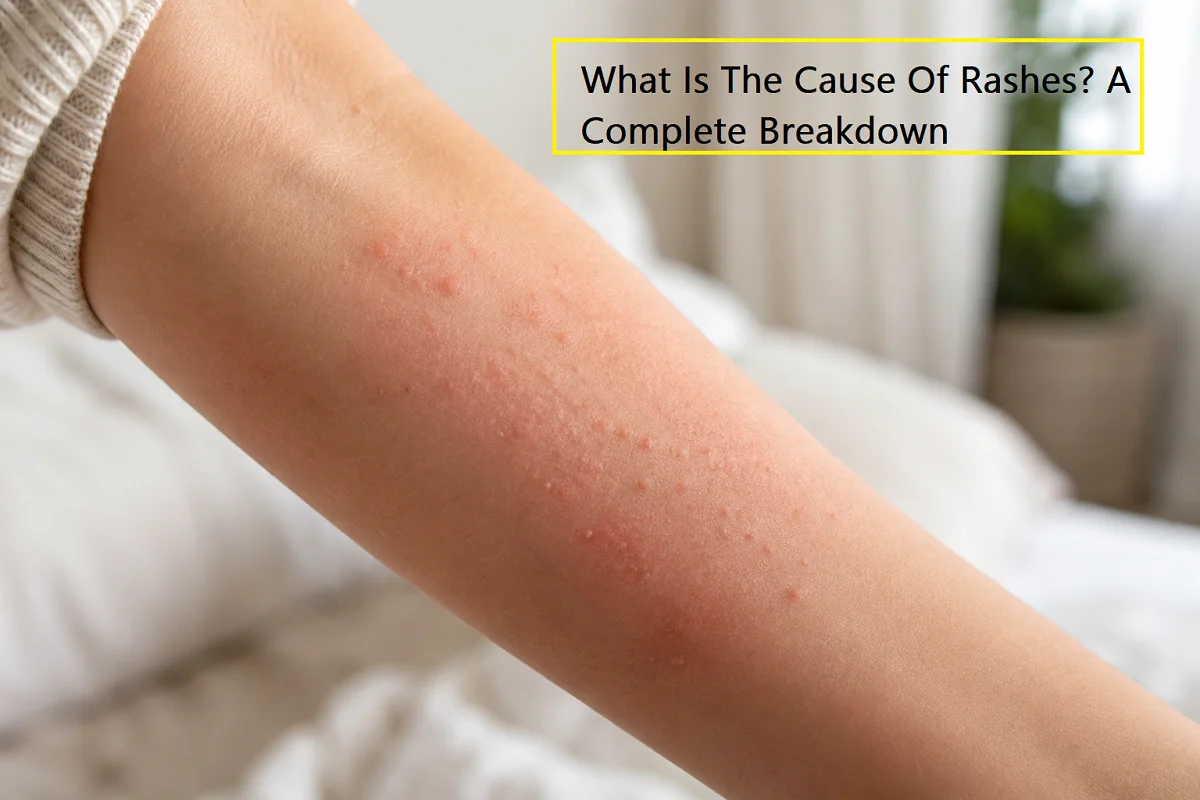
Your skin gets itchy, red, and bumpy, and you have no idea why. That’s the moment most people start searching for what is the cause of rashes, and honestly, the answer isn’t one thing. It’s a whole family of triggers, from a new laundry detergent to a virus you picked up last week.
Rashes are one of the most common reasons people see a doctor. Almost everyone gets at least one at some point in their life. The tricky part isn’t that rashes are rare. It’s that so many different things can cause the exact same red, itchy patch of skin, which makes figuring out your specific trigger harder than it should be.
This guide breaks down the real causes behind rashes, walks through the five main types dermatologists recognize, covers which diseases tend to start with a rash as the first sign, and gives you a clear sense of what actually helps a rash go away. I’ll also flag the moments when a rash stops being a nuisance and becomes something you need to get checked out.
What Is a Rash, Exactly?
A rash is simply a change in how your skin looks or feels. It might be red, bumpy, dry, scaly, blistered, or swollen. Some rashes show up in one small patch. Others spread across your whole body.
Here’s the thing that surprises people: a rash isn’t a diagnosis by itself. It’s a symptom. Your skin reacting is like a smoke alarm going off, it’s telling you something is happening underneath, but you still need to figure out what that something is.
Rashes can look pretty different depending on your skin tone, too. On lighter skin, a rash usually reads as red or pink. On darker skin, the same rash might look more purple, gray, or brown, and it can be harder to spot early on.
What Causes Rashes? The Main Categories
So what’s actually behind that red patch on your arm? Most rashes fall into a handful of broad buckets. Let’s go through them.
Irritants and allergens. This is the big one. Contact dermatitis happens when something touches your skin and your body doesn’t like it, think new soap, a metal clasp on a watch, poison ivy, or a chemical in your laundry detergent. The rash usually shows up right where the contact happened, and it can take anywhere from a few hours to a couple of days to appear.
Skin conditions. Eczema, psoriasis, hives, and rosacea are chronic conditions that produce rashes as a core symptom, not a side effect of something else. These tend to come and go over a lifetime rather than clearing up once and never returning.
Infections. Bacteria, viruses, and fungi can all trigger a rash. Ringworm is fungal. Impetigo is bacterial. Chickenpox, measles, and shingles are viral. Each needs a different kind of treatment, so knowing which category you’re dealing with actually matters.
Bug bites and stings. Fleas, mosquitoes, and ticks can all leave behind an itchy, localized rash. Tick bites deserve extra attention. A rash that looks like a spreading bullseye can be an early sign of Lyme disease, and that’s not something to wait out.
Heat and friction. Sweat ducts get blocked in hot, humid weather, and you end up with small red bumps, commonly called heat rash or prickly heat. Chafing from tight clothing does something similar through pure friction.
Medications. Some prescriptions cause a rash as a side effect. This can range from a mild, harmless reaction to something more serious, so any new rash that shows up after starting a new medication is worth mentioning to whoever prescribed it.
The Five Types of Rashes
If you’ve searched around, you’ve probably seen dermatology sources group rashes into five broad categories. Here’s how that breakdown works.
- Infectious rashes. Caused by bacteria, viruses, or fungi. Chickenpox, ringworm, and impetigo all live here.
- Allergic rashes. Triggered by an immune response to something you’ve eaten, touched, or been exposed to. Hives are the classic example.
- Environmental or irritant rashes. Caused by direct contact with something physically or chemically irritating, like harsh soap or friction from clothing.
- Plant-related rashes. A specific subset of contact reactions, poison ivy, poison oak, and poison sumac are the usual suspects.
- Autoimmune rashes. Your immune system mistakenly attacks healthy skin cells. Psoriasis and lupus both fall into this group.
Not every rash fits neatly into just one box. Eczema, for instance, has both an allergic and an autoimmune component for a lot of people, which is part of why it’s so stubborn to treat.
What Diseases Start With a Rash?
Some illnesses announce themselves with a rash before anything else shows up. Knowing which ones can help you connect the dots faster.
- Chickenpox starts with red spots that turn itchy within about half a day, then progress into fluid-filled blisters.
- Measles produces a rash that spreads from the face downward, usually three to five days after the first symptoms like fever and cough begin.
- Shingles causes a painful, blistering rash in a band on one side of the body, and it can start before you even notice the blisters themselves.
- Impetigo shows up as sores or blisters, usually around the face and hands, often in young children.
- Pityriasis rosea creates a temporary rash of raised, scaly patches, frequently starting with one larger “herald patch” before smaller ones follow.
- Lyme disease often begins with a bullseye-shaped rash at the site of a tick bite, though not everyone who gets Lyme develops this rash.
- Scarlet fever follows an untreated strep infection and produces a rash with a distinctive sandpaper-like texture.
If a rash shows up alongside fever, sore throat, or general illness, that combination points toward an infection rather than a simple irritant. Worth remembering: not every disease-related rash looks dramatic. Some are subtle enough that people miss them entirely.
What Helps a Rash Go Away?
Most mild rashes clear up with basic care and a bit of patience. A few things genuinely help.
- Switch to gentle products. Fragrance-free soaps and mild, hypoallergenic cleansers reduce further irritation while your skin heals.
- Use cool water, not hot. Hot water strips natural oils and can make itching worse. Lukewarm water is gentler.
- Try an over-the-counter cream. Hydrocortisone cream calms inflammation and itching for a lot of common rashes. Calamine lotion works well for chickenpox, poison ivy, or poison oak specifically.
- Take an oatmeal bath. Colloidal oatmeal genuinely soothes itchy, inflamed skin, this isn’t just an old wives’ tale, it’s a legitimate at-home remedy dermatologists recommend.
- Don’t scratch. I know, easier said than done. But scratching breaks the skin barrier and opens the door to infection, which turns a simple rash into a bigger problem.
- Identify and avoid the trigger. If you can figure out what caused it, whether that’s a new lotion or a plant you brushed against, steering clear of it prevents round two.
For rashes tied to a chronic condition like eczema or psoriasis, over-the-counter options only go so far. A dermatologist can prescribe something stronger, like a topical steroid or an immunomodulator cream, when needed.
How Long Do Rashes Usually Last?
This depends entirely on the cause, so there’s no single answer here. A mild contact reaction might fade in a couple of days. A viral rash often runs alongside the illness itself, so it clears up once you’re over the virus, generally a week or two. Chronic conditions like eczema and psoriasis don’t really “go away” in the same sense. They’re managed rather than cured, with flare-ups and calmer stretches over time.
If a rash hasn’t budged after a week of home care, that’s usually the point to loop in a healthcare provider.
When a Rash Needs Medical Attention
Most rashes are annoying, not dangerous. But a handful of warning signs mean you shouldn’t wait it out. Seek care right away if your rash:
- Covers a large portion of your body or spreads rapidly
- Comes with a fever, dizziness, or trouble breathing
- Blisters, oozes, or forms open sores
- Looks infected (warm, swollen, red streaking, or yellow pus)
- Appears alongside facial or throat swelling
That combination of rash plus breathing trouble is a potential sign of anaphylaxis, a severe allergic reaction. That’s an emergency, not a wait-and-see situation. If you or someone with you shows those signs, get emergency help immediately rather than trying home treatment first.
Conclusion
A rash is your skin’s way of flagging that something’s off, whether that’s an allergen, an infection, friction, or a chronic condition flaring up. The cause determines the fix: an irritant calls for avoidance and gentle care, an infection needs proper treatment for that specific bug, and a chronic condition needs ongoing management rather than a one-time cure.
Most rashes are mild and clear up with basic home care, cool water, fragrance-free products, and a little patience. Knowing the warning signs of something more serious, though, means you’ll catch the rare case that actually needs urgent attention. When in doubt, or when a rash sticks around longer than a week, a dermatologist can pin down the exact cause and get you the right treatment faster than guessing ever will.