Spring shows up gradually. The mornings get a little brighter, the air loses some of its bite, and there’s a pull to get outside again after months of staying in. In Traditional Chinese Medicine, that pull isn’t just in your head. TCM has spent centuries studying how the body responds to the seasons, and spring health tips for elderly readers are really about working with that shift instead of against it.
That doesn’t mean anything dramatic. It means small adjustments to movement, food, and mood that fit an aging body better than the “detox and reboot” advice aimed at everyone else.
Why TCM treats spring differently
In TCM, each season links to an organ system and an element. Spring belongs to Wood, and Wood governs the liver. The theory is that after winter’s stillness, the body’s energy, or Qi, starts rising and moving outward again, and the liver is what keeps that movement smooth. When Qi gets stuck, TCM practitioners often connect it to irritability, stiffness, or a sluggish feeling that doesn’t match “just being tired.”
You don’t need the full framework to find the practical side useful. Gentle movement, seasonal food, and steady emotional habits are good advice at any age, but they matter more for older adults, since the body has less margin for error. A cold snap a 30-year-old shrugs off can stiffen an older person’s joints for days. A skipped walk here and there adds up faster later in life.
Move a little, not a lot
Winter naturally slows people down, and that’s fine. Spring is the season TCM associates with moving again, but for elderly readers the emphasis should be gentle and consistent rather than intense.
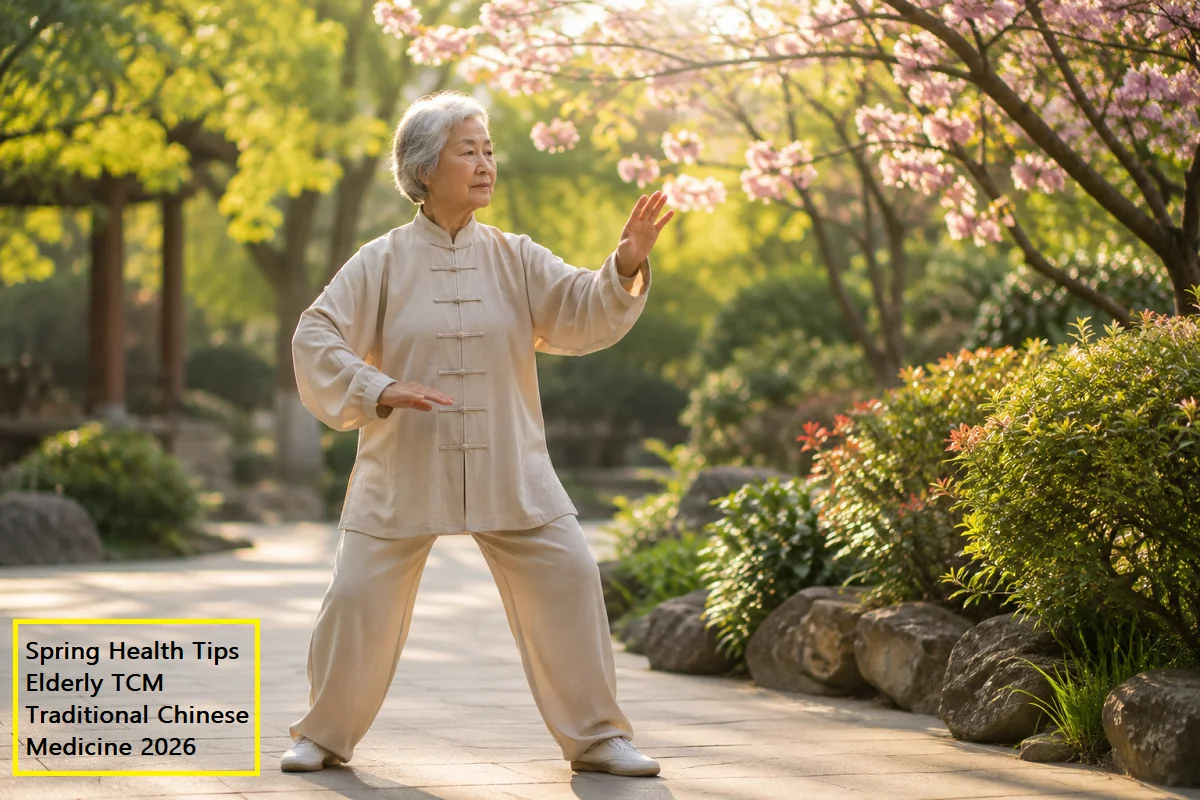
A short walk outside once the sun is up works well. So does light stretching, especially through the sides of the body and the hips, since stiffness there tends to build up over winter. Tai chi and qigong are the two practices most associated with spring in TCM, and there’s a good reason they’re popular with older adults specifically: both are slow, low impact, and built around balance, which matters for fall prevention.
If joint pain or mobility is already a concern, chair-based versions of tai chi and gentle stretching cover most of the same ground without the standing balance requirement. The goal isn’t a workout. It’s getting circulation moving after a season of sitting still.
Eat warm, eat light, add a little sour
TCM’s spring food advice sounds almost too simple: lighter meals, warm rather than cold, with a bit of sour flavor worked in. Classical Chinese medical texts describe easing off heavy, rich food and leaning toward fresh greens as the season turns.
For older adults, this fits well with general digestive advice too. Digestion tends to slow with age, and a stretch of lightly cooked vegetables, soups, and grains asks less of the gut than the heavy comfort food that gets us through winter. Sour foods like citrus, a splash of vinegar, or a handful of berries are the traditional nod to liver support in spring. None of it needs to be exotic. A bowl of congee with greens and a little ginger, or a simple vegetable soup with a squeeze of lemon, does the job.
Warmth still matters even as the weather improves. TCM cautions against jumping straight into cold or raw food just because it’s warmer outside, since spring weather is often unpredictable and the body is still adjusting. Warm drinks and cooked meals through the early part of the season are gentler on an aging digestive system, whatever you make of the theory behind them.
Keep the mood steady
The liver connection in TCM isn’t only physical. Frustration, irritability, and a short temper are all linked to liver Qi in traditional theory, and spring is considered the season when that link shows up most. Whether or not you follow the underlying logic, the practical advice holds up: emotional steadiness matters, and older adults dealing with isolation or the frustrations of a slower body can use extra support here.
Simple things help. Time outside, even ten minutes on a porch or in a garden, does something for mood that indoor time doesn’t. Talking things through with a friend or family member, rather than sitting with frustration alone, is part of TCM’s traditional advice for spring too. So is a small creative outlet, gardening, painting, playing music, anything that gives the mind somewhere to go besides worry.
Watch for the season’s specific risks
Spring brings its own hazards worth naming directly. Temperature swings between a cold morning and a warm afternoon can catch people off guard, so layering clothes and keeping a light scarf or jacket handy matters more than it sounds like it should. Pollen season picks up too, and allergies can hit harder as the immune system ages.
Falls are also a spring risk in an indirect way. After a winter of reduced activity, muscles and balance can be a step behind where they were in autumn. Easing back into movement, rather than jumping straight into a long walk or garden project, gives the body time to catch up.
When to bring in a professional
Everything above is general wellness guidance, not medical advice. If there’s a specific health condition involved, from joint pain to blood pressure to digestive issues, the right move is talking to a doctor before making changes, and consulting a licensed TCM practitioner or acupuncturist if herbal remedies or acupuncture are part of the plan. TCM herbs in particular are not automatically safe just because they’re natural. Some interact with common medications, and dosages for older adults are usually lower than what’s used for younger patients. A qualified practitioner will account for that. A general wellness article can’t.
Conclusion
Spring health tips for elderly readers, at least through a TCM lens, come down to something fairly unglamorous: move a little more than winter allowed, eat a little lighter and warmer, keep an eye on mood, and stay alert to the season’s specific risks like temperature swings and post-winter stiffness. None of it requires a dramatic overhaul. It’s closer to a nudge in the right direction, timed to when the body is already inclined to shift on its own. For anything beyond that general nudge, a doctor or a licensed TCM practitioner is the right next step.