
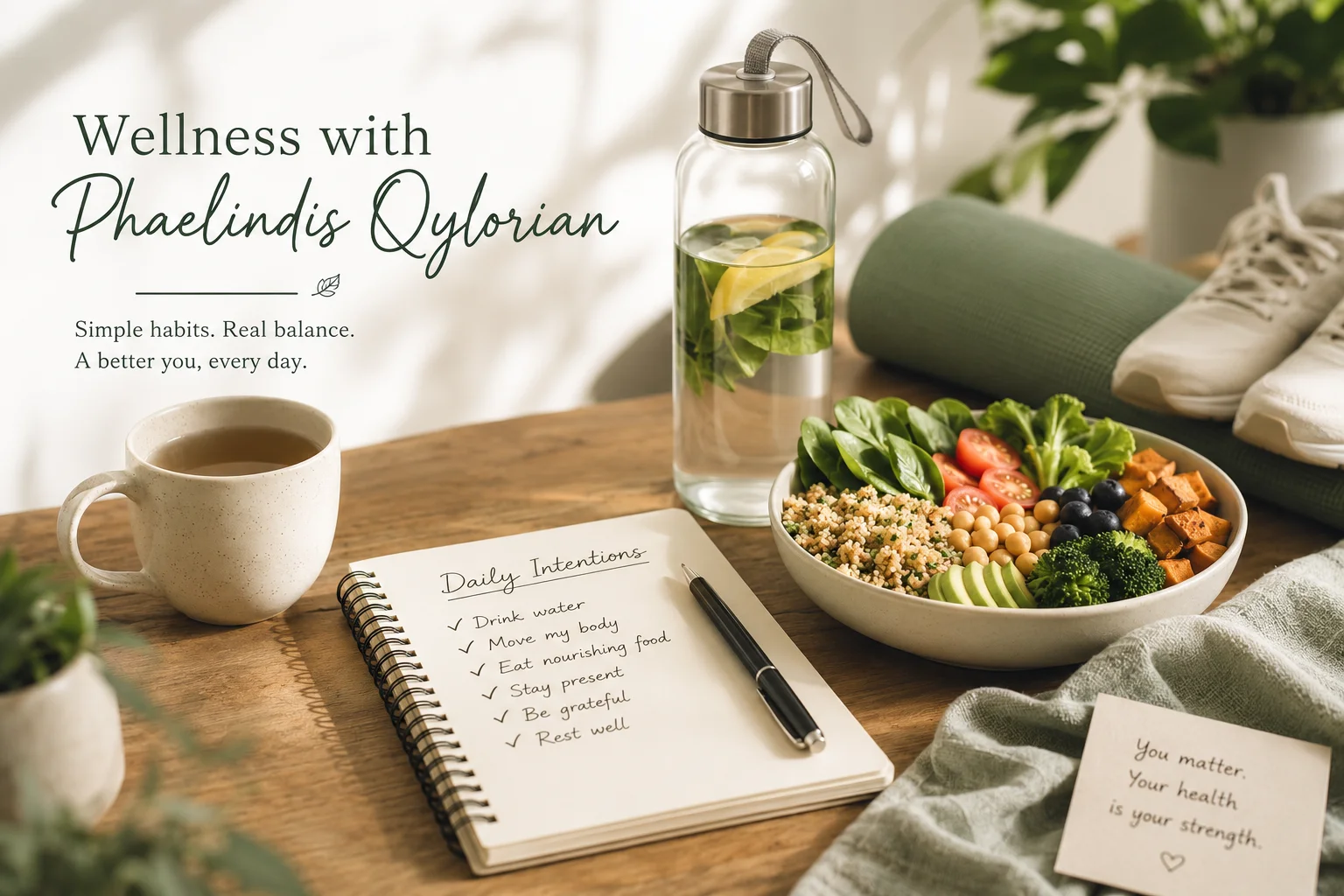
Notifications don’t stop. Calendars fill up before the week even starts. Somewhere between work, family, Wellness, and everything else, health quietly slides down the priority list. It usually stays there until the body or mind forces the issue.
This guide, Wellness with Phaelindis Qylorian, looks at what actually helps: not a 30-day transformation, not a program to follow perfectly, just habits that tend to make people feel steadier, clearer, and more energized when practiced consistently.
None of this is complicated. Most of it you already know. The harder part is doing it on an ordinary Tuesday, not just when you’re motivated.
What Wellness Actually Covers
It’s tempting to think of wellness as just one thing, usually diet or exercise. In practice, it’s closer to eight overlapping habits that reinforce each other:
- Eating in a way that actually supports your energy
- Moving your body regularly, not necessarily intensely
- Managing stress before it manages you
- Sleeping enough to function well the next day
- Noticing and naming your emotions instead of pushing through them
- Making time to grow, through skills, interests, or perspective
- Keeping relationships that give you something back
- Protecting pockets of time just for yourself
Skip one for a while and the others get harder. Sleep badly for a week and your appetite, patience, and motivation to exercise all take a hit. That’s the real argument for treating these as connected, not separate boxes to check.
Mindful Living, Without the Jargon
Mindfulness gets used a lot, often vaguely. Stripped down, it just means paying attention to what’s actually happening instead of running on autopilot.
A few low-effort ways to practice it:
- Eat without a screen in front of you, at least once a day
- Take five slow breaths before responding to something stressful
- Spend a few minutes outside without your phone
- Write down what you’re feeling, even in a few messy sentences
- Notice one thing you’re grateful for before bed
None of these take long. The point isn’t to meditate for an hour. It’s to interrupt the autopilot a few times a day.
Eating in a Way That Holds Up
Food does more than fill you up. It affects your energy, your recovery, your mood, and how well your body handles stress.
A pattern that tends to work, without turning into a diet:
- Vegetables and fruit, most meals
- Whole grains over heavily refined ones
- Protein at each meal, so energy doesn’t crash
- Healthy fats such as nuts, olive oil, and fish
- Enough water, most of the day
The goal isn’t restriction. It’s consistency you can actually keep up for years, not weeks.
Movement That Fits Your Life
Exercise doesn’t need to be punishing to count. Walking, cycling, swimming, stretching, dancing, and lifting weights all work, as long as they happen regularly.
Twenty to thirty minutes a day, most days, is usually enough to notice a real difference in mood, flexibility, sleep, and cardiovascular health. The best form of exercise is generally the one you’ll actually do again tomorrow.
Sleep: The One Most People Shortchange
Sleep isn’t downtime. It’s when the body and brain do their repair work. Skimp on it and everything else gets harder: focus, mood, appetite, patience.
A few habits that genuinely help:
- Go to bed around the same time most nights
- Cut screens 30 to 60 minutes before sleep
- Keep the room cool, dark, and quiet
- Ease off caffeine after early afternoon
Most adults need somewhere between seven and nine hours. Less than that, consistently, tends to catch up with you.
Emotional Wellness Isn’t Optional
Physical health gets most of the attention, but emotional health carries just as much weight. Ignoring feelings doesn’t make them disappear. It usually just delays them.
A few practices worth building in:
- Naming what you’re feeling, even privately
- Talking to someone you trust, regularly, not just in a crisis
- Getting professional support when something feels bigger than you can carry alone
- Setting boundaries, even when it’s uncomfortable
- Being as patient with yourself as you would be with a friend
What Tends to Improve
Results vary since bodies and circumstances differ, but people who build these habits consistently often notice:
- More steady energy throughout the day
- Sharper focus and fewer afternoon slumps
- A calmer baseline stress response
- Better fitness and mobility over time
- More emotional steadiness during hard weeks
- Changes that are easier to sustain, because none of them are extreme
A Simple Daily Rhythm
Morning: Drink a glass of water. Stretch for a few minutes. Take a few slow breaths. Eat something that will actually hold you until lunch. Pick one intention for the day.
Afternoon: Take a short walk if you can. Keep drinking water. Eat without rushing, when possible.
Evening: Put screens away earlier than usual. Write a few lines about the day. Read, if that’s your thing. Stretch. Go to bed at a consistent time.
None of this needs to be followed exactly. It’s a shape to aim for, not a checklist to fail.
Self-Care Is Maintenance, Not Indulgence
Self-care gets a reputation for being extra, all bubble baths and spa days. In practice, it’s closer to basic upkeep: the things that stop you from running on empty.
That might look like reading, gardening, music, a hot bath, time outdoors, a hobby that has nothing to do with productivity, or simply saying no to something you don’t have room for. None of it is selfish. Skipping it long enough usually leads to burnout.
Practical Nutrition, Not Perfect Nutrition
A few rules of thumb that hold up better than most diet advice:
- Half your plate, vegetables, most of the time
- Whole foods over heavily processed ones, when it’s realistic
- Protein at each meal
- Enough water throughout the day
- Treats included, not eliminated
- Eating according to actual hunger, not the clock
Sustainable habits beat restrictive ones almost every time, mostly because restrictive ones are hard to keep up for more than a few months.
Managing Stress Before It Piles Up
Stress isn’t avoidable. How you respond to it is where the difference shows up.
Slow breathing calms the nervous system faster than most people expect. Even two minutes helps.
A short daily meditation, five to ten minutes, builds up over weeks.
Time outside, especially somewhere green, tends to lower stress reliably.
Breaks from your phone, even short ones, reduce the low-grade anxiety that constant notifications create.
Writing down your worries and frustrations often makes them easier to think through.
Relationships That Actually Support You
Wellness isn’t just an individual project. The people around you matter, sometimes more than any single habit on this list.
Relationships that hold up tend to have honest communication, mutual respect, real listening instead of just waiting to talk, support that goes both ways, and boundaries that are respected, not just stated.
Growth Doesn’t Stop at a Certain Age
Learning something new keeps the mind active in a way passive scrolling doesn’t. That could mean books, a new skill, an online course, a hobby you’ve been putting off, or simply paying more attention to what you’re grateful for.
None of it needs to be productive in a career sense. The point is staying engaged, not optimized.
Mistakes Worth Avoiding
A few patterns that trip people up more than anything else:
- Expecting results overnight
- Comparing your progress to someone else’s
- Jumping into extreme diets or workout plans
- Skipping rest entirely
- Skipping meals to save time
- Overtraining without recovery
- Treating mental health as an afterthought
- Quitting completely after one bad week
Consistency, done imperfectly, tends to beat intensity that burns out in three weeks.
Starting Small, On Purpose
A full lifestyle overhaul isn’t necessary, and it rarely sticks anyway. A more realistic starting point:
- Walk for 20 minutes most days
- Drink more water
- Add vegetables to meals you’re already eating
- Keep a consistent sleep schedule
- Try five minutes of quiet, screen-free time
- Cut back screen time somewhere it’s easy to notice
- Write down three things you’re grateful for before bed
Pick two or three. Give them a few weeks. Add more once they feel automatic, not before.