You’re sitting slouched on the couch, and out of nowhere a sharp pain stabs you just under your left breast. It hurts to breathe in. For a few seconds, you’re sure something is wrong with your heart. Then, just as suddenly, it’s gone.
If that sounds familiar, you may have experienced precordial catch syndrome, one of the most common causes of sudden chest pain in otherwise healthy people. It’s harmless, but the pain is real, and the fear it triggers is real too. Here’s what’s actually happening in your chest, why it happens, and how to tell it apart from something that needs urgent attention.
What Is Precordial Catch Syndrome?
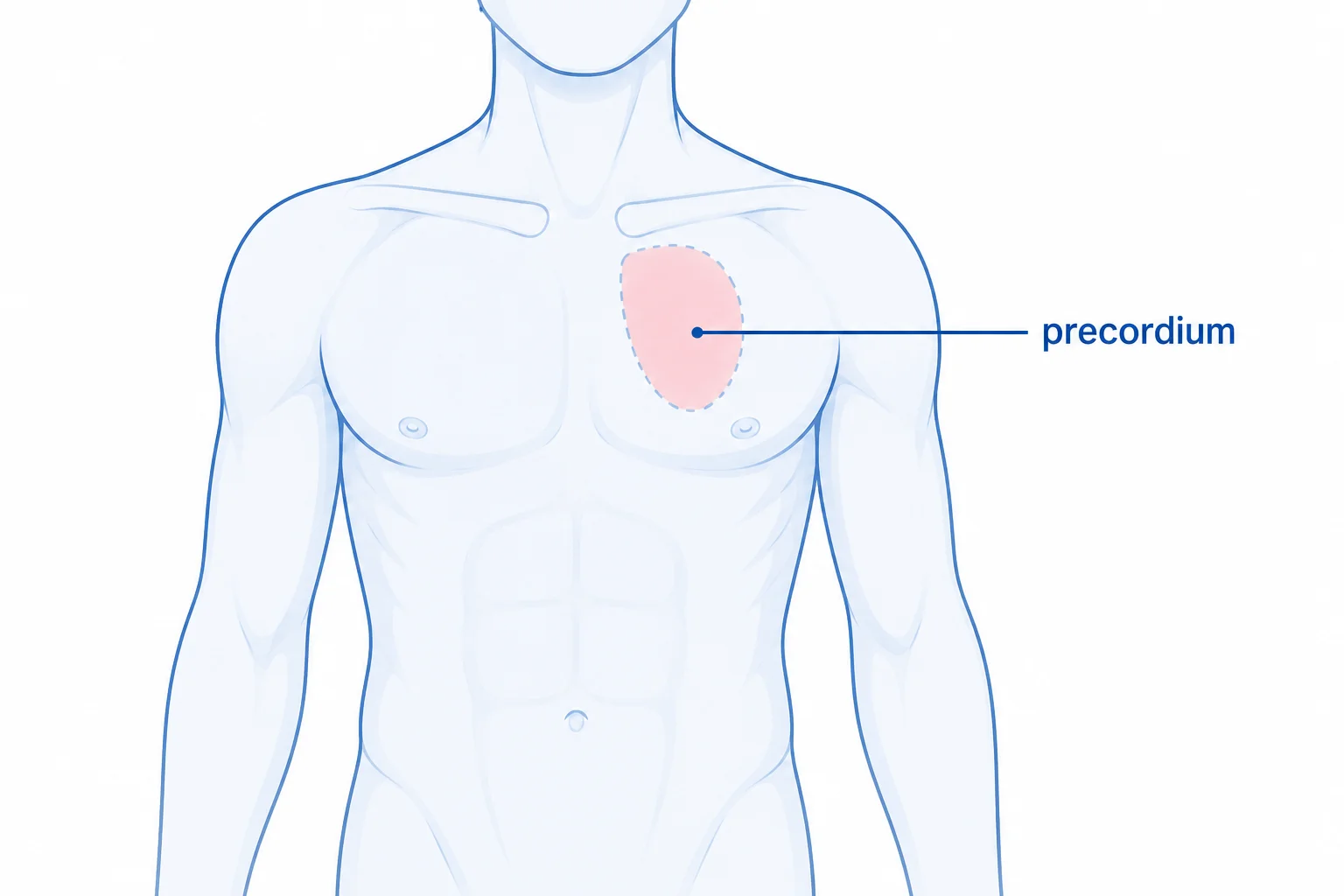
“Precordial” refers to the precordium, the area of your chest wall that sits over your heart. Precordial catch syndrome (PCS) is a sharp, stabbing pain that appears suddenly in that area, usually on the left side, just below or near the nipple. It’s also known as Texidor’s twinge, named after one of the doctors who first described it.
Doctors first documented the condition in the medical literature in 1955, and it’s now understood to be a relatively common, non-serious cause of chest pain. Despite how alarming it feels, PCS has nothing to do with your heart, lungs, or any dangerous underlying condition.
What Does It Feel Like?
The pain of precordial catch syndrome has a distinct pattern that sets it apart from other chest pain:
- Sudden onset. It appears with no warning, often while you’re sitting or slouching at rest.
- Sharp and localized. The pain covers a small area, usually no larger than one or two fingertips, and doesn’t spread to other parts of the body.
- Worse with deep breathing. Taking a full breath makes it sharper, so people often catch themselves breathing shallowly until it passes.
- Brief. Episodes typically last anywhere from a few seconds to a few minutes. Some sources note it can occasionally stretch to 30 minutes, though that’s less common.
- No other symptoms. People with PCS don’t experience paleness, flushing, wheezing, or changes in pulse rate or rhythm. The only side effect tends to be lightheadedness, and that’s usually from holding your breath against the pain rather than from the condition itself.
For some people, the pain is a dull annoyance. For others, it’s intense enough to briefly affect vision or take their breath away. Either way, once it passes, it’s gone completely, with no lingering soreness or damage.
Who Gets Precordial Catch Syndrome?
PCS shows up most often in children, teenagers, and young adults. It can start as young as age 6, and most people who experience it grow out of it by the time they reach their 20s. It’s less common in older adults, though it can still occur.
If you’re an adult and this is the first time you’ve had chest pain like this, that’s exactly the kind of situation where a doctor visit is worth it, not because PCS itself is dangerous, but because your risk profile for other causes of chest pain changes with age.
What Causes It?
The precise cause of precordial catch syndrome isn’t fully understood. That uncertainty can feel unsatisfying, but it’s consistent across every major medical source on the condition. What researchers do have is a working theory.
The leading explanation is that the pain comes from nerves in the pleura, the inner lining of the chest wall, getting pinched or irritated. Some researchers also point to the cartilage surrounding the ribcage, or muscle spasm, as possible contributors.
A few things seem to make an episode more likely:
- Poor posture. Slouching puts extra pressure on the nerves in that area, which is why episodes so often strike while someone is sitting hunched over.
- Growth spurts. This may explain why the condition clusters so heavily in the adolescent years.
- Minor chest injury. A blow to the chest can also trigger irritation that leads to an episode.
- Psychological stress. Some research has found a correlation between stress and PCS episodes, though it’s not considered a primary cause on its own.
None of these factors point to anything wrong with your heart or lungs. The condition isn’t caused by heart or lung disease, and it doesn’t lead to either one.
Precordial Catch Syndrome vs. Other Chest Pain
Because chest pain is one of the symptoms doctors take most seriously, it’s worth knowing how PCS differs from conditions it sometimes gets confused with.
Costochondritis is inflammation of the cartilage connecting your ribs to your breastbone. Unlike the here-and-gone nature of PCS, costochondritis typically causes tenderness and pain that lasts much longer, often days. Pressing on the area usually reproduces the pain, which isn’t the case with PCS.
Angina or heart-related pain tends to come with exertion, spreads to the arm, jaw, or back, and is often accompanied by shortness of breath, sweating, or nausea. PCS does none of this. It doesn’t radiate, and it isn’t triggered by physical activity in the way cardiac pain typically is.
Pleurisy involves inflammation of the lung lining and usually comes with a persistent ache that worsens over a longer period, often alongside other signs of respiratory illness.
Doctors typically diagnose PCS by recognizing a classic pattern: brief, sharply localized pain in an otherwise healthy person, with nothing concerning turning up on examination. A normal heart rate, normal oxygen level, and unremarkable lung exam are all reassuring signs.
When to See a Doctor
Even when chest pain resolves quickly and doesn’t spread, it’s worth mentioning to a healthcare provider, since they can rule out other conditions with a straightforward evaluation. This is especially true if you notice a change in how often the pain occurs or what it feels like.
If your symptoms don’t fit the typical PCS pattern, or if anything about your history raises questions, a doctor may order tests such as an electrocardiogram, chest X-ray, or blood work to be thorough. These tests don’t confirm PCS directly since there’s no specific test for it, but they help rule out other causes.
Seek emergency care right away if chest pain comes with any of the following:
- Pain that lasts longer than five minutes or doesn’t ease up with rest
- Pain that spreads to your arm, shoulder, jaw, neck, back, or upper abdomen
- Shortness of breath
- Sweating, nausea, or vomiting
- A rapid or irregular heartbeat
- Lightheadedness that goes beyond what you’d expect from shallow breathing
- Pain that started during exercise or physical exertion rather than at rest
These are signs that call for immediate evaluation, since chest pain can occasionally be a symptom of something far more serious. Precordial catch syndrome does not cause these additional symptoms. If you’re experiencing them, treat it as a medical emergency and don’t wait it out.
How Is It Treated?
There’s no medication that cures precordial catch syndrome, and most people don’t need any treatment beyond reassurance that the pain is harmless. A few things can help in the moment and over time:
- Sit up straight. Correcting your posture during an episode can sometimes ease the pain faster.
- Breathe slowly and calmly. Taking slow, gentle breaths rather than fighting through the pain can help it pass.
- Don’t panic. Anxiety about the pain can make you tense up, which doesn’t help. Reminding yourself that the sensation is brief and benign often takes the edge off.
- Work on posture long-term. Since slouching is a common trigger, standing or sitting straighter throughout the day may reduce how often episodes happen.
Some providers suggest an over-the-counter anti-inflammatory like ibuprofen, though the pain typically resolves before the medication would even take effect. It’s more of an option for people who have recurring episodes than a fix for any single one.
The Outlook Is Good
Precordial catch syndrome is not caused by heart or lung disease, and there are no known long-term complications from having it. Most people who experience it in childhood or adolescence stop having episodes by their 20s. Beyond the pain itself, and the worry it can cause in the moment, it leaves nothing behind.
That said, “harmless” and “worth ignoring” aren’t the same thing. If chest pain is new to you, changes in character, or shows up alongside any of the warning signs above, get it checked out. A quick evaluation is the difference between confidently understanding your body and quietly wondering every time it happens again.