A practical guide to recognizing a spider bite, giving it proper first aid, and knowing when it needs a doctor’s attention.
Spiders bite far less often than people assume, and when they do, most bites cause nothing more than brief pain, redness, and itching that clears up within a few days on its own. A small number of spider bites, mainly from black widows and brown recluse spiders in the United States, can cause more serious symptoms and genuinely need medical attention. This guide covers basic first aid for an ordinary bite, the warning signs that call for a doctor or an emergency room, and how to recognize a bite from these two higher risk spiders.
Start Here: First Aid for a Typical Spider Bite
Most spider bites can be managed at home with a few simple steps.
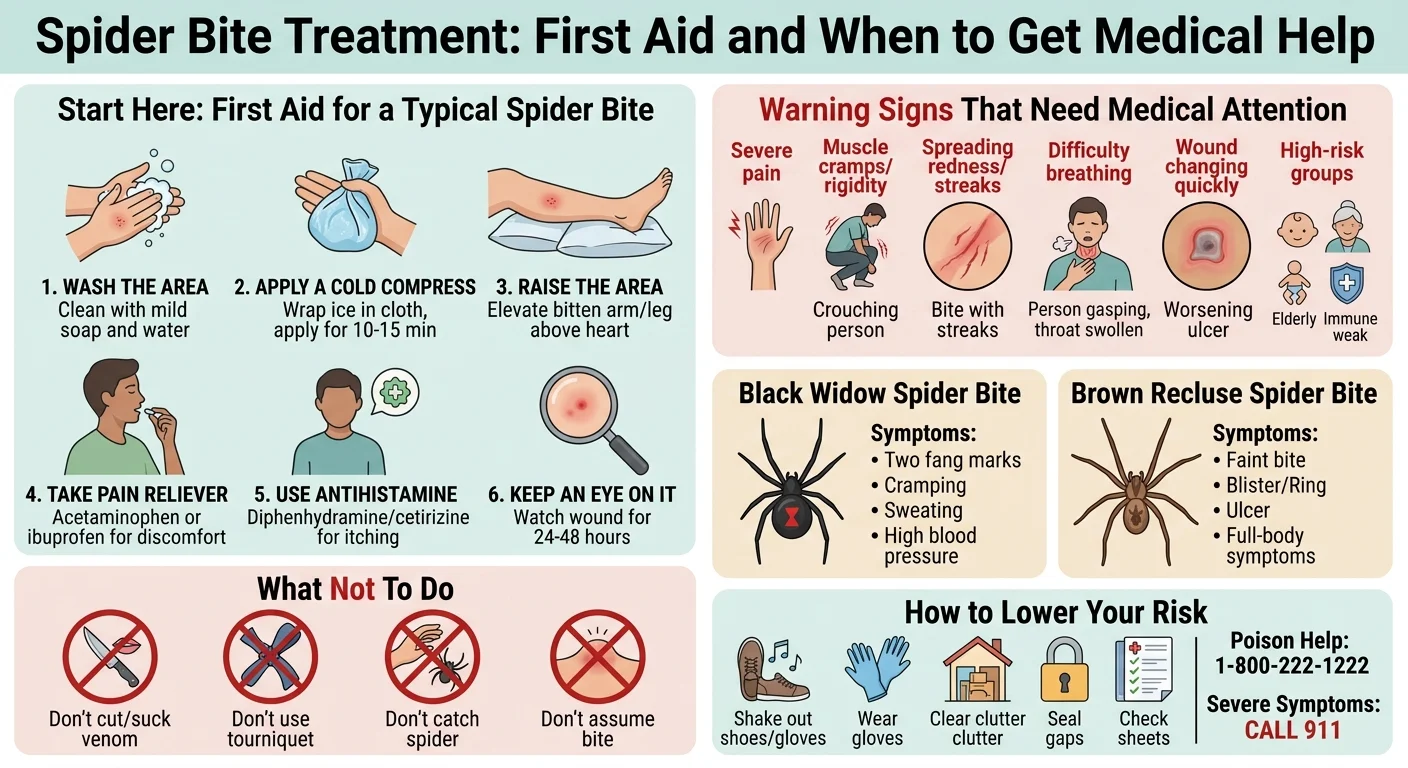
- Wash the area. Clean the bite with mild soap and water to lower the risk of infection.
- Apply a cold compress. Wrap an ice pack or a damp cloth around some ice and hold it over the bite for 10 to 15 minutes at a time. Repeat this through the day to ease pain and swelling. Always keep a layer of cloth between the ice and your skin.
- Raise the area if you can. Keeping a bitten arm or leg elevated above heart level helps reduce swelling.
- Take an over the counter pain reliever. Acetaminophen or ibuprofen can take the edge off the discomfort.
- Use an antihistamine for itching. Diphenhydramine or cetirizine can help if the bite is itchy.
- Keep an eye on it. Watch the wound over the next day or two. Most minor bites fade on their own, but a change for the worse is a signal to get checked out.
What Not to Do
A few pieces of old first aid advice still circulate even though they don’t help and can make things worse.
- Don’t cut the bite or try to suck out venom. This doesn’t remove venom from the body and raises the risk of infection and extra tissue damage.
- Don’t apply a tourniquet. Cutting off blood flow to the area can cause more harm than the bite itself.
- Don’t try to catch or handle the spider if there’s any risk of another bite. A photo taken from a safe distance is usually enough to help a doctor identify it.
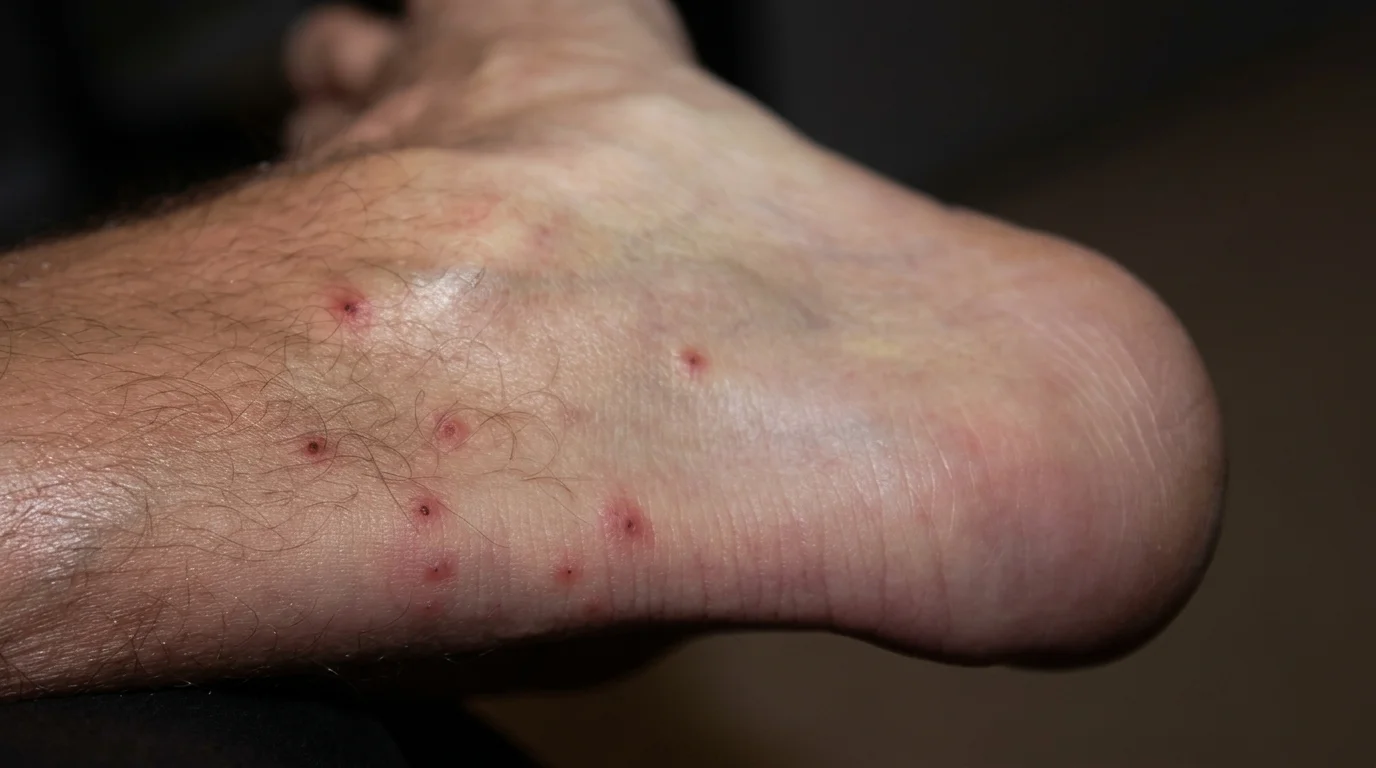
- Don’t assume every red bump is a spider bite. Many insect bites, rashes, and skin infections look similar, and spiders are rarely caught in the act. If a bite looks unusual or keeps changing, let a clinician take a look rather than guessing.
Warning Signs That Need Medical Attention
Get medical care right away if any of the following apply:
- You know or strongly suspect the bite came from a black widow or a brown recluse.
- You’re unsure what bit you and the area is changing quickly or you start to feel unwell.
- Pain becomes severe, or you develop muscle cramping, rigidity, or stomach pain.
- The wound keeps growing, or the skin around it turns red, purple, or dark and that discoloration is spreading.
- You notice red streaks spreading out from the bite, which can be a sign of a developing infection.
- You have trouble breathing or swallowing, swelling of the face, lips, or throat, dizziness, or a rash spreading well beyond the bite site. These can point to a serious allergic reaction, known as anaphylaxis, and need emergency care immediately.
- The bite is in an infant, a young child, an older adult, or someone with a chronic illness or weakened immune system, since these groups are more likely to have a serious reaction.
If you’re in the United States and want guidance on a bite that isn’t a clear emergency, Poison Help can be reached at 1-800-222-1222, any time of day. For severe symptoms or signs of anaphylaxis, call 911 or get to the nearest emergency department without waiting.
Black Widow Spider Bites
How to recognize one. Black widows are shiny, black (occasionally dark brown) spiders with a red or orange hourglass shaped marking on the underside of the abdomen. In the United States they’re most common in the South, and they tend to build low, tangled webs in garages, sheds, woodpiles, under eaves, and around outdoor furniture that doesn’t get disturbed often.
Symptoms. The bite itself may barely be felt, sometimes leaving nothing more than two small fang marks and a little redness. Within thirty minutes to a few hours, muscle cramping and rigidity often set in, usually starting near the bite and spreading to the abdomen, back, and limbs. Sweating, nausea, and a rise in blood pressure are also common. Symptoms typically peak within about eight to twelve hours and can linger for a few days. Severe reactions are uncommon in healthy adults, though children, older adults, and people with certain health conditions are more likely to be affected.
Treatment. Clean the bite with soap and water and apply a cold compress, then contact poison control or a healthcare provider for guidance, since symptoms can continue to develop over the following hours. A doctor may offer pain medication or muscle relaxants for cramping. Antivenom is available for severe cases, though it’s not often needed and carries its own small risk of an allergic reaction.
Brown Recluse Spider Bites
How to recognize one. Brown recluse spiders are light to medium brown with a darker violin or fiddle shaped marking on the top of the body, though this marking can be faint. They’re found mainly in the southern and central United States, and true to their name, they tend to hide in undisturbed places such as cardboard boxes, closets, attics, and woodpiles rather than sitting out in an open web.
Symptoms. The bite is often painless or only mildly felt at first, so it can go unnoticed for hours. Over the following day, the area may start to itch, sting, and swell, sometimes developing a blister ringed by discolored skin. In a minority of cases, the tissue around the bite breaks down over the following days into a slow healing wound. Rarely, particularly in children, a bite can trigger body wide symptoms such as fever, chills, nausea, and joint pain within a few days of the bite.
Treatment. Wash the area and apply a cold compress, then have it evaluated by a healthcare provider. Brown recluse bites can be hard to confirm from the wound alone, and how aggressively to treat one varies case by case, so this is a judgment call best left to a doctor rather than something to manage with home remedies. Many bites heal on their own with simple wound care and time, and a provider may prescribe antibiotics if infection sets in or simply monitor the wound as it progresses.
How to Lower Your Risk of Spider Bites
- Shake out shoes, gloves, and clothing before putting them on, especially items that have been stored away or left outside.
- Wear gloves and long sleeves when moving firewood, boxes, or anything that has sat undisturbed for a while.
- Clear out clutter such as old boxes, stacked newspapers, and rarely used furniture, since these are common spider hiding spots.
- Seal cracks and gaps around doors, windows, and the foundation to keep spiders from getting indoors in the first place.
- Move your bed away from the wall and check the sheets before getting in, particularly in regions where black widows or brown recluses are common.
- If a spider lands on you, brush it off gently rather than swatting at it, which is more likely to provoke a bite.
Frequently Asked Questions
Can a spider bite be fatal? It’s rare. In the United States and other countries with good access to medical care, serious complications or death from a spider bite are uncommon, and the risk is highest for infants, older adults, and people with underlying health problems.
How can I tell if it was really a spider bite? Often it’s hard to say for certain. Many bites and skin irritations blamed on spiders turn out to be from mosquitoes, bedbugs, or a skin infection, since spiders rarely bite without being provoked and are seldom caught in the act. If the wound looks unusual or keeps getting worse, a healthcare provider is in a better position to judge than a guess based on appearance alone.
Does cutting the bite or sucking out the venom actually help? No. Neither one removes venom from the body, and both raise the risk of infection and tissue damage. Basic wound care plus medical attention for anything that looks serious is the safer approach.
What number should I call for advice on a bite? In the United States, Poison Help at 1-800-222-1222 connects you with a poison control specialist and is available at any hour for guidance on a bite that doesn’t need a 911 call.
The Bottom Line
Most spider bites heal on their own with basic first aid: a clean wound, a cold compress, and a little patience. The real skill is telling an ordinary bite apart from one that needs medical attention, and acting quickly when symptoms point toward a black widow, a brown recluse, or a serious allergic reaction. This article is meant as general information rather than medical advice, so if a bite looks unusual or you’re genuinely worried, a call to poison control or a visit to a healthcare provider is always a reasonable next step.