What causes that relentless itch, how long it sticks around, and what actually helps.
If you’ve spent time in tall grass, a berry patch, or the shady edge of a wooded trail and later found yourself covered in small, maddeningly itchy red bumps around your ankles or waistline, there’s a good chance chiggers are the culprit. The good news is that chigger bites are common, rarely serious, and almost always clear up on their own. This guide covers what chiggers actually are, why the bites itch so intensely, how to calm them down, and how to avoid them next time.
What Chiggers Actually Are
Despite the name, chiggers aren’t a distinct insect species. They’re the larval stage of mites in the Trombiculidae family, sometimes called red bugs or harvest mites. Only the larval stage bites people and animals; once chiggers mature past that stage, they feed on small insects and insect eggs instead.
Chiggers are tiny enough that they’re nearly impossible to spot on skin with the naked eye. They live outdoors in tall grass, weeds, berry patches, leaf litter, and the shaded, moist edges of woodlands, and they’re most active in the warmer months, generally from late spring through fall.
How a Chigger Bite Actually Happens
A chigger doesn’t fly or jump. It climbs onto skin or clothing from grass or vegetation, then crawls until it reaches a spot where clothing fits snugly, such as a waistband, a sock line, or a skin fold, since that’s usually as far as it can travel. Once it settles, it pierces the skin and releases a digestive substance that breaks down nearby skin cells, which hardens the surrounding tissue into a small feeding tube. The chigger then feeds on the liquefied cells rather than on blood.
The bite itself is painless, so you won’t feel it happening. A common myth is that chiggers burrow into the skin and stay there, but that isn’t accurate. Chiggers feed on the surface and typically drop off on their own within a few days. By the time the itching starts, the chigger responsible is often already gone, and the itching and bump that follow are your skin’s own reaction, not a sign that a mite is still attached.
Where You’re Most Likely to Notice Bites
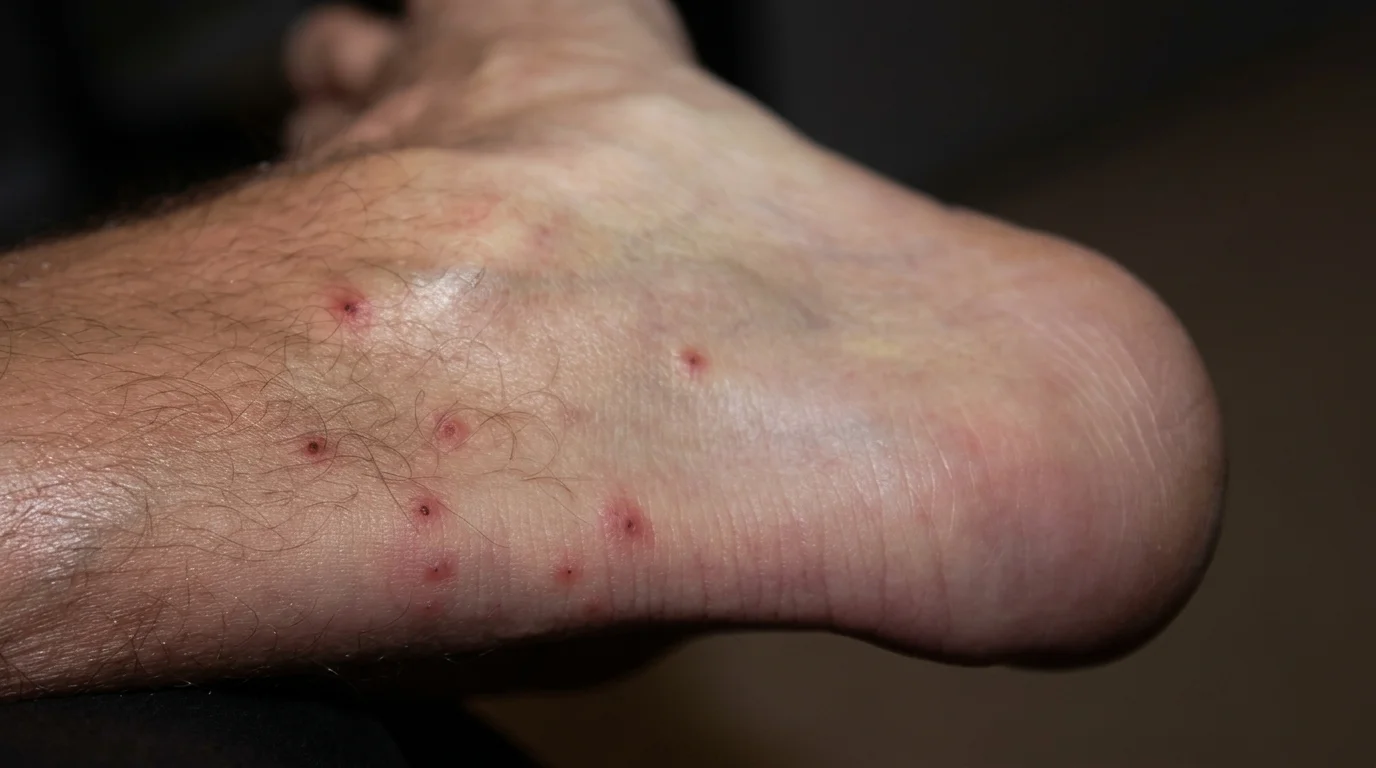
Because chiggers tend to travel until something stops them, bites cluster around the ankles, waistline, armpits, groin, and the backs of the knees, basically anywhere clothing sits close to the skin. It’s common to see a rash that stops in a fairly straight line right where a sock or waistband would have been. Since several chiggers may climb on at once and take similar paths, bites often show up in small groups rather than as a single spot.
Symptoms of Chigger Bites
Typical signs include:
- Intense itching that usually begins a few hours after exposure, sometimes not until later the same day
- Small, red, pimple-like bumps, sometimes with hives or small blisters
- A firm or slightly hardened, scab-like center, which is one clue that helps tell chigger bites apart from similar-looking bites
- Bites grouped together, often following the line of tight clothing
How Long Chigger Bites Last
Itching is usually most intense in the first day or two and tends to start easing within about three days. That said, some people notice lingering itch for a week or longer, and the bumps themselves can take one to two weeks to fully fade. Scratching, heat, and sweat can all make the itching feel worse and last longer, so managing the itch early tends to help.
How to Treat Chigger Bites
If you suspect you’ve picked up chigger bites, the first useful step is to shower and wash the area with soap and water as soon as you can, and to wash the clothes you were wearing in hot water. This won’t undo bites that have already set in, but it can remove any chiggers still on your skin or clothing before they attach elsewhere.
From there, treatment is mainly about managing the itch and protecting the skin while it heals:
- Oral antihistamines to reduce itching
- Over-the-counter hydrocortisone or other topical corticosteroid cream
- Calamine lotion
- Cool compresses applied to the bites
- Colloidal oatmeal baths
- Keeping nails trimmed and avoiding scratching, since broken skin raises the risk of a secondary bacterial infection
There’s no treatment that removes a chigger bite overnight. Supportive care like the options above is generally what helps most while the body clears the irritation on its own.
Home Remedies Worth Skipping
Nail polish, bleach, turpentine, and kerosene are frequently suggested online as ways to “suffocate” a chigger still attached to the skin. Since chiggers don’t burrow into skin and are usually gone within a few days anyway, there’s nothing for these substances to smother, and they can irritate skin that’s already inflamed. It’s best to stick with gentler, skin-safe options like the ones above.
Chigger Bites vs. Other Bug Bites
A few patterns can help distinguish chigger bites from other common bites:
- Mosquito bites tend to form a single soft, puffy bump that fades within a day or two, while chigger bites are firmer and last noticeably longer.
- Flea bites look similar and are also very itchy, but chigger bites typically develop that harder, scab-like center that flea bites usually lack.
- Bed bug bites often appear in a line or cluster on skin that was exposed while sleeping, whereas chigger bites cluster where clothing fits tightly.
- Scabies is caused by a different mite that does burrow into the skin and stay there, producing thin burrow-like tracks and intense itching that’s often worse at night. It usually requires prescription treatment, unlike chigger bites.
If you’re not sure what’s causing a rash, a healthcare provider can usually tell by looking at the pattern of the bites along with your recent outdoor activity.
When to See a Doctor
Most chigger bites can be managed at home, but it’s worth checking in with a healthcare provider if:
- The rash hasn’t started improving after about two weeks
- You notice increasing redness, warmth, swelling, or pus, which can signal a secondary infection
- Itching is severe and isn’t responding to over-the-counter care
- You develop signs of a broader allergic reaction, such as widespread hives or swelling of the face, lips, or throat; these need urgent medical attention
It’s also worth flagging a recent chigger exposure to a doctor if you’ve traveled to rural parts of Southeast Asia, India, China, Japan, Indonesia, or northern Australia and later develop fever, headache, body aches, or a dark, scab-like sore at a bite site. In those regions, chiggers can occasionally spread a bacterial illness called scrub typhus, which is treated with the antibiotic doxycycline. Chiggers in the United States are not considered a meaningful disease risk the way ticks or mosquitoes can be.
How to Prevent Chigger Bites
A little prevention goes a long way before heading into chigger habitat:
- Avoid sitting or walking through tall grass, weeds, berry patches, and shaded, overgrown areas when chiggers are active, roughly late spring through fall
- Wear long pants and sleeves, and tuck pant legs into socks or boots to close off easy entry points
- Apply an EPA-registered repellent containing DEET, picaridin, or IR3535 to exposed skin
- Treat clothing, socks, and gear with permethrin rather than applying it to skin directly, since permethrin is meant for fabric, not bare skin
- Shower and scrub with soap as soon as possible after spending time in a chigger-prone area, and wash the clothes you wore in hot water; both steps can remove chiggers before they have a chance to settle in and feed
Quick Answers to Common Questions
Do chiggers burrow into your skin? No. Chiggers feed at the surface of the skin through a small feeding tube and typically drop off on their own within a few days. They don’t live or burrow underneath the skin.
Does nail polish kill chiggers that are already attached? Not really, and it isn’t necessary. Since chiggers aren’t under the skin, there’s nothing to suffocate, and nail polish can irritate skin that’s already inflamed.
Can chiggers live in your house or bed? Chiggers are an outdoor pest tied to grass and vegetation. They aren’t known to set up an indoor infestation the way fleas or bed bugs can.
How long before chigger bites stop itching? Itching is usually worst in the first day or two and tends to ease within about three days, though the bumps themselves can take one to two weeks to fully clear.
The Bottom Line
Chigger bites are uncomfortable, but for almost everyone they’re a short-term nuisance rather than a medical problem. Wash up and change clothes after time outdoors in grassy or wooded areas, lean on simple over-the-counter care to manage the itch, try to leave the bites alone rather than scratching, and cover up or use repellent next time you’re headed somewhere chiggers are likely to be. If a rash seems to be getting worse instead of better, or something about it doesn’t fit the usual pattern, it’s reasonable to have a healthcare provider take a look.