
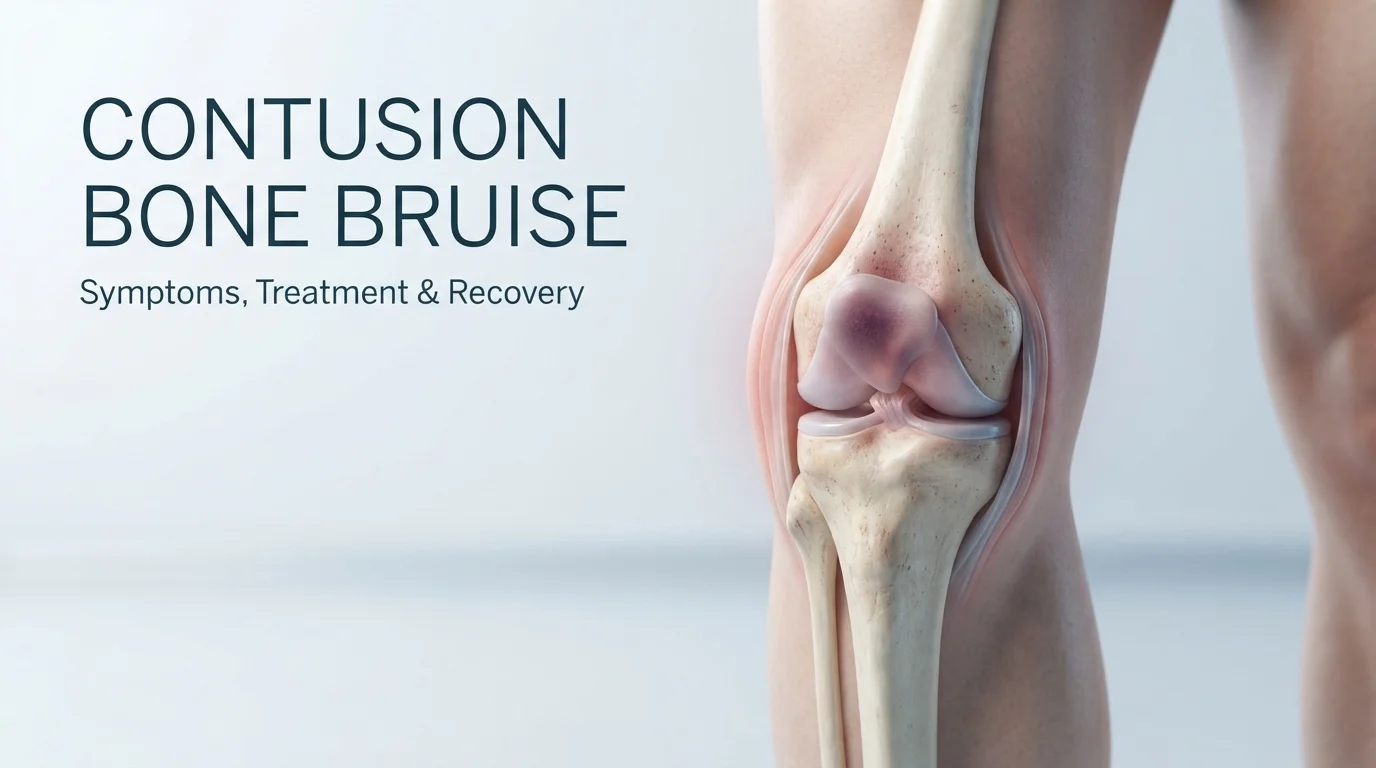
A contusion bone bruise is an injury that damages bone tissue without necessarily causing a complete fracture. Also called a bone contusion, it can happen after a hard impact, fall, sports injury, car accident or twisting injury. Unlike an ordinary skin bruise, a bone bruise occurs deeper inside the body and may cause a dull, persistent ache, tenderness and swelling.
Bone bruises can be painful even when there is no obvious mark on the skin. They usually heal with time and appropriate care, but some can take several months to fully recover. Understanding the symptoms and knowing when an injury needs medical evaluation can help prevent further damage.
What Is a Contusion Bone Bruise?
A bone bruise is a type of bone injury caused when enough force damages the small blood vessels and tissue within or around a bone. Blood and fluid can collect in the injured area, creating swelling and pain.
Healthcare professionals often use the terms bone bruise and bone contusion interchangeably. A bone can be injured without actually cracking through like it does with a fracture.
The injury is usually deeper than a typical bruise on the skin. That’s why you may feel pain coming from inside the affected area even if there is little or no visible discoloration.
A bone bruise can also occur alongside another injury. For example, a person may sprain a knee or ankle while also developing a bone contusion.
What Happens Inside a Bruised Bone?
Bones aren’t solid, lifeless structures. They contain blood vessels, marrow and a network of supporting tissue.
A strong impact can compress the bone and damage tiny blood vessels. This can cause bleeding and swelling within the bone. MedlinePlus describes bone bruising as an injury involving the medullary portion of the bone that can be accompanied by bleeding and swelling.
The location of the damage affects how the injury feels and how long it takes to recover.
A bone contusion can affect different areas, including the tissue covering the outside of the bone, the area beneath joint cartilage or tissue deeper inside the bone itself.
Because the damage is beneath the surface, you may not see the familiar purple or blue coloring associated with an ordinary skin bruise.
Types of Bone Bruises
Healthcare providers may classify bone contusions according to where the injury occurs.
Periosteal Contusion
The periosteum is the layer of tissue covering most bones. It contains blood vessels and nerves. A direct blow can injure this area and cause significant tenderness.
Subchondral Bone Bruise
This type occurs near a joint, underneath the cartilage. It can happen after an injury that affects the joint and may occur together with ligament or cartilage damage.
Intraosseous Bone Contusion
An intraosseous contusion occurs deeper inside the bone itself. It involves injury within the bone and may be harder to identify without appropriate imaging.
The type, location and severity of the injury can all influence recovery time.
What Causes a Bone Bruise?
A bone bruise usually results from significant physical force. Common causes include:
- Falls
- Sports injuries
- Car accidents
- Direct blows
- Hard impacts
- Twisting injuries
- Joint injuries
- Repetitive physical stress in some situations
Contact-sport athletes may have a higher risk because collisions and falls can place considerable force on bones. People involved in physically demanding work or activities may also be more exposed to injuries.
A twisting injury is another important cause. A sudden force through a joint can affect both the surrounding soft tissues and nearby bones.
Bone Bruise Symptoms
Symptoms vary depending on the location and severity of the injury. Common signs include:
- Deep or aching bone pain
- Tenderness
- Swelling
- Reduced movement
- Pain when putting weight on the affected area
- Skin bruising or discoloration in some cases
Cleveland Clinic describes the pain from a bone bruise as a dull, throbbing ache that can feel deeper than an ordinary surface bruise. The pain may become worse with certain movements, positions or weight-bearing activities.
Not every bone bruise produces visible skin discoloration. That can make the injury confusing, especially when the person remembers a significant impact but doesn’t see a typical bruise.
If pain is severe after a fall, collision or other major trauma, don’t assume that the injury is only a bruise.
Bone Bruise vs. Fracture
One of the most important questions after an injury is whether the bone is bruised or actually broken.
A bone bruise involves damage to the bone tissue without the complete break associated with a fracture. A fracture means the bone has cracked or broken.
Both injuries can cause pain, swelling and tenderness, so symptoms alone may not always tell you what happened.
| Bone Bruise | Bone Fracture |
|---|---|
| Bone tissue is injured | Bone is cracked or broken |
| May cause deep aching pain | Can cause severe or sharp pain |
| Usually does not make the bone unstable | May affect bone stability |
| Often not visible on a standard X-ray | Many fractures can be seen on X-ray |
| MRI may identify the bone injury | X-ray, CT or MRI may be used depending on the injury |
| Usually heals without surgery | Some fractures require immobilization or surgery |
A standard X-ray generally cannot show a bone bruise, although doctors may use an X-ray to check for a fracture. MRI can provide more detailed information when a bone bruise or associated soft-tissue injury is suspected.
Importantly, a person shouldn’t try to diagnose a fracture based only on how the pain feels. Significant trauma deserves proper medical assessment.
How Is a Bone Bruise Diagnosed?
Diagnosis usually begins with a physical examination and a discussion about how the injury occurred.
A healthcare professional may ask:
- When did the injury happen?
- Was there a fall, collision or direct blow?
- Where exactly does it hurt?
- Does movement make the pain worse?
- Can you put weight on the affected area?
- Has swelling increased?
- Have you experienced any other injuries?
Imaging may be used when necessary.
X-Ray
X-rays are useful for looking for fractures and other bone abnormalities, but they generally don’t show bone bruises themselves.
MRI
MRI can provide a much more detailed view of bone and surrounding soft tissue. It can help identify bone bruising and associated injuries involving structures such as ligaments or cartilage.
CT Scan and Ultrasound
Depending on the suspected injury, a healthcare provider may also use CT or ultrasound. The choice depends on the symptoms, body area and clinical situation.
How Is a Bone Bruise Treated?
Treatment depends on the injury and whether other structures were damaged.
For many uncomplicated bone bruises, the main goal is to reduce stress on the injured area and give the bone enough time to heal.
Rest
Avoid activities that increase pain or place excessive stress on the injured bone. Continuing intense exercise or sports too soon can delay recovery or worsen the injury.
Ice
A cold pack can help reduce pain and swelling. Keep a layer of cloth between ice and your skin, and follow medical advice about how often and how long to use cold therapy.
Compression
Compression may help control swelling in some injuries. However, it should be used appropriately, particularly when the injury involves a joint or limb.
Elevation
Keeping an injured area elevated can help reduce swelling, especially during the early stage of an injury.
These measures are commonly summarized as RICE: rest, ice, compression and elevation.
Medication
Healthcare providers may recommend pain-relieving medication depending on your circumstances. Acetaminophen and certain anti-inflammatory medicines may be options for some people, but medication isn’t appropriate for everyone.
If you take blood thinners, have kidney problems, stomach ulcers, bleeding problems or other medical conditions, ask a healthcare professional before taking medication for an injury.
Physical Therapy
Physical therapy may be recommended when a bone contusion affects movement or occurs near a joint. A therapist can help restore strength, flexibility and range of motion while reducing the risk of returning to activity too quickly.
Immobilization
Some injuries may require a splint, brace or cast to reduce movement and stress on the affected area. This is determined by the healthcare provider based on the location and severity of the injury.
How Long Does a Bone Bruise Take to Heal?
There isn’t one fixed healing time for every bone bruise.
Many bone bruises improve over several weeks, while more serious injuries can take months or longer to completely heal. The location, severity and type of bone contusion can all affect recovery.
Other injuries can also change the timeline. For example, a bone bruise occurring alongside a ligament injury may require a different recovery plan than an uncomplicated bone contusion.
It’s also possible for pain to improve before the bone has completely recovered. Feeling better doesn’t necessarily mean the injured area is ready for heavy exercise or contact sports.
That’s why returning to normal activity should be based on your healthcare provider’s advice and your actual recovery rather than the calendar alone.
Can You Exercise With a Bone Bruise?
It’s generally not a good idea to push through significant bone pain after an injury.
High-impact activities, contact sports and exercises that place stress on the injured area may need to be avoided while the bone heals. Cleveland Clinic recommends waiting until a healthcare provider says it is safe to resume intense physical activity.
The right return-to-exercise plan depends on the location and severity of the injury.
For example, someone with a bone bruise in the leg may need to limit running, jumping and heavy lower-body training. Someone with an upper-body injury may need to temporarily modify lifting or contact activities.
A gradual return is usually safer than suddenly returning to your previous training level.
When Should You See a Doctor?
A suspected bone bruise deserves more attention than an ordinary surface bruise.
Seek medical evaluation if you have persistent bone pain, swelling, reduced movement or pain when using the affected body part. Cleveland Clinic specifically recommends medical evaluation when someone suspects a bone bruise.
You should seek urgent medical attention after significant trauma, particularly if you have:
- Severe or rapidly worsening pain
- Major swelling
- Inability to bear weight
- Obvious deformity
- Numbness or weakness
- An injury from a serious fall or car accident
- Signs that another serious injury may have occurred
A fracture and a bone bruise can occur from similar accidents, and one injury does not rule out the other.
How Can You Reduce the Risk of Bone Injuries?
Not every bone bruise can be prevented because accidents and unexpected impacts happen. Still, some practical steps can lower the risk of injury.
Wear appropriate protective equipment during sports and physically demanding activities. Use seat belts in vehicles, keep walking areas free of trip hazards and use appropriate equipment rather than standing on unstable furniture. These measures are also recommended by Cleveland Clinic as part of general injury prevention.
Athletes should also pay attention to proper technique, recovery and gradual increases in training intensity.
Conclusion
A contusion bone bruise, also known as a bone contusion, is a deeper injury than an ordinary skin bruise. It can cause aching pain, tenderness and swelling even when there is little visible bruising.
Most bone bruises heal with time, activity modification and appropriate care, but recovery can take weeks or months depending on the injury. X-rays may help rule out a fracture, while MRI can detect bone bruising when more detailed imaging is needed.
The key is not to ignore persistent bone pain after significant trauma. If you’re unsure whether an injury is a bruise, fracture or another type of damage, getting it assessed by a healthcare professional is the safest approach.