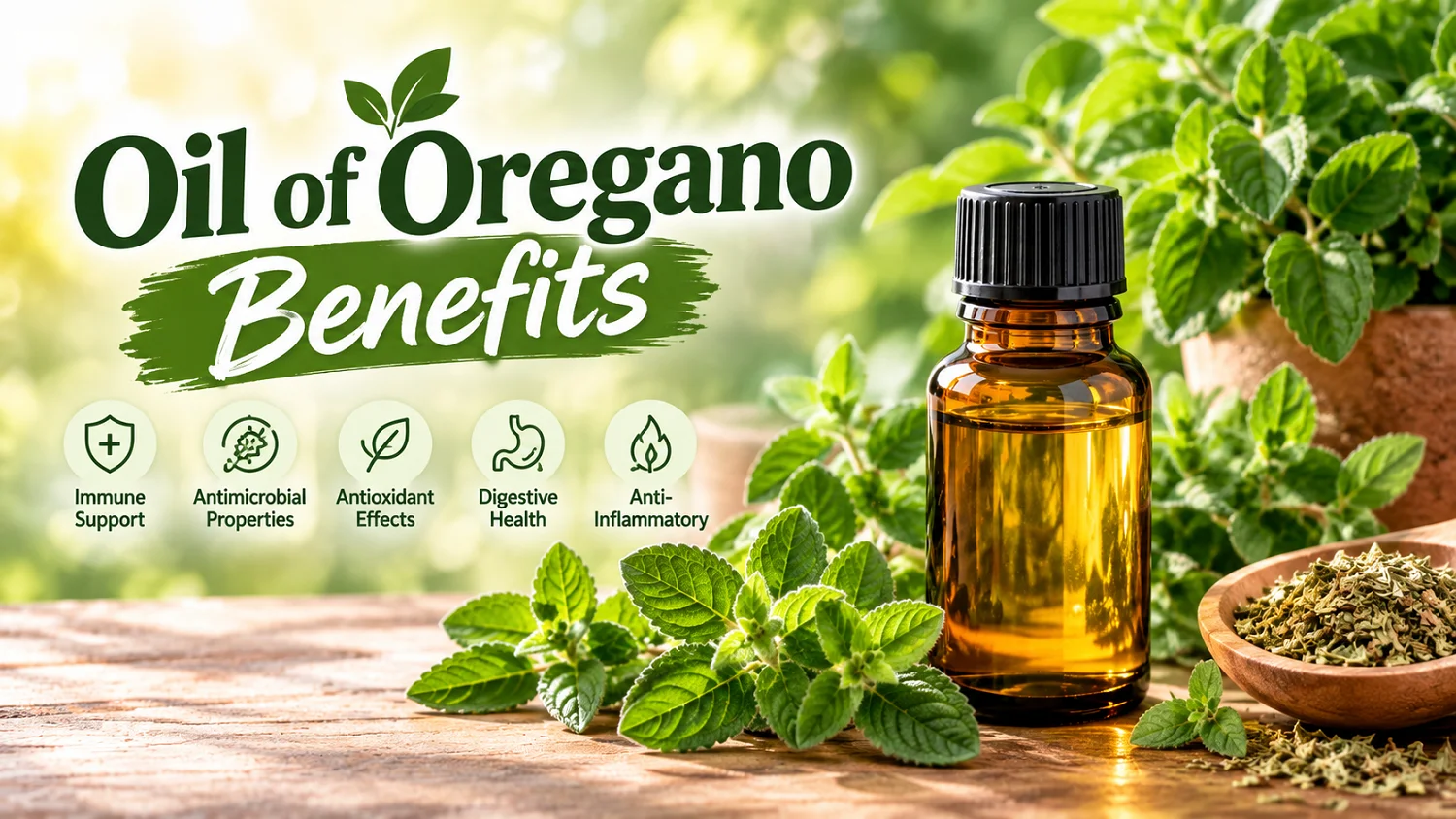
Oil of oregano is a concentrated herbal product that has attracted attention for its possible antimicrobial, antioxidant, antifungal, and anti-inflammatory properties. Many people use it for immune support, digestive health, colds, and other wellness purposes. But how much of what you hear about oil of oregano is actually supported by research?
The answer is more complicated than many supplement websites suggest.
Oregano contains natural compounds such as carvacrol and thymol, which have demonstrated interesting biological activity in laboratory studies. However, laboratory findings do not automatically mean that taking oregano oil will prevent or treat a disease in humans. Current evidence for many popular uses remains limited.
Here is what you should know about the potential oil of oregano benefits, how it may work, and what the research says about its safety.
What Is Oil of Oregano?
Oil of oregano is made from oregano plants, particularly species such as Origanum vulgare. It contains concentrated plant compounds, including carvacrol, thymol, and other phenolic compounds.
It is important to understand that the term “oregano oil” can refer to different products.
Some products are dietary supplements designed for oral use, while oregano essential oil is highly concentrated and is generally intended for topical, aromatic, or other specific uses. You should not assume that every oregano oil product is safe to swallow.
Cleveland Clinic also distinguishes oregano oil supplements from oregano essential oil and warns that concentrated essential oil should not be ingested.
What Makes Oil of Oregano Interesting?
Much of the interest in oregano oil comes from its naturally occurring compounds.
Carvacrol
Carvacrol is one of the major phenolic compounds found in oregano oil. Laboratory research has investigated its antimicrobial and antioxidant properties.
Thymol
Thymol is another important compound associated with oregano. It has demonstrated antimicrobial activity in laboratory research.
Other plant compounds
Oregano also contains compounds such as rosmarinic acid, flavonoids and other phenolic substances that contribute to its antioxidant activity.
These compounds help explain why researchers continue to study oregano oil. However, the presence of a biologically active compound does not prove that the finished supplement will treat a medical condition.
That distinction is important when evaluating oil of oregano benefits.
Potential Oil of Oregano Benefits
1. It May Have Antimicrobial Properties
One of the most studied properties of oregano oil is its potential ability to act against microorganisms.
Laboratory studies have found that oregano compounds, particularly carvacrol and thymol, can affect certain bacteria and other microbes. This has led to interest in oregano oil as a natural antimicrobial substance.
However, there is a major limitation.
A substance that inhibits bacteria in a laboratory environment does not necessarily work as an antibiotic inside the human body. Absorption, dosage, metabolism, the location of an infection and many other factors can change the outcome.
For this reason, oregano oil should not be considered a replacement for prescribed antibiotics.
2. It Has Antioxidant Potential
Oregano contains several antioxidant compounds.
Antioxidants help protect cells from oxidative stress caused by unstable molecules known as free radicals. Carvacrol, thymol and other compounds found in oregano have been investigated for antioxidant activity.
This is one reason oregano is often discussed as a potentially beneficial herb.
Still, antioxidant activity in laboratory research does not mean that taking oregano oil will prevent cancer, heart disease, aging, or another chronic condition.
Those stronger claims require good human evidence.
3. It May Have Antifungal Activity
Oregano oil has also been studied for activity against certain fungi.
Compounds such as carvacrol and thymol have demonstrated antifungal effects in laboratory settings. This is one reason oregano oil is sometimes promoted for fungal problems involving the skin, nails, or digestive system.
But again, laboratory activity should not be confused with proven treatment.
A fungal infection may require an accurate diagnosis and an appropriate antifungal medication. Applying concentrated oregano essential oil directly to the skin can also cause irritation or an allergic reaction.
4. It May Help With Inflammation
Another area of research involves the potential anti-inflammatory properties of oregano compounds.
Some laboratory and animal research suggests oregano and its compounds may influence biological pathways associated with inflammation.
However, there is not enough high-quality human evidence to say that oregano oil can reliably treat inflammatory diseases.
It is better to describe this as a promising area of research rather than an established health benefit.
5. It May Support Digestive Health
Digestive health is another common reason people look for oregano oil.
Oregano has traditionally been used for digestive complaints, and researchers have investigated its antimicrobial and other biological properties. Cleveland Clinic notes that oregano may have potential digestive effects, although human research remains limited.
Some supplement marketers make much stronger claims about oregano oil and conditions such as intestinal infections, Candida overgrowth, or SIBO.
Those claims should be treated carefully.
Digestive symptoms such as bloating, gas, diarrhea and abdominal discomfort can have many different causes. Using oregano oil without knowing the cause may delay appropriate medical care.
6. It May Have Antiviral Properties in Laboratory Research
Carvacrol and thymol have attracted scientific interest because laboratory studies have found activity against certain viruses.
This does not mean oil of oregano has been proven to prevent or cure viral infections in people.
For example, NCCIH states that there is no strong evidence that oil of oregano prevents or treats the common cold or influenza.
This is an important distinction because “antiviral activity” is sometimes presented online as if it were equivalent to a clinically proven antiviral treatment.
It is not.
7. It May Have Potential Immune-Related Effects
Oregano products are frequently marketed as immune-support supplements.
The biological activity of oregano compounds makes this an interesting area for researchers, but there is currently not enough strong evidence to conclude that taking oregano oil significantly “boosts” the human immune system.
Children’s Hospital of Philadelphia similarly notes that the evidence does not establish oregano as a proven way to strengthen the immune system.
For healthy immune function, basics such as adequate sleep, a balanced diet, physical activity and recommended vaccinations have much stronger evidence behind them.
Does Oil of Oregano Help With Colds and Flu?
This is one of the most common questions about oregano oil.
Although laboratory studies have found interesting antimicrobial and antiviral activity, human evidence is not strong enough to say that oregano oil prevents or treats colds or influenza.
NCCIH specifically reports that there is no strong evidence supporting oil of oregano for preventing or treating colds.
So if you have a cold, oregano oil should not replace proven approaches or medical care when needed.
If symptoms are severe, persistent, or getting worse, speak with a healthcare professional.
Oil of Oregano vs. Oregano Essential Oil
These products are often confused online.
Oil of oregano may refer to an oral supplement formulated for dietary use.
Oregano essential oil is a highly concentrated aromatic oil. It may be used in aromatherapy or diluted for certain topical applications, depending on the product instructions.
You should always check the product label before using it.
Do not assume that an essential oil is safe to swallow simply because a different oregano product is sold as an oral supplement. Cleveland Clinic specifically warns against ingesting oregano essential oil.
Possible Side Effects and Safety
Oregano is commonly consumed as a culinary herb, but concentrated oregano products can have different safety considerations.
Possible problems can include:
- Stomach upset
- Mouth or throat irritation
- Skin irritation
- Allergic reactions
- Potential interactions with medications
- Possible effects on blood sugar or blood clotting
Cleveland Clinic notes that oregano supplements may affect blood sugar and blood clotting, while topical oregano oil can cause allergic dermatitis in some people.
People taking medications should be particularly careful with concentrated herbal supplements.
If you take blood thinners, diabetes medication, or other regular medicines, ask a doctor or pharmacist before using oregano oil.
Pregnant or breastfeeding people should also seek professional advice because safety information is limited. Drugs.com notes that there is limited clinical trial evidence supporting therapeutic uses of oregano and insufficient safety information for pregnancy and lactation.
Is There a Recommended Dose of Oil of Oregano?
There is no universally established therapeutic dose of oregano oil for treating a specific disease.
Products can vary considerably in concentration, formulation and intended use.
For that reason, it is not appropriate to assume that a dose used in one research study applies to every oregano oil supplement.
Follow the product’s instructions and speak with a qualified healthcare professional if you are considering oregano oil for a specific health problem.
Most importantly, do not increase the amount simply because you believe a higher dose will provide stronger benefits.
What Does the Research Really Say?
The biggest takeaway from current research is that oregano oil is promising but not proven for many of its popular uses.
There is good scientific interest in compounds such as carvacrol and thymol. Laboratory research supports antimicrobial, antioxidant and other biological activity.
But many human studies are small or limited, and there is not enough evidence to make strong claims that oregano oil can prevent or cure infections, boost immunity, treat chronic disease, or replace conventional medical treatment.
This evidence gap is important.
A supplement can have interesting laboratory properties while still lacking sufficient clinical evidence for a particular health claim.
That is currently the best way to interpret many of the reported oil of oregano benefits.
Frequently Mentioned Uses That Need More Research
You may see oregano oil promoted for:
- Candida
- SIBO
- Parasites
- Respiratory infections
- Colds and flu
- Gut health
- Immune support
- Skin fungus
- Inflammation
- Blood sugar management
Some of these areas have laboratory or preliminary research behind them, but that does not mean oregano oil is a proven treatment.
For example, NCCIH does not find strong evidence that oregano oil prevents or treats colds, while medically reviewed sources emphasize the limited nature of human evidence for many other uses.
If you have a diagnosed medical condition, use evidence-based treatment rather than relying on oregano oil alone.
Conclusion
The potential oil of oregano benefits are largely connected to natural compounds such as carvacrol and thymol. Laboratory research suggests that these compounds may have antimicrobial, antioxidant, antifungal and anti-inflammatory properties.
However, the evidence in humans is much less convincing.
Oregano oil may be an interesting herbal supplement, but it should not be viewed as a natural replacement for antibiotics, antifungal medicines, antiviral treatments, or other proven medical care. If you take medications, are pregnant or breastfeeding, or have an ongoing health condition, talk with a healthcare professional before using concentrated oregano products.
The most accurate way to view oil of oregano today is simple: promising research, but limited clinical evidence for many of the health claims made online.