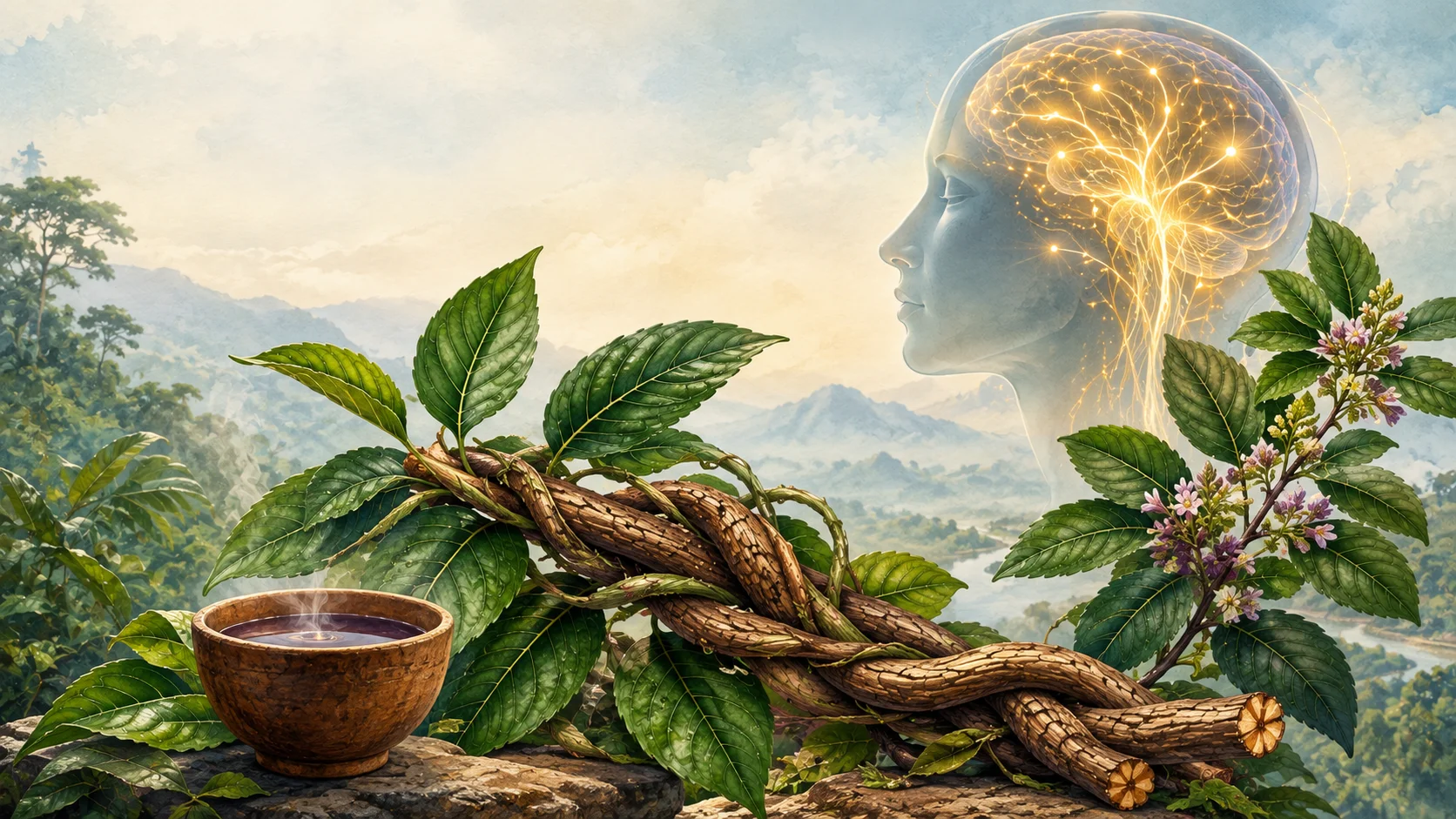
Ayahuasca is a psychoactive brew traditionally made from Amazonian plants. It can cause intense changes in perception, emotion, thinking, and awareness. Indigenous and other communities in parts of South America have used ayahuasca in traditional, spiritual, and ceremonial practices for generations, and interest in the brew has since spread internationally.
Ayahuasca can cause significant physical and psychological effects, and the risks can be greater when it is combined with certain medicines or used by people with particular medical or psychiatric conditions. Its legal status also varies widely between countries and often depends on whether a religious or cultural exemption applies.
This guide explains what ayahuasca is, how it works, what research shows, who faces the greatest risk, and where the law stands.
When to Get Emergency Medical Help
Seek emergency medical care right away if someone develops any of the following after taking ayahuasca:
- High fever with heavy sweating
- Severe muscle stiffness, tremors, or uncontrolled movements
- A very fast or irregular heartbeat, or chest pain
- Severe confusion or agitation that does not improve
- A seizure or loss of consciousness
- Persistent or severe vomiting
- Thoughts of suicide or self harm
These symptoms can point to serotonin toxicity, a dangerous change in blood pressure or heart rate, dehydration, or another medical emergency. Do not wait for symptoms to pass. Tell the medical team exactly what was taken, roughly when, and which medicines or other substances the person uses.
What Is Ayahuasca?
Ayahuasca is a traditional brew whose name is often translated from Quechua as “vine of the soul.” It is also known as yage or by other regional names.
Traditional preparations commonly combine the stem or bark of the Banisteriopsis caapi vine with the leaves of a plant that contains DMT. Psychotria viridis, commonly called chacruna, is one well known source.
The exact recipe varies between regions, traditions, and preparers. Different plant species, methods, and concentrations can produce real differences in the chemical makeup and strength of the final brew, which makes the effects of an unfamiliar preparation hard to predict.
How Does Ayahuasca Work?
DMT is the main psychedelic compound responsible for most of ayahuasca’s effects. It acts on several serotonin receptors in the brain, including the serotonin 2A receptor, which is strongly linked to psychedelic effects.
Taken by mouth on its own, DMT is rapidly broken down by an enzyme called monoamine oxidase, in the gut and liver, long before it can reach the brain in meaningful amounts.
Banisteriopsis caapi contains beta carboline alkaloids such as harmine and harmaline. These compounds inhibit monoamine oxidase, which lets orally taken DMT remain active long enough to produce its effects. That same inhibition is also the main reason ayahuasca can interact dangerously with certain medicines.
What Does Ayahuasca Feel Like?
Reported mental effects include vivid visual imagery, altered sense of time, intense emotions, unusual memories resurfacing, and a feeling of connection or detachment from the body. Some people describe the experience as meaningful. Others experience fear, panic, paranoia, or disorientation.
Physical effects can include nausea, vomiting, diarrhea, sweating, dizziness, tremors, and a faster heart rate with higher blood pressure. Vomiting is sometimes called “purging” in ceremonies, but medically it is a drug effect, not proof that the body is releasing toxins. Repeated vomiting or diarrhea can contribute to dehydration.
The main effects typically last several hours, though tiredness or emotional sensitivity can continue afterward.
Who Faces the Greatest Risk?
Drug Interactions
Because ayahuasca inhibits monoamine oxidase, combining it with certain medicines or substances can cause serious problems. Substances of particular concern include:
- SSRI and SNRI antidepressants
- MAOI antidepressants
- Some tricyclic antidepressants
- Tramadol
- MDMA and other serotonergic drugs
- Certain stimulants
This list is not complete. Over the counter cold and cough products, herbal supplements, and other prescription medicines can also interact. Serotonin toxicity is a particular concern when multiple serotonin raising substances are combined.
Never stop or change a prescribed medicine on your own in order to use ayahuasca. Some medicines cause withdrawal symptoms if stopped suddenly, so talk to your prescriber first.
Mental Health Conditions
People with a personal or family history of psychosis face particular concern, since psychedelics can sometimes trigger severe psychological reactions. The same caution applies to people with bipolar disorder or other serious psychiatric conditions. Anyone with a significant mental health condition should speak with a qualified professional before considering a psychedelic substance.
Heart and Other Health Conditions
Ayahuasca can temporarily raise heart rate and blood pressure, so people with cardiovascular disease or uncontrolled high blood pressure face added risk. Safety data in pregnancy and breastfeeding are limited, so ayahuasca should not be assumed safe in either case.
Unregulated Settings
Most ayahuasca use happens outside medical supervision. A ceremony or retreat may not screen participants for medicines or health conditions, may lack trained staff, and may use a brew of unknown strength. A person in an altered state is also vulnerable, so the practices of whoever is running the session matter.
What Does Research Say About Ayahuasca?
Researchers are studying possible mental health uses for ayahuasca, but the evidence is still early. One well known randomized, double blind, placebo controlled trial gave a single dose of ayahuasca or placebo to 29 adults with depression that had not responded to standard treatment. Seven days later, 64 percent of the ayahuasca group had responded, compared with 27 percent of the placebo group.
These results are promising but come from a small trial with short follow up in a supervised clinical setting. A single study cannot establish long term safety or prove ayahuasca works as a treatment outside that setting. Larger controlled trials are needed. Ayahuasca is not an approved treatment for depression or any other condition in the United States.
Is Ayahuasca Legal?
Ayahuasca laws vary widely, and the legal status in many places depends on whether the brew contains a controlled substance such as DMT and whether a religious or cultural exemption applies. This section is general information, not legal advice, and laws change, so confirm current rules where you live.
United States. DMT is a federally controlled substance, and because ayahuasca typically contains DMT, it falls under that same control. In 2006, the Supreme Court ruled in Gonzales v. O Centro Espirita Beneficente Uniao do Vegetal that the government could not block that specific church’s religious use of the brew under the Religious Freedom Restoration Act. That ruling did not make ayahuasca legal generally. Some religious organizations have obtained their own protections or exemptions, but these do not extend automatically to other groups or individuals. State and local policies that reduce penalties for some psychedelics do not necessarily make DMT containing ayahuasca legal.
United Kingdom. DMT is a Class A controlled substance under the Misuse of Drugs Act. Traditional or religious use of ayahuasca is not automatically exempt from this.
Other countries. Treatment varies considerably. Some countries in South America recognize or tolerate certain traditional or religious uses, while others restrict any DMT containing preparation. The outcome often depends on the exact ingredients, how the substance is used, and whether a recognized exemption exists.
Frequently Asked Questions
What is the difference between ayahuasca and DMT?
DMT is a single compound. Ayahuasca is a brew that combines a DMT containing plant with Banisteriopsis caapi, whose alkaloids inhibit the enzyme that would otherwise break DMT down before it could take effect.
Is ayahuasca safe?
It is not risk free. Potential problems include psychological distress, a faster heart rate and higher blood pressure, vomiting and dehydration, drug interactions, and serious psychiatric reactions in vulnerable people. Overall risk depends on your health, your medicines, the brew’s composition, and the setting.
Can I take ayahuasca with antidepressants?
Not without medical guidance. Because ayahuasca inhibits monoamine oxidase, combining it with many antidepressants raises the risk of serotonin toxicity. Never stop an antidepressant suddenly to make room for ayahuasca. Speak with your prescriber first.
Is ayahuasca addictive?
Current research has not established the same dependence profile seen with many commonly misused drugs. However, long term human data are limited, so the question is not fully settled.
How long do the effects last?
Typically several hours, with tiredness or emotional sensitivity sometimes continuing afterward. Duration varies with the preparation, dose, and individual factors.
Does ayahuasca cure depression or anxiety?
No. Early research, particularly in treatment resistant depression, is promising but limited. Ayahuasca is not an approved treatment and should not replace evidence based care from a licensed professional.
Is ayahuasca legal in the United States?
Not generally. DMT is federally controlled, so DMT containing ayahuasca is subject to federal drug law. Some religious organizations hold specific exemptions, but these do not apply to the general public.
Talk to a Doctor
If you are considering ayahuasca, or you already used it and feel unwell, speak openly with a healthcare professional. Tell them what you took, roughly when, and which medicines or other substances you use. That information helps clinicians catch dangerous interactions and treat you safely.
If you live with depression, anxiety, trauma, or another mental health condition, a licensed professional can discuss treatments with an established safety record. If you are experiencing severe symptoms, a seizure, chest pain, or thoughts of suicide or self harm, seek emergency medical help immediately.