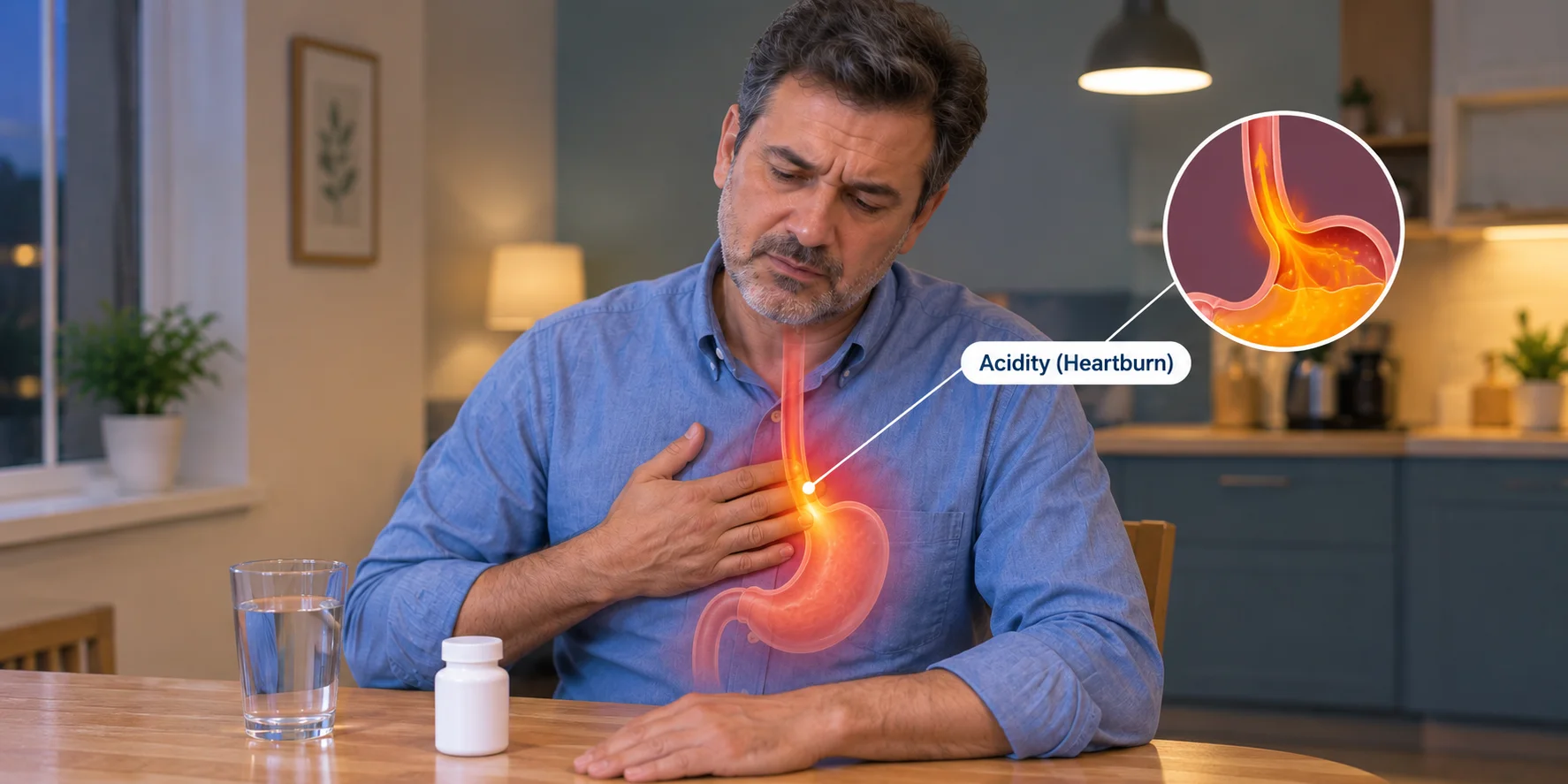
Heartburn after dinner is one thing. Waking up at 2 a.m. with a burning chest, or clearing your throat all day because acid keeps creeping up, is another. If that’s where you are, you’re probably less interested in theory and more interested in what to do about it tonight, this week, and long term.
Acid reflux treatment isn’t one-size-fits-all. It ranges from simple habit changes to over-the-counter medication to prescription drugs and, in a smaller number of cases, surgery. What works depends on how often symptoms happen, how severe they are, and whether they’re damaging your esophagus. This guide walks through each option in the order most doctors actually recommend trying them.
What’s Actually Happening When You Have Acid Reflux
Acid reflux occurs when stomach acid flows backward into the esophagus, the tube connecting your throat to your stomach. Normally, a ring of muscle called the lower esophageal sphincter (LES) keeps that acid where it belongs. When the LES relaxes at the wrong time or weakens, acid escapes upward and irritates tissue that was never built to handle it.
Occasional reflux, the kind you get after a big spicy meal, isn’t usually a medical problem. It becomes gastroesophageal reflux disease, or GERD, when it happens regularly, generally defined as symptoms twice a week or more for several weeks. GERD matters because left unmanaged, it can damage the digestive tract over time, sometimes leading to esophagitis or, in rare cases, more serious complications.
So the real question behind “acid reflux treatment” usually splits into two paths: calming occasional symptoms, and managing a chronic pattern that needs a longer-term plan.
Step 1: Lifestyle and Diet Changes
This is where every credible treatment plan starts, and honestly, it’s the step people skip because it’s less exciting than a pill. But it works, and it costs nothing.
Eat smaller meals, and stop eating close to bedtime. A full stomach puts pressure on the LES. Lying down within two to three hours of eating makes reflux far more likely, since gravity isn’t helping keep acid down anymore.
Identify your personal trigger foods. Common culprits include tomato-based sauces, citrus, chocolate, caffeine, alcohol, mint, and fried or fatty foods. Not everyone reacts to the same things, though, so a short food-and-symptom log for a week or two can be more useful than any generic list.
Elevate the head of your bed. Raising it six to eight inches, not just stacking pillows, uses gravity to keep stomach contents where they belong overnight.
Lose excess weight if you’re carrying it around your midsection. Extra abdominal weight increases pressure on the stomach, which pushes acid upward. Even modest weight loss often reduces symptom frequency.
Cut back on smoking. Nicotine relaxes the LES, which is exactly the muscle you need working correctly.
Loosen tight clothing around the waist. It sounds minor, but constant pressure on the abdomen is a real contributor for some people.
None of these fixes are glamorous, and they won’t erase severe GERD on their own. But for mild, occasional reflux, they’re often enough by themselves.
Step 2: Over-the-Counter Options
When lifestyle changes aren’t quite cutting it, three categories of OTC medication cover most needs.
Antacids (Tums, Rolaids, Maalox) neutralize existing stomach acid fast, usually within minutes. They’re good for occasional, mild heartburn but wear off quickly and don’t prevent future episodes.
H2 blockers (famotidine, sold as Pepcid) reduce how much acid your stomach produces. They take longer to kick in than antacids, roughly 30 to 90 minutes, but the relief lasts several hours and can be taken preventively before a meal you expect will trigger symptoms.
Proton pump inhibitors (PPIs) like omeprazole (Prilosec) and esomeprazole (Nexium) block acid production more completely and are meant for short courses, typically 14 days, to control more persistent symptoms. Current clinical guidance points to PPIs as the first medication patients with typical GERD symptoms should try. That said, PPIs aren’t meant to be a permanent daily habit without medical oversight, since long-term use carries its own considerations that a doctor should weigh with you.
If you’re reaching for OTC heartburn medication more than twice a week, or for longer than a couple of weeks straight, that’s the signal to talk to a doctor rather than keep restocking the medicine cabinet.
Step 3: Prescription Treatment
When OTC options aren’t enough, or when reflux has caused visible damage to the esophagus, prescription-strength treatment comes into play.
Prescription-dose PPIs are simply higher doses or longer courses of the same drug class available over the counter, used under medical supervision for esophagitis healing or harder-to-control GERD.
Potassium-competitive acid blockers (PCABs) are a newer class of medication. Vonoprazan, sold under the brand name Voquezna, is a potassium-competitive acid blocker approved by the FDA for healing erosive esophagitis, and it’s also approved for relief of heartburn linked to non-erosive GERD. It blocks the same acid pumps as PPIs but works faster and stays active longer, and in clinical trials it performed as well as or better than standard PPIs for healing erosive disease. Research comparing it directly to other reflux medications found it more effective at lowering stomach acid, particularly in patients with more severe esophageal damage.
Prokinetics, a smaller category of drugs, help the stomach empty faster, which can reduce the amount of content available to reflux upward. These are used less often and typically reserved for specific cases.
If symptoms persist despite eight weeks of consistent PPI use, most gastroenterologists will recommend an endoscopy to look directly at the esophagus and rule out other causes, since that combination is a standard trigger for further evaluation.
Step 4: Procedures and Surgery
Surgery is not the first move for most people with reflux, but it’s a real option when medication isn’t controlling symptoms, when someone can’t tolerate long-term medication, or when a hiatal hernia is contributing to the problem.
Fundoplication is the most common surgical approach. The surgeon wraps the top of the stomach around the lower esophagus to reinforce the LES. It’s often done laparoscopically, meaning smaller incisions and a shorter recovery than older open techniques.
LINX device is a ring of magnetic beads placed around the LES. The magnets keep the sphincter closed against reflux but allow it to open when you swallow. It’s less invasive than fundoplication and reversible if needed.
Endoscopic procedures, done through the mouth without external incisions, are used in select cases to tighten the LES or reduce a hiatal hernia, though they’re not appropriate for everyone.
Surgery is generally reserved for people with confirmed GERD, often those with more advanced esophagitis, who haven’t had lasting relief from medication or who want to get off long-term drug therapy.
When to See a Doctor
A few symptoms mean it’s time to stop self-treating and get checked out:
- Difficulty or pain when swallowing
- Unexplained weight loss
- Vomiting blood or material that looks like coffee grounds
- Black or tarry stools
- Chest pain that could be confused with a heart problem (always treat this as an emergency first, GERD symptom second)
- Heartburn that persists despite two weeks of consistent OTC treatment
- Symptoms that started after age 50, since new-onset reflux later in life warrants a closer look
None of these are meant to cause panic. Most reflux is manageable and not dangerous. But they’re the specific signs that call for an actual diagnosis rather than another round of antacids.