
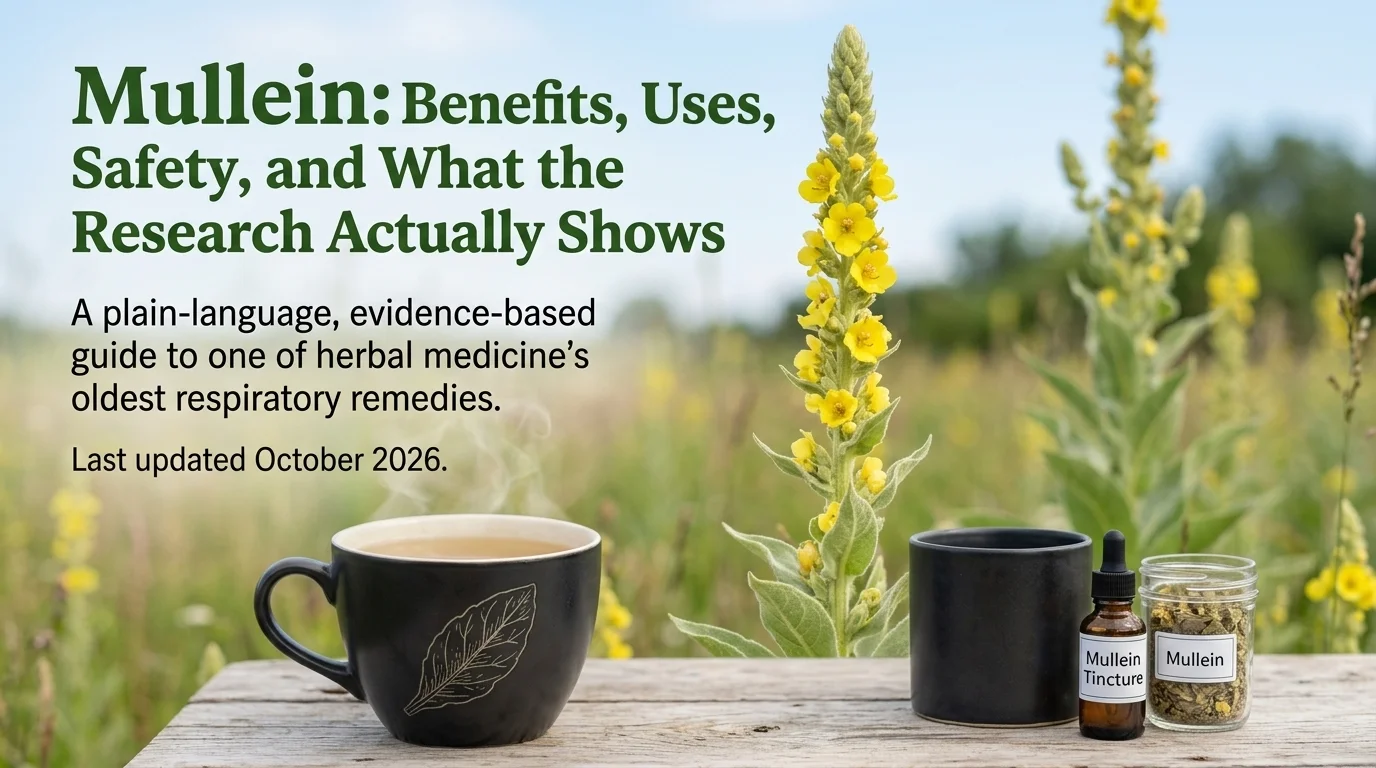
A plain-language, evidence-based guide to one of herbal medicine’s oldest respiratory remedies. Last updated October 2026.
If you’ve seen mullein tea all over social media promising to “detox” your lungs, or you’re just curious about the tall, fuzzy-leaved plant growing along the roadside, here’s what this traditional herb can and can’t do, based on what research and health regulators actually say.
What Is Mullein?
Mullein (Verbascum thapsus, also called great mullein, woolly mullein, or velvet plant) is a tall, soft-leaved flowering plant in the figwort family. It’s easy to recognize: large, fuzzy, pale green leaves form a low rosette in its first year, followed by a towering flower spike covered in small yellow blooms in its second year. Native to Europe, northern Africa, and temperate Asia, mullein has naturalized across North America and now grows wild along roadsides, fields, and disturbed ground almost everywhere.
People have used mullein medicinally for more than 2,000 years. Ancient Greek and Roman physicians documented it for coughs and lung complaints, and several Native American traditions dried and smoked the leaves or brewed them into teas for respiratory relief. Today it remains one of the most widely used herbs for soothing coughs, congestion, and sore throats, sold as loose dried leaf, tea bags, tinctures, oils, and capsules in health food stores and online.
What’s Actually In It
Mullein leaves and flowers contain a mix of compounds that give the plant its soothing reputation:
- Mucilage, a gel-forming carbohydrate that coats and soothes irritated mucous membranes
- Saponins, plant compounds thought to help loosen mucus (they’re also why oversteeped mullein tea can taste faintly bitter or soapy)
- Flavonoids and verbascoside, antioxidant compounds studied for anti-inflammatory activity in lab settings
- Tannins, which contribute an astringent quality
Most of what’s known about these compounds comes from test-tube and animal research rather than large human trials, which matters for how much weight to put on the health claims below.
Potential Health Benefits
Respiratory Support
This is mullein’s best-known and best-supported use. In 2018, the European Medicines Agency’s Committee on Herbal Medicinal Products formally recognized mullein flower, based on its long-standing traditional use, for relieving a sore throat that comes with a dry cough and cold, in adults and teenagers over 12. That’s a meaningful traditional-use recognition, though the committee was explicit that the conclusion rests on history of use, not clinical trials.
Beyond that, small lab and animal studies suggest mullein’s mucilage and saponins may help loosen mucus and ease coughing, and some in vitro research has found antiviral activity against viruses such as influenza and herpes simplex. None of this has been confirmed in well-designed human clinical trials, so it’s most accurate to think of mullein as a traditional comfort remedy for a cold-related cough, not a proven treatment for asthma, bronchitis, or COPD.
Ear Discomfort
Mullein-infused oil is a long-standing folk remedy for earache, often combined with garlic and other herbs. One small pediatric trial looked at a multi-herb ear-drop blend that included mullein and found it comparable to a standard numbing ear drop for pain relief, but because several herbs were combined, mullein’s individual contribution isn’t clear. Because ear pain can signal an infection or a ruptured eardrum, any ear remedy, mullein oil included, should only be used after a healthcare provider has actually examined the ear.
Skin Soothing
The same mucilage that soothes irritated throats is traditionally applied to minor skin irritation, chapped skin, and small wounds as an infused oil or poultice. Evidence here is mostly traditional and anecdotal, with a handful of small studies, including one looking at mullein oil and episiotomy wound healing. It’s reasonable to consider topical mullein a gentle skin soother, not a treatment for serious skin conditions or wounds that need medical attention.
Antioxidant Activity
Mullein’s flavonoid content gives it measurable antioxidant activity in lab testing. Antioxidants matter for long-term health, but having antioxidant activity in a test tube is a long way from proving a specific benefit, such as cancer or heart disease prevention, in a person drinking tea. Treat this one as plausible, not proven.
Does Mullein Tea “Detox” or “Heal” the Lungs?
Mullein tea has become a social media trend, often promoted with claims that it pulls tar from the lungs, reverses smoking damage, or detoxes the lungs. This specific claim isn’t supported by evidence. Lungs clear themselves through cilia (tiny hair-like structures) and immune cells, not through anything you drink, and no herbal tea has been shown to remove tar or reverse structural lung damage. If you’ve quit smoking, the real driver of lung recovery is time and staying smoke-free, not a particular tea.
A related trend involves smoking or vaping mullein leaf instead of tobacco, pointing to its traditional use by some Indigenous groups. Medical sources are consistently cautious here: inhaling smoke from any burning plant material, mullein included, introduces combustion byproducts and particulate matter into the lungs. If the goal is respiratory support, a brewed tea, tincture, or capsule avoids that problem entirely and is the more sensible route.
Different Ways to Use Mullein
| Form | Common use | Notes |
|---|---|---|
| Dried leaf tea | Cough, congestion, sore throat | Must be strained well, see below |
| Tincture | Same as tea, more concentrated | Typically 1 to 4 mL, one to three times daily |
| Infused oil | Earache (with a carrier oil), skin | Never ingested, never placed in the ear without a doctor checking it first |
| Capsules | Convenience, consistent dosing | Follow the product label |
How to Make Mullein Tea
This is the most common way people use mullein, and preparation matters more than with most herbal teas because of the fine hairs on the leaves.
- Use 1 to 2 teaspoons of dried mullein leaf (flowers can be added too) per cup of water.
- Heat water to just below boiling, around 170 to 200°F.
- Steep for 10 to 15 minutes, covered.
- Strain thoroughly through a fine mesh strainer, cheesecloth, or coffee filter. The leaves carry tiny hairs that can irritate the throat if they aren’t filtered out.
- Some people drink it up to two or three times a day during a cold. There’s no clinically established dose, so starting with one cup and noticing how you feel is a reasonable approach.
Safety, Side Effects, and Who Should Be Careful
Mullein leaf and flower have a long history of use with few reported serious side effects, and it’s generally treated as safe in food amounts. That said, traditionally well tolerated isn’t the same as rigorously studied, and a few specific points are worth knowing:
- Never use the seeds. This is the one firm warning that comes up across sources. Mullein seeds contain compounds, commonly cited as rotenone along with high levels of saponins, that have traditionally been used to stun fish, and they’re considered unsafe to eat. Always check that dried mullein leaf or flower products are free of seeds, and never make tea from seed heads.
- Pregnancy and breastfeeding. There isn’t enough safety data to confirm mullein is safe during pregnancy or while nursing, so most clinical references recommend avoiding it unless a healthcare provider says otherwise.
- Possible medication interactions. Mullein hasn’t been well studied for drug interactions, but because it contains coumarin-type compounds, there’s a theoretical concern about increased bleeding risk with blood thinners such as warfarin. It may also have mild blood-sugar-lowering and sedative effects, worth knowing if you take diabetes medication or sedatives. Check with a pharmacist or doctor before combining mullein with any prescription medication.
- Skin contact. Fresh mullein leaves can irritate the skin in sensitive people, similar to a mild poison ivy-type reaction, so gloves are worth wearing if you harvest it yourself.
- Allergies. As with any plant, allergic reactions are possible, especially in people sensitive to other plants in the figwort family.
- Supplement regulation. Mullein products sold as supplements aren’t reviewed by the FDA for safety or effectiveness before reaching shelves, so quality and potency can vary by brand.
If you’re managing a chronic respiratory condition such as asthma or COPD, mullein is not a substitute for prescribed treatment. Bring it up with your doctor before adding it alongside your current medications.
Buying and Storing Mullein
Dried mullein leaf and flower are widely available at natural food stores, herbal apothecaries, and online. A few practical tips:
- Choose organically grown mullein when possible, and avoid wild-harvested mullein from roadsides or industrial areas, where it can absorb pollutants from the soil.
- Look for products that specify “leaf and flower” rather than unidentified “mullein parts,” and check that seeds aren’t included.
- Store dried mullein in an airtight container, away from light and heat, where it will generally keep its potency for about a year.
Frequently Asked Questions
Does mullein tea actually help a cough? It may help with the mild, dry cough that comes with a common cold or sore throat, largely because of its soothing mucilage content. This is the one use with meaningful traditional-use recognition from European regulators. It isn’t a proven treatment for chronic lung conditions.
Is it safe to take mullein every day? There’s no established long-term safety data for daily use. Most people use it short-term during a cold or cough rather than continuously. If you want to use it regularly, check with a healthcare provider first.
Can children use mullein? European herbal guidance limits mullein flower products to ages 12 and up due to a lack of data in younger children. Mullein oil for earache should never be used in a child’s ear without a doctor examining the ear first.
Does mullein interact with medications? Formal interaction research is limited, but there are theoretical concerns with blood thinners, diabetes medications, and sedatives. Tell your doctor or pharmacist about any herbal supplements you take.
Is smoking mullein a healthy alternative to cigarettes? No. While mullein has a history of being smoked in some traditional practices, inhaling smoke from any burned plant material exposes the lungs to combustion byproducts. If you’re looking for mullein’s respiratory benefits, tea, tincture, or capsules are the better route, and if you’re trying to quit smoking, a doctor can point you to proven cessation methods.
The Bottom Line
Mullein has centuries of traditional use behind it as a gentle remedy for coughs, sore throats, and minor respiratory discomfort, and modern lab research offers some plausible explanations for why. What it doesn’t have is strong clinical trial evidence, and claims that it detoxes or heals the lungs outright go well beyond what’s actually been studied. Used sensibly, strained well, free of seeds, and not as a substitute for medical care, it’s a low-risk herbal option many people find soothing. If you’re pregnant, nursing, on medication, or managing a chronic lung condition, check with a healthcare provider before adding it to your routine.