If you’ve ever picked up an iron supplement and put it back down because your stomach couldn’t handle it, you’re not alone. That’s the single biggest complaint about iron supplementation, and it’s the whole reason “whole food iron supplement cofactors” has become something people search for by name instead of just searching “iron pills.”
The short version: iron on its own is hard for your body to absorb, and it’s hard on your gut. Pairing it with the right cofactors, most commonly vitamin C, changes both of those problems. This guide walks through what that actually means, what the research says, and what’s worth paying attention to before you buy.
What Does “Whole Food Iron” Actually Mean?
Here’s the thing nobody explains clearly on product pages: “whole food” isn’t a regulated term. It’s a marketing description, not a chemical one.
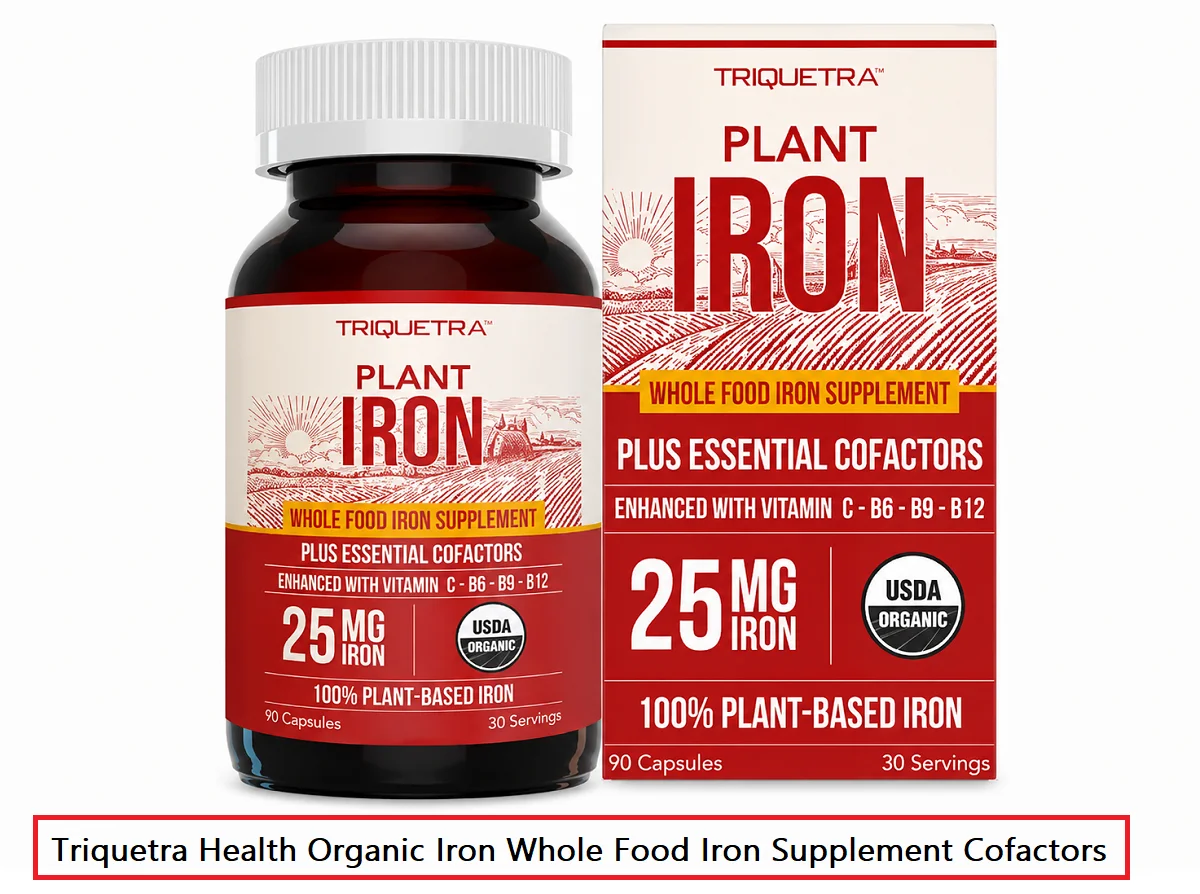
Standard iron supplements use forms like ferrous sulfate or ferrous fumarate, iron bound to a simple salt. Whole food iron products instead source iron from plant material (or complex it with plant compounds) so the mineral arrives in something closer to the matrix you’d get from eating iron-rich food. The idea is that your body recognizes and processes that form more easily.
Does that actually translate to better absorption? Honestly, that’s where the evidence gets thinner than the marketing suggests. Plenty of people report it’s gentler on their stomach. That’s a real and common experience, not nothing. But “gentler” and “better absorbed” are two different claims, and most brands blur them together.
What’s much better established is the second half of the story: cofactors.
Why Cofactors Matter More Than the Iron Form Itself
Iron comes in two dietary forms: heme (from animal sources) and non-heme (from plants and most supplements). Non-heme iron is absorbed far less efficiently on its own, which is exactly why cofactors exist in these formulas in the first place.
Vitamin C is the cofactor with the most research behind it. Vitamin C enhances the absorption of non-heme iron because of its iron-chelating and reducing properties, converting ferric iron into ferrous iron, which is more soluble. It doesn’t stop there, either. Vitamin C also counteracts several common absorption inhibitors, including phytates found in grains and legumes, polyphenols in tea and coffee, and calcium from dairy.
That second point matters more than people realize. You can take a perfectly good iron supplement and still blunt its effect by taking it with your morning coffee. I’ve seen people do this for months, wondering why their iron levels aren’t budging, not realizing the culprit was sitting right next to the pill bottle.
The key role of vitamin C in nonheme iron absorption is generally accepted, largely because it prevents the formation of insoluble iron compounds and helps convert iron into a form the body can actually take up into cells. That’s not a fringe claim. It’s about as settled as nutrition science gets.
Some formulas add BioPerine (black pepper extract) alongside vitamin C. BioPerine has a genuine track record for improving absorption of certain other compounds, curcumin being the best-known example. Its specific effect on iron absorption is less thoroughly documented in the independent research than product marketing sometimes implies, so I’d treat that ingredient as a reasonable bonus, not the main event.
Does the Dose of Vitamin C Actually Matter?
Yes, and this is worth knowing before you compare products side by side. The effect of vitamin C on iron absorption has been shown to be dose dependent, and it only increases iron absorption when both nutrients are consumed together. That last part is the practical takeaway: timing matters. Vitamin C sitting in a separate multivitamin you take at a different time of day isn’t doing much for the iron pill you swallowed at breakfast.
One frequently cited human trial found that as the vitamin C dose was increased from 25 mg to 1,000 mg, iron absorption climbed from 0.8% to 7.1% in male subjects fed a liquid formula meal containing 4.1 mg of iron. That’s roughly a ninefold jump just from more vitamin C, no change to the iron itself.
That single-meal data comes with a real caveat, though. Long-term studies paint a more complicated picture. The facilitating effect of vitamin C on iron absorption from a complete, real-world diet is far less pronounced than its effect on absorption from single, isolated meals. That finding might explain why some long-term vitamin C supplementation studies didn’t move the needle on people’s actual iron status as much as the single-meal data predicted.
What does that mean for you practically? A whole-food iron supplement that already builds vitamin C into the same capsule sidesteps the timing problem entirely. You’re not relying on remembering to eat an orange with your pill.
The B-Vitamin Piece People Skip Past
Iron absorption is only step one. Getting that iron into working red blood cells is a separate process, and it depends on a different set of nutrients entirely.
B6 helps convert iron into hemoglobin, the protein in red blood cells that actually carries oxygen. B9 (folate) is needed for red blood cell production itself. B12 rounds this out, and a B12 deficiency is one of the more common causes of anemia that has nothing to do with iron levels at all.
This is why a lot of “iron plus cofactor” formulas bundle in a B-complex rather than iron on its own. If your fatigue is actually a B12 problem, straight iron supplementation won’t touch it, no matter how well-absorbed the iron is.
What to Actually Look For Before Buying
A few things worth checking on any label, whole food or not:
- Elemental iron amount, not just total ingredient weight. This is the number that matters for dosing.
- Vitamin C in the same product, not just “pairs well with vitamin C” on the marketing copy. If it’s not in the capsule, you have to remember to add it yourself.
- Third-party testing. Supplements aren’t reviewed by the FDA before they hit shelves, so independent lab verification is one of the only outside checks you get.
- Realistic dosing. Anything promising dramatic results in days is worth a second look, not less scrutiny.
One honest limitation worth naming here: none of this replaces an actual blood test. Iron deficiency and iron overload can produce overlapping, vague symptoms, fatigue being the big one, and taking iron you don’t need isn’t harmless. Excess iron is genuinely harder for your body to get rid of than a deficiency is to correct. If you haven’t had ferritin and hemoglobin checked recently, that’s the actual first step, not picking a supplement.
Common Mistakes People Make With Iron Supplements
Taking it with coffee or tea. As covered above, polyphenols in both can block a meaningful chunk of the iron you just swallowed.
Taking it with a calcium supplement or a big glass of milk. Calcium competes with iron for absorption. Separate them by a couple of hours if you can.
Assuming more is always better. Iron overload is a real condition, and megadosing without a documented deficiency isn’t a shortcut, it’s a risk.
Stopping the moment energy improves. Rebuilding iron stores takes longer than resolving symptoms does. Stopping early is one of the most common reasons people relapse into deficiency within a few months.
Ignoring the B-vitamin side entirely. As covered above, iron absorption and red blood cell production are two different steps. Missing either one caps how much benefit you’ll actually feel.
Our latest blogs:
- Spring Health Tips Elderly TCM Traditional Chinese Medicine 2026
- Biomatrix International Animal Health Nutrition Probiotics
Conclusion
The research on iron absorption cofactors is more settled than a lot of supplement marketing lets on, and also more nuanced. Vitamin C’s role in converting and protecting non-heme iron is well documented and genuinely useful, particularly when it’s built into the same product so timing isn’t left to chance. The “whole food” sourcing itself is a gentler-on-the-stomach story more than a proven-better-absorption one, at least based on what’s publicly verifiable right now.
None of this is a substitute for actually knowing your iron levels. Get tested first, talk to your doctor about whether supplementation makes sense for you specifically, and if you do go the whole-food-plus-cofactor route, check that the vitamin C is actually in the formula and not just mentioned nearby.