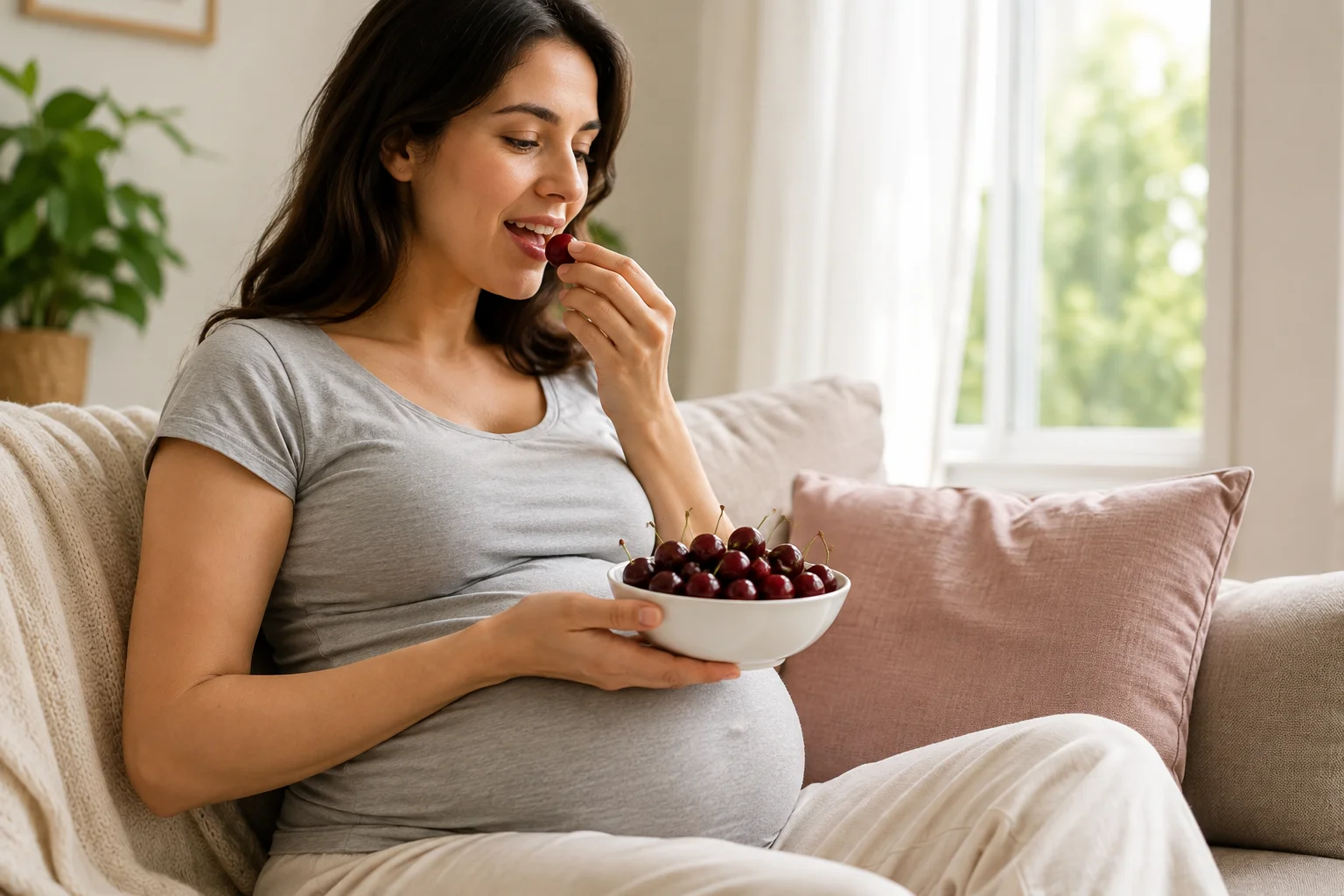
Yes, cherries are safe to eat during pregnancy, and they’re actually a smart choice. Fresh, washed cherries give you fiber, potassium, vitamin C, and antioxidant compounds called anthocyanins, all without any pregnancy-specific restrictions. The only things to watch for are the pit (a choking hazard, not a nutrition issue), how much sugar you’re taking in if you have gestational diabetes, and washing them properly to cut your risk of foodborne illness.
That’s the short version. Here’s what’s actually behind it, because “just eat them” isn’t much use without knowing why, how much, and what to skip.
Why Cherries Are a Good Pick During Pregnancy
Pregnancy nutrition guidance keeps circling back to the same handful of nutrients: folate, potassium, vitamin C, and fiber. Cherries deliver on three of the four.
Fiber. A cup of cherries has around 3 grams of fiber. That’s not a huge number on its own, but constipation is one of the more universally annoying pregnancy symptoms, driven by hormonal changes and, later, by the uterus pressing on your intestines. Fiber-rich fruit is one of the easiest fixes that doesn’t involve a laxative.
Potassium. Cherries are a decent source of potassium, a mineral involved in fluid balance and blood pressure regulation. Pregnancy increases your blood volume by up to 50%, so your body is doing more fluid-balance work than usual.
Vitamin C. Cherries provide meaningful vitamin C, which supports collagen formation in your baby’s developing skin, cartilage, and blood vessels, and helps your body absorb iron from plant foods.
Antioxidants. The deep red color in cherries comes from anthocyanins, plant compounds with anti-inflammatory properties. Tart (sour) cherries generally have higher anthocyanin concentrations than sweet cherries like Bing or Rainier.
None of this makes this fruit a superfood that outperforms other produce. They’re a good fruit, comparable to berries or grapes in overall nutritional value. The point isn’t that cherries are uniquely powerful. It’s that there’s no pregnancy-specific reason to avoid them, and several ordinary reasons to include them.
How Many Cherries Is Safe Per Day?
There’s no cherry-specific limit set by any health authority, because they aren’t a restricted or high-risk food in pregnancy. The relevant guidance is the general recommendation to eat 2 to 4 servings of fruit per day as part of a varied diet, with one serving being roughly a cup, around 15 to 20 peaces.
Two things push people toward moderation rather than a hard cap:
Sugar. Cherries are sweeter than many fruits. If you have gestational diabetes or are watching your blood sugar for another reason, treat cherries the way you’d treat grapes or mango: a serving at a time, not a bowl grazed on all afternoon, and ideally paired with some protein or fat to slow the sugar spike.
Fiber overload. Eating a large amount of any high-fiber fruit in one sitting can cause bloating or loose stools. This isn’t a pregnancy issue specifically, it’s just how fiber works, but pregnancy’s already-sensitive digestive system makes it worth mentioning.
A normal serving, eaten as part of a normal diet, doesn’t run into either problem.
The Pit Is the Real Risk, Not the Fruit
If there’s one genuine hazard with cherries in pregnancy, it’s mechanical, not nutritional: the pit. Cherry pits are a choking risk for anyone, and pregnancy doesn’t change your throat anatomy. Pit them before eating, especially if you’re distracted, eating on the go, or feeding cherries to a toddler at the same time you’re eating your own.
Swallowing a pit whole is generally not dangerous. Pits pass through the digestive system for most adults without incident. The concern is choking while eating, not what happens if one is swallowed. If you’re ever unsure whether something you swallowed is causing a problem, that’s a call to your doctor, not a symptom to search your way through.
Washing Cherries Properly
This is the step most people skip, and it’s the one with the most actual safety weight behind it. Pregnancy suppresses parts of your immune response, which is why the CDC notes that pregnant women are about 10 times more likely to get a Listeria infection than the general population. Listeria can cross the placenta, and it’s one of the reasons deli meat and soft cheese show up on every pregnancy food list. It’s less talked about that raw produce is also a route of exposure.
The FDA’s guidance for fresh produce during pregnancy is straightforward: rinse under running water right before eating, and use a small brush on firmer produce to remove surface dirt. Don’t use soap, detergent, or bleach solutions on fruit. ACOG’s guidance echoes this, recommending that raw produce be washed thoroughly under running tap water before it’s eaten, peeled, or cut, even if you’re planning to remove the skin.
Sweet vs. Tart Cherries: Does It Matter for Pregnancy?
Not in any safety sense. Sweet cherries (Bing, Rainier, Lambert) and tart cherries (Montmorency being the most common) are both fine during pregnancy. The differences are nutritional and practical, not safety-related:
- Tart cherries have more concentrated anthocyanins and a naturally lower sugar content when eaten fresh, though tart cherry products are frequently sweetened, which changes that math.
- Sweet cherries are more commonly eaten fresh, out of hand, while tart cherries are more often used in juice, dried form, or baking, because they’re less pleasant to eat raw.
- Tart cherry juice contains a small amount of naturally occurring melatonin, which is where some of its sleep-aid reputation comes from. The effect size in actual studies is modest, and it hasn’t been specifically studied in pregnant populations, so treat it as “might help a little,” not a proven remedy for pregnancy insomnia.
What About Cherry Juice, Dried, and Maraschino?
These aren’t the same product nutritionally, and they don’t all get the same green light.
100% cherry juice is generally fine in moderation. The catch is that juice concentrates the sugar and strips out the fiber that would otherwise slow its absorption, so a cup of juice affects your blood sugar differently than a cup of whole cherries. Check the label for “100% juice” with no added sugar, and treat a serving the same way you’d treat any fruit juice in pregnancy: occasional, not a daily habit.
Dried cherries are also fine, with the same sugar caveat as juice, since drying concentrates natural sugars into a smaller volume. A small handful, not a cup, is a reasonable serving.
Maraschino cherries are the one to actually limit. They’re not really “cherries” nutritionally at this point, they’re a fruit shape delivering sugar syrup and, frequently, artificial dyes like Red 40. Nothing about them is unsafe in pregnancy specifically, but they don’t carry any of the nutritional benefits described above, so there’s no upside to eating them regularly.
Cherry Allergies and Pregnancy
If you’ve ever reacted to cherries, that doesn’t change during pregnancy, and pregnancy isn’t a reason to test your tolerance. Cherry allergy symptoms, itching, mild swelling, or in more serious cases difficulty breathing, are treated the same way whether or not you’re pregnant. If you’ve never had a problem with cherries before, pregnancy doesn’t introduce a new mechanism for suddenly developing one, though pregnancy can occasionally shift how existing sensitivities present. If you notice a new reaction to a food you’ve always tolerated, mention it to your provider.